

Deliberate Practice Books for Psychotherapy Training and Supervision
Sentio University faculty write and edit books on Deliberate Practice in psychotherapy training and clinical supervision, including the Essentials of Deliberate Practice series published by the American Psychological Association. These are the texts students work from in Sentio’s Master of Arts in Marriage and Family Therapy program.
- The APA series is edited by Sentio co-founders Tony Rousmaniere and Alexandre Vaz.
- Each volume applies deliberate practice to a single approach, from cognitive behavioral therapy and emotion focused therapy to psychodynamic psychotherapy and systemic family therapy.
- The exercises are built into the Sentio MFT curriculum and taught by the faculty who wrote them.
- The methods rest on published research on therapist development and client outcomes.
The Essentials of Deliberate Practice Book Series
Published by the American Psychological Association and edited by Tony Rousmaniere and Alexandre Vaz. Browse the series at APA or on Amazon.
Deliberate Practice in Motivational Interviewing
Deliberate practice exercises help clinicians develop competence in fundamental motivational interviewing skills to better assist clients with change goals, like quitting addictive behaviors and developing healthier habits, and to improve treatment engagement and retention.
Read the reviews
Like a sunburst on a cloudy day, this book clears the haze of motivational interviewing skill acquisition. It harnesses the wisdom of deliberate practice and provides sharp, direct, and stepwise instruction for trainers and learners alike. It is an essential traveling companion for anyone on the MI road.
David B. Rosengren, PhD, President, Prevention Research Institute, Lexington, KYHere is a book that gathers decades of experience and here is the opportunity to reap the rewards. The book is well organized and opens the door to improving your practice. A wonderful contribution to the field.
Stephen Rollnick, PhD, Honorary Distinguished Professor, School of Medicine, Cardiff University, Cardiff, Wales, United Kingdom
Deliberate Practice in Child and Adolescent Psychotherapy
Deliberate practice exercises help students and trainees rehearse fundamental child and adolescent psychotherapy skills to develop basic competence and hone their own personal therapeutic style.
Read the reviews
Essential and exceptional. This book addresses head on the perplexing predicament in child and adolescent psychotherapy: even the best schooling does not adequately prepare you to be a skilled psychotherapist. Presenting a persuasive remedy, these experts lead us through exercises in experiential learning, demonstrating how deliberate practice develops skilled, compassionate clinicians. Full of useful examples and exercises that psychotherapists at all skill levels can directly apply in their practice, this book is a field manual for effective child and adolescent psychotherapy.
Danielle Magaldi, PhD, Associate Professor, City University of New York, Bronx, NYThis is the book that I wish had existed when I was training as a child therapist! By breaking our work down into 12 core domains, it shows how we can use deliberate practice to improve the way we work with children. If this sounds reductionist, then what the authors offer is no simple “how to do therapy” cookbook. Instead, they see therapy like a complex jazz improvisation, where intense practice creates the foundation for creativity and flexibility, allowing each therapist to discover their own personal style.
Nick Midgley, PhD, Professor of Psychological Therapies With Children and Young People, University College London and the Anna Freud Centre, London, United Kingdom
Deliberate Practice in Systemic Family Therapy
Deliberate practice exercises allow students and trainees to rehearse systemic family therapy (SFT) skills to develop basic competence and hone their own personal therapeutic style.
Read the reviews
Every therapist I’ve ever known, every student, supervisee, and experienced clinician alike, wants to continue getting better at doing therapy throughout their careers. The focused and challenging exercises in this book, grounded in the science of expertise and expert performance, can help them do exactly that.
Benjamin E. Caldwell, PsyD, author of Saving Psychotherapy: How Therapists Can Bring the Talking Cure Back From the BrinkThis cutting-edge volume exemplifies the best of clinical science and is a must-read for both aspiring and experienced couple and family therapists. The authors build on the best of relational science, integrating the foundational principles of systemic theory with research on common and specific factors that inform the selection, tailoring, and sequencing of interventions. Detailed, progressive exercises guide the acquisition of essential family therapy skills, enhancing the conceptual and technical competencies of novice and seasoned clinicians alike.
Douglas K. Snyder, PhD, Professor of Clinical Psychology, Texas A&M University, College Station, and coeditor of the Clinical Handbook of Couple Therapy
Deliberate Practice in Dialectical Behavior Therapy
Deliberate practice exercises allow students and trainees to rehearse foundational dialectical behavior therapy (DBT) skills and strategies to respond effectively and flexibly to diverse, complex clinical presentations and situations.
Read the reviews
Trainee therapists and their supervisors will find an absolute treasure trove within this short volume. Boritz and colleagues have used their considerable expertise to develop a detailed set of deliberate practice exercises, of different levels of difficulty, to support therapists as they learn and shape their dialectical behavior therapy practice. This unique volume provides behaviorally specific instructions, enabling all therapists, regardless of their prior experience, to benefit from engaging with the exercises. For those new to deliberate practice, the authors clearly describe all the necessary steps to maximize learning.
Michaela A. Swales, PhD, Professor of Clinical Psychology, North Wales Clinical Psychology Programme, Bangor University, and Director of Training, British Isles DBT Training, Wrexham, England, United Kingdom
Deliberate Practice in Multicultural Therapy
Deliberate practice exercises provide trainees and students opportunities to develop a more multicultural, intersectional approach to psychotherapy and hone their own personal therapeutic style.
Read the reviews
It is the emphasis on not only the “why” but the “how” we as clinicians and clinical supervisors can provide culturally affirming care and training that sets this book apart from others on multicultural therapy.
Sheeva Mostoufi, PhD, Training Coordinator and Licensed Clinical Psychologist, Old Town Psychology, Alexandria, VAThis book is jam-packed with examples in which trainees can learn firsthand how to make use of cultural opportunities during therapy, regardless of theoretical orientation. The deliberate practice framework for working with these opportunities results in trainees experientially learning what it means to take a culturally humble perspective, and thereby begin to develop their own cultural comfort. The experiential focus throughout makes the learning come alive and leads to greater authenticity.
Hanna Levenson, PhD, Professor, Wright Institute, Berkeley, CA
Deliberate Practice in Rational Emotive Behavior Therapy
Deliberate practice exercises provide trainees and students an opportunity to build competence in essential rational emotive behavior therapy (REBT) skills while developing their own personal therapeutic style.
Read the reviews
This book is the fundamental reference guide for the deliberative practice of rational emotive behavior therapy. Written by key leaders in the field, it should be in the portfolio of any trainee and trainer interested to learn and apply REBT efficiently. The book and its approach is a very relevant and important development in the whole REBT and cognitive behavior therapy field.
Daniel David, PhD, Professor, International Institute of Psychotherapy, Member of the Romanian Academy and of the Academia EuropaeaDeliberate practice is at the heart of a revolution in clinical training and supervision. This volume, by leading experts in rational emotive behavior therapy, brings the structure of deliberate practice to bear in helping students as well as more experienced therapists identify and master the component skills crucial to becoming an effective and flexible rational emotive behavior therapy practitioner.
David A. F. Haaga, PhD, Professor of Psychology and Director of Clinical Training, American University, Washington, DC
Deliberate Practice in Emotion-Focused Therapy
This deliberate practice exercises in this concise clinical training manual give trainees an effective method for building competence in the common factors all therapists must master, while also developing skills fundamental to emotion-focused therapy (EFT).
Read the reviews
This book, by internationally recognized figures of our field, merges two of the most influential trends in current psychotherapy: an empirically supported approach that comprises many relational and technical skills that can be assimilated in most theoretical orientations, and an innovative method of training for therapists at all levels of experience. This is a stunning example of how we can learn and teach, concretely and progressively, a wide range of emotion-focused therapy interventions.
Louis G. Castonguay, PhD, Liberal Arts Professor of Psychology, The Pennsylvania State University, University Park, PARhonda Goldman has devoted her career to understanding and specifying what emotion-focused therapists do to promote emotional change. Based on her vast experience, this wonderful book demonstrates how to turn the subtle, almost intuitive, skills of working with emotion into deliberate skills one can learn and practice.
Leslie S. Greenberg, PhD, Distinguished Research Professor Emeritus, York University, Toronto, ON, Canada
Deliberate Practice in Cognitive Behavioral Therapy
Deliberate practice exercises help students and trainees rehearse fundamental cognitive-behavioral therapy (CBT) skills to develop basic competence and hone their own personal therapeutic style.
Read the reviews
Deliberate practice, as presented by Boswell and Constantino, takes training to a new level by providing an actual tool for developing the various components of competent CBT. This accessible book should be considered a basic resource for training clinics, supervisors, and instructors. Seasoned therapists will also find this book useful in refining skills or recalibrating to avoid “therapist drift.” This is a most welcomed advancement.
Christopher R. Martell, PhD, ABPP, Clinic Director and Lecturer, Psychological Services Center, University of Massachusetts Amherst, Amherst, MAPractice makes perfect! Clinical training typically lacks opportunities for students to rehearse specific skills repeatedly until they become second nature. Deliberate Practice in Cognitive Behavioral Therapy aims to fill this gap so that trainees can put into action what they learn in their classes, workshops, readings, and clinical placements. This book is filled with practical exercises to develop skills across 10 core components of CBT. It will absolutely change the way I train my own students.
Martin M. Antony, PhD, Professor of Psychology, Ryerson University, Toronto, ON, Canada
Deliberate Practice in Schema Therapy
Deliberate practice exercises allow students and trainees to rehearse foundational schema therapy skills so that they can build competence and hone their own personal therapeutic styles.
Read the reviews
In Deliberate Practice in Schema Therapy, Wendy Behary and Joan Farrell deliver a groundbreaking contribution to schema therapy training and the development of clinical competence and mastery. Along with the thoughtful and meticulous framework provided by Tony Rousmaniere and Alexandre Vaz, this body of work will be a truly inspiring and helpful resource for anyone new to clinical practice as well as the proficiently experienced clinician. This revolutionary approach to learning, applied to schema therapy, will make the model more accessible in graduate school settings as well as in parts of the world where certified schema therapy trainers are scarce or unavailable.
Jeffrey E. Young, PhD, Founder of Schema TherapyDeliberate Practice in Schema Therapy provides a practical guide to learning how to conceptualize clients who have had traumatic childhoods. It teaches the clinician how and when to use schema therapy to help clients understand and then change their unhelpful reactions. Practical exercises aid the therapist in using standard and advanced schema therapy techniques.
Judith S. Beck, PhD, Beck Institute for Cognitive Behavior Therapy, and Clinical Professor of Psychology in Psychiatry, University of Pennsylvania, Philadelphia, PA
Deliberate Practice in Psychodynamic Psychotherapy
Deliberate practice exercises help trainees achieve competence in essential psychodynamic therapy skills and apply them in a range of clinical situations while honing their own personal style and language.
Read the reviews
This book fills an essential need, one that has gone unaddressed for too long. The authors provide deceptively simple yet sophisticated exercises tailor-made for mastering skills that help beginning psychodynamic psychotherapists to settle into themselves and deepen their work with clients. These exercises elegantly complement the more usual, and indispensable, educational experiences of acquiring theoretical knowledge and participating in meaningful supervisory and personal therapy relationships, contributing to the development of creative, reflective, and skillful practitioners.
Joan E. Sarnat, PhD, ABPP, Faculty and Supervising Analyst, Psychoanalytic Institute of Northern California, San Francisco, CADeliberate Practice in Psychodynamic Psychotherapy is a gift of clarity and focus to developing therapists. Too often, relational treatment approaches have been vague in helping trainees conceptualize and intervene within the therapeutic relationship. Many supervisees describe themselves as “imposters,” painfully unsure of what to say or do to help. This foundational text empowers therapists by providing experiential, multistep practices for each key concept. Kudos to the authors for bringing these comprehensive training practices to our field.
Edward Teyber, PhD, Professor Emeritus, Psychology, California State University, San Bernardino, CA
Deliberate Practice in Interpersonal Psychotherapy
Deliberate practice exercises provide trainees and students an opportunity to build competence in essential interpersonal therapy skills while developing their own personal therapeutic style.
Read the reviews
This book provides a cutting-edge approach to training a broad spectrum of providers in interpersonal psychotherapy. This is an important contribution to psychotherapy training that will be of interest to clinicians committed to providing quality, personalized, and “deliberate” clinical care. The clinical significance of this work is extraordinary.
Gregory G. Kolden, PhD, University of Wisconsin Department of Psychiatry, Madison, WII wish Deliberate Practice in Interpersonal Psychotherapy had been available when I was training in interpersonal psychotherapy (IPT) many years ago. The book offers exercises for the beginning, and also the experienced, psychotherapist that provide a wealth of material to improve the practice of IPT, a therapy that looks easy from the outside but is difficult to practice in the real world. This book will help greatly in getting therapists to practice IPT in an effective way.
Marc B. J. Blom, MD, PhD, Former President, Dutch Society for Interpersonal Psychotherapy, The Hague, The Netherlands
Deliberate Practice in Psychedelic-Assisted Therapy
Deliberate practice exercises help trainees achieve competence in essential psychedelic-assisted psychotherapy skills and apply them in a range of clinical situations while honing their own personal style and language.
Read the reviews
This book is just terrific. The authors have taken an unruly endeavor, teaching psychedelic-assisted therapy, and organized it in a lyrical, lovely, and thorough way. The focus remains resolutely on the patient and therapist relationship, and the practical exercises allow therapists to grow in skill and attunement, according to their own talent and personality. Most of all, the book allows for teachers to bring out the inner wisdom of each student, supporting the same kind of personal growth we hope to evoke in our patients.
Jeffrey Guss, MD, Lead Trainer, Fluence, and Clinical Assistant Professor of Psychiatry, NYU School of Medicine, New York, NYThis book emphasizes the critical importance of therapists’ presence and the personal work that is required to develop and maintain a capacity for “properly attuned flexibility” in the face of intense experiences. The authors then provide a rich collection of practice exercises that are a valuable resource for therapists to learn to embody this capacity. This resource is particularly welcome as psychedelic-assisted therapy approaches regulatory approval.
Michael Mithoefer, MD, MDMA Researcher, MAPS Public Benefit Corporation, Asheville, NC
Deliberate Practice in Emotionally Focused Couple Therapy
Deliberate practice exercises provide trainees and students an opportunity to build competence in essential emotionally focused couple therapy (EFCT) skills while developing their own personal therapeutic style.
Read the reviews
Emotionally focused couple therapy training needs more goal-directed exercises like the ones provided in this book. The deliberate practice exercises make training more specific and more relevant. We need to get this book in front of trainers and supervisors.
Sue Johnson, EdD, Founding Director, International Centre for Excellence in Emotionally Focused Therapy, Ottawa, ON, CanadaA highlight in this groundbreaking series, Deliberate Practice in Emotionally Focused Couple Therapy is sure to become essential reading for those learning about or active in the practice of this therapy. Brilliantly structured around well-chosen exercises, the reader is helped not only to understand this approach but also with very specific ways on how to build competence with each of its fundamental methods.
Jay Lebow, PhD, Clinical Professor and Senior Scholar, The Family Institute at Northwestern and Northwestern University, Evanston, IL
Deliberate Practice in Career Counseling
Deliberate practice exercises help trainees achieve competence in essential career counseling skills and apply them in a variety of contexts while honing their own personal style.
Read the reviews
This practical guide is an essential resource for career counselors at all levels, offering clear examples and real-world scenarios to refine and enhance counseling skills. Ideal for new supervisors and instructors alike, it provides actionable strategies to support effective, impactful career counseling.
Jon Schlesinger, MEd, CCC, Executive Director, Hiatt Career Center, Brandeis University, Waltham, MAIf you are puzzled by how to help students and practitioners apply their core counseling skills to career interventions, then look no further. This book provides a systematic program of activities that faculty and supervisors can use to effectively and efficiently enable practitioners to close the gap between theoretical knowledge and actually performing career counseling.
Mark L. Savickas, PhD, Professor and Chair Emeritus, Department of Behavioral Sciences, Northeast Ohio Medical University, Rootstown
Deliberate Practice in Accelerated Experiential Dynamic Psychotherapy
Deliberate practice exercises help trainees achieve competence in essential accelerated experiential dynamic psychotherapy skills and apply them in a variety of contexts while honing their own personal style.
Read the reviews
Deliberate Practice in Accelerated Experiential Dynamic Psychotherapy is a major advance in clinical training for trainers and trainees alike that will not only improve your therapeutic practice but deepen your understanding of AEDP theory. Natasha Prenn, Hanna Levenson, and their colleagues seamlessly integrate cutting-edge science with specific engaging, fun exercises that make mastering AEDP skills not only accessible but downright exciting. They are masters at making even the most complex AEDP concepts and strategies simple and learnable, while staying true to the spirit of AEDP.
Diana Fosha, PhD, Developer of AEDP and Founder and Director of the AEDP InstituteI’ve spent over 20 years honing my AEDP skills alongside Natasha Prenn. She’s a master supervisor and therapist, but most of all, a gifted teacher. Her clear and concise writing allows therapists to learn and practice AEDP techniques while finding their authentic way of working. Deliberate practice is a welcomed and long-overdue addition to the AEDP literature.
Hilary Jacobs Hendel, LCSW, certified AEDP psychotherapist, and author of It’s Not Always Depression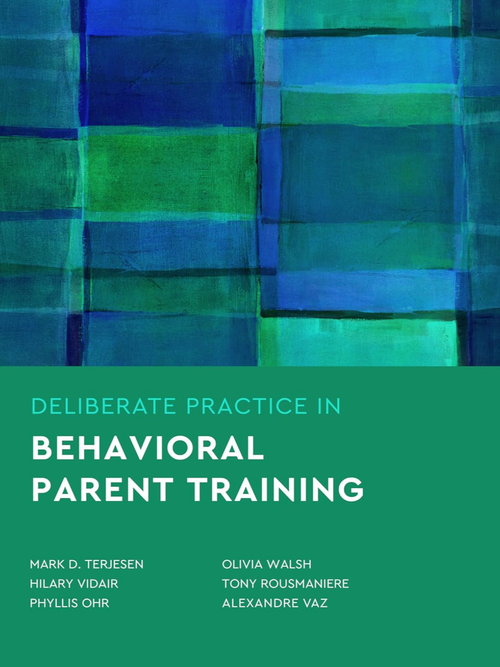
Deliberate Practice in Behavioral Parent Training
Deliberate practice exercises provide trainees and students an opportunity to build competence in essential behavioral parent training skills while developing their own personal therapeutic style.
Read the reviews
Terjesen and colleagues have produced the essential guide for comprehensively training and supervising mental health professionals in the provision of behavioral parent training (BPT). This book is unique in providing a graduated set of deliberate practice exercises that support trainees and supervisees in translating parent training knowledge into implementation of skills that serve as the foundation for effective delivery of established BPT programs. The “learning by doing” exercises cogently described in this book have been rigorously evaluated by multiple BPT trainers across more than a dozen countries. I strongly recommend the use of this text for training mental health professionals working with families who could benefit from BPT.
George J. DuPaul, PhD, Lehigh University, Bethlehem, PAThe only book I’ve seen that teaches you how to become an expert in delivering parent training. Incredibly useful whether you are a beginner or a seasoned pro. You will get better after reading this expertly written book.
Camilo Ortiz, PhD, ABPP, Long Island University-Post Campus, Brookville, NY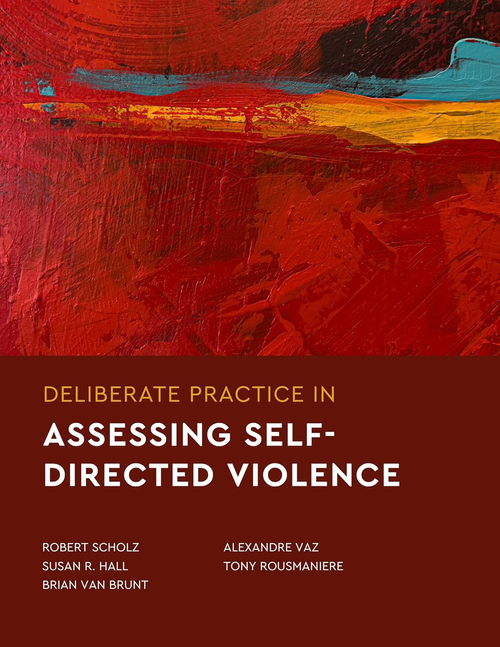
Deliberate Practice in Assessing Self-Directed Violence
To help address the suicide public health crisis, this book presents deliberate practice exercises to reduce clinicians’ fears of talking about suicide and self-injury with clients and assessing for risk with skill and empathy.
Read the reviews
I’m thrilled to see the publication of Deliberate Practice in Assessing Self-Directed Violence. Why? Because for decades we’ve needed a text with clear guidance to help students and practitioners develop skills for assessing self-directed violence (aka suicide assessment). Now we have it. This book moves training and practice in assessing self-directed violence to the next level.
John Sommers-Flanagan, PhD, Director, Center for the Advancement of Positive Education, University of Montana, MissoulaFinally, a book that bridges the gap between a therapist’s knowledge of self-directed violence and how to use that knowledge during times it matters most. What sets this book apart is the shift in mindset, from the assumption therapists get better over time to the fact that intentional training and repetition through deliberate practice is what’s needed to bridge the gap between “I know this” and “I nailed it.”
Lisa Pescara-Kovach, PhD, Director, Center for Education in Mass Violence and Suicide, and Professor, Educational Studies, The University of Toledo, Toledo, OH
Other Books by Sentio University Faculty
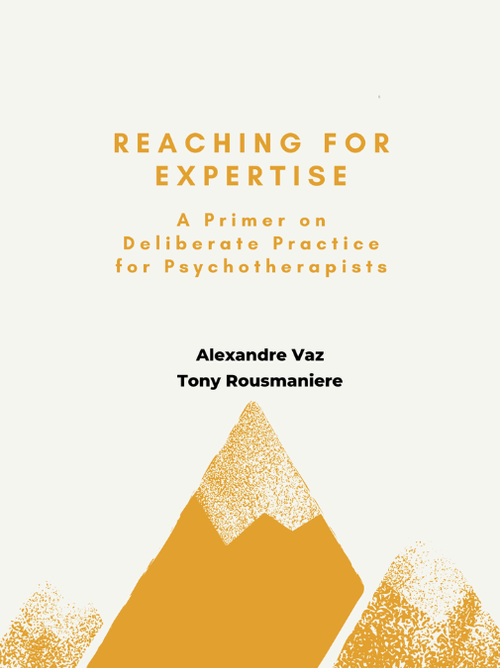
Reaching for Expertise: A Primer on Deliberate Practice for Psychotherapists
This ebook provides a concise guide for therapists who want to learn about and use Deliberate Practice (DP) for their clinical skill development. It covers all the major research and principles of clinical expertise and DP, as well as practical takeaways to enhance therapist’s skills and client outcomes. It also includes forms and other resources to get you started in implementing DP. This ebook is appropriate for therapists of all developmental levels, from beginning trainees to seasoned professionals.
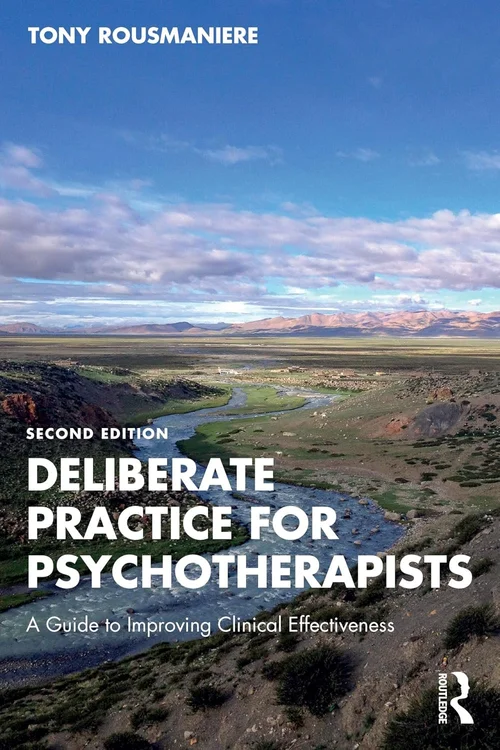
Deliberate Practice for Psychotherapists: A Guide to Improving Clinical Effectiveness
A first-person account of one clinician’s effort to become more effective, set alongside the research on therapist development and clinical expertise. The book draws on deliberate practice findings from fields including medicine and the performing arts, and sets out practical steps therapists can use to build skill regardless of theoretical orientation or level of experience.
Read the reviews
This book deals with an underdeveloped field of psychotherapy research, therapist development, in a very unique manner and both very personal and self-disclosing but also related to research evidence. Tony Rousmaniere explains the paths to competence and expertise as a therapist with all its ups and downs using a broad perspective and attracts trainees - and this is specifically striking - to learn from many other fields such as medicine and even the performing arts. This book provides an extremely valuable contribution to the field!
Bernhard Strauss, PhD, past-president of the Society for Psychotherapy ResearchThis book has important potential. Like Yalom, the book will benefit therapists in training, as well as professional therapists. The first person account is compelling. Deliberate Practice may be a beneficial "disruption" to traditional psychotherapy training.
Nick Ladany, PhD, Dean, UC San Diego School of Leadership and Education SciencesCandid, bold, challenging, and constantly tied to clinical reality, this engrossing and innovative book offers creative insights and valuable tools to help clinicians become more effective, irrespective of their theoretical orientation and level of experience.
Louis Castonguay, PhD, past-president of the Society for Psychotherapy ResearchIn this remarkable book, Tony Rousmaniere combines a masterful command of the research literature with a brave, honest, and compelling account of his own struggles and growth as a clinician. This book challenges and inspires the reader to strive to be a better therapist, and provides practical suggestions for how to do so. It has already impacted how I practice and how I supervise.
Catherine F. Eubanks, PhD, President-Elect, Society for the Exploration of Psychotherapy Integration (SEPI)an essential guide for therapists for using DP to increase their expertise.
Rodney Goodyear, PhD, past-president of the Society for Advancement of Psychotherapyprovides incredibly important information for trainees, practitioners, and supervisors across all levels of experience.
Mark J. Hilsenroth, PhD, editor of the journal PsychotherapyIn clear and entertaining fashion, Tony Rousmaniere reviews the latest research and lays out the steps for using deliberate practice to foster continuous professional development.
Scott D. Miller, PhD, co-developer of Feedback Informed Treatment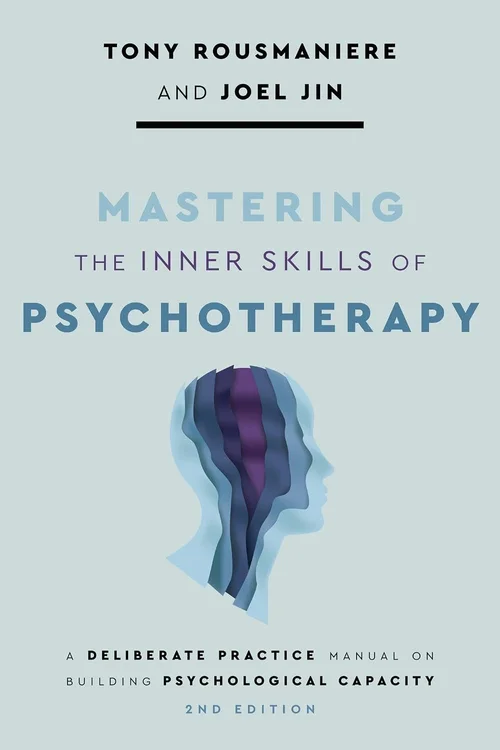
Mastering the Inner Skills of Psychotherapy: A Deliberate Practice Manual on Building Psychological Capacity
A deliberate practice manual for the inner skills a therapist needs to stay present and intervene effectively with clients whose interpersonal process, despair, or trauma history would otherwise overwhelm them. Includes detailed clinical examples, exercises, and measurement tools, and is written for clinicians at any experience level and in any theoretical orientation.
Read the reviews
99.7% (my best estimate) of all therapists have had the experience of feeling “de-skilled” by the so-called difficult client. Such clients with their negative interpersonal process, despair, and traumatic histories can overwhelm a clinician’s psychological capacity to stay present and intervene effectively. What to do? Reach for this book! No matter what your experience level, theory, or client focus, this book can help you deal with those challenging cases from the inside out.
Hanna Levenson, PhD, Professor, Wright Institute, Berkeley, CAWith his characteristic blend of refreshing candor, insight, and humor, Tony Rousmaniere conveys his passion for helping therapists improve their skills through deliberate practice in this engaging and accessible book
Catherine F. Eubanks, Ferkauf Graduate School of Psychology, Yeshiva University, President-Elect of the Society for the Exploration of Psychotherapy Integration (SEPI)With detailed clinical examples, helpful exercises, ingenious measurement tools, and a truly engaging writing style he provides creative principles and guidelines to identify, understand, work with, and develop therapists psychological and inner skills
Louis G. Castonguay, Ph.D., Professor, Department of Psychology, Penn State University, Former President of the Society for Psychotherapy Researcha source of essential practical wisdom that has a lot to offer to psychotherapists, and members of allied professions, at any stage of their career.
John McLeod, Professor II Psychology, University of Oslo, Emeritus Professor of Counselling, Abertay University Dundee.An important contribution to the literature on therapist training.
Michael Helge Rønnestad, Professor emeritus, Dept. of Psychology, University of Osloin providing a highly personal account of his own professional journey, Tony’s authenticity and humility in is nothing short of inspiring.
Myrna L. Friedlander, PhD, Professor, University at Albany/SUNYa journey of self-discovery that is destined to awaken the better therapist inside all of us.
Nicholas Ladany, Dean, School of Leadership and Education Sciences, University of San DiegoTony Rousmaniere is at the forefront of integrating performance science (especially the notion of deliberate practice) to advance our understanding of psychotherapy training.
J. Christopher Muran, Ph.D., Gordon F. Derner School of Psychology, Adelphi University; Mount Sinai Beth Israel Psychotherapy Research Program, Icahn School of Medicine at Mount Sinai; Past President, Society for Psychotherapy Research & Past Editor, Psychotherapy Research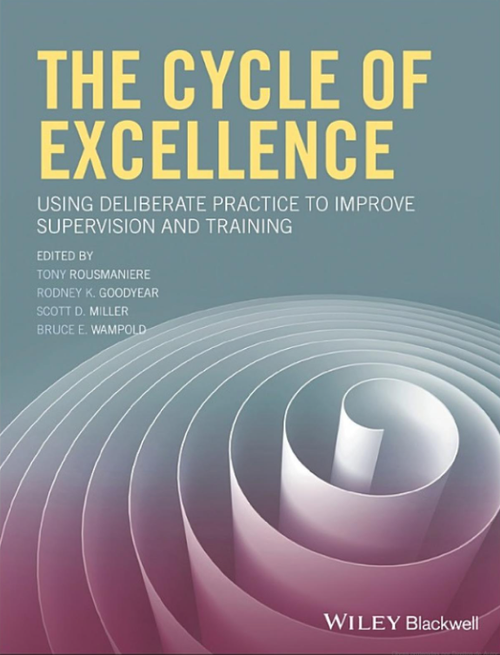
The Cycle of Excellence: Using Deliberate Practice to Improve Supervision and Training
How do the good become great? Practice! From musicians and executives to physicians and drivers, aspiring professionals rely on deliberate practice to attain expertise. Recently, researchers have explored how psychotherapists can use the same processes to enhance the effectiveness of psychotherapy supervision for career-long professional development. Based on this empirical research, this edited volume brings together leading supervisors and researchers to explore a model for supervision based on behavioral rehearsal with continuous corrective feedback. Demonstrating how this model complements and enhances a traditional, theory-based approach, the authors explore practical methods that readers can use to improve the effectiveness of their own psychotherapy training and supervision.
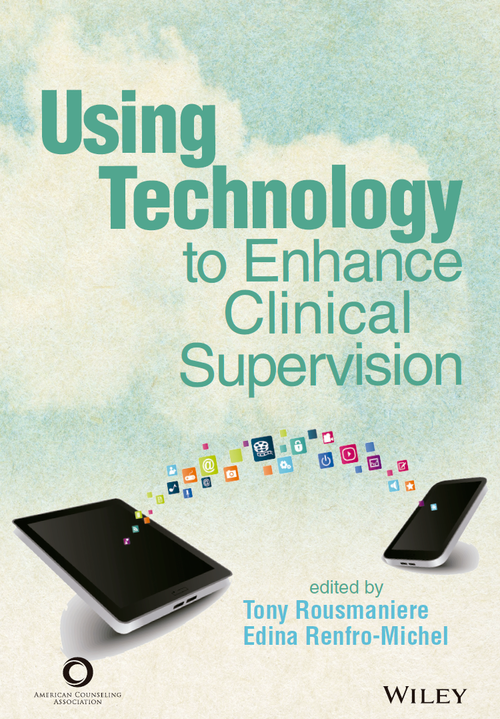
Using Technology to Enhance Clinical Supervision
This is the first comprehensive research and practice-based guide for understanding and assessing supervision technology and for using it to improve the breadth and depth of services offered to supervisees and clients. Written by supervisors, for supervisors, it examines the technology that is currently available and how and when to use it.
Read the reviews
This excellent team of content experts address not only a range of technologies and their uses, but also the legal and ethical considerations to which supervisors should attend. It is essential that supervisors be technologically competent, and this volume will be invaluable in helping to ensure that competence.
Rodney K. Goodyear, PhD, University of RedlandsThe editors and expert contributors show us the tremendous value of integrating technology into clinical supervision, and of closely attending to the nuances and opportunities involved with preparing and supervising counselors in an ever-changing landscape. This is a must-have resource for the delivery of clinical supervision today.
Danica G. Hays, PhD, University of Nevada, Las VegasRousmaniere and Renfro-Michel offer a compelling and comprehensive understanding of how supervisors and supervisees can benefit from integrating technology into the supervisory process. There is a technology wave approaching, and these authors provide the tools needed to successfully ride the wave rather than crash into it.
Nicholas Ladany, PhD, University of San Diego