


Practice Time! is Sentio University's free YouTube series, hosted by Amy DeSmidt and Jamie Manser, demonstrating live deliberate practice sessions across the clinical skills taught in the APA book series The Essentials of Deliberate Practice. The episodes below are organized by therapy model, so you can dive straight into the modality you care about, watch a focused skill demonstration, and then move into the longer-format deliberate practice page for that model. If you are a clinician building skills outside formal training, pair these episodes with the wider Free Therapist Training hub. If you are a licensed supervisor learning how to use deliberate practice in your own supervision, see the six- or twelve-month Clinical Supervisor Training. And if you are considering graduate work, the Sentio MFT Program is the first hybrid MFT program in California to integrate deliberate practice across the entire curriculum.
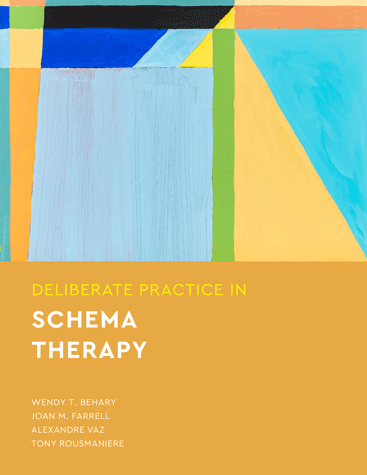
Schema Therapy
Schema therapy lives in chair work, limited reparenting, and imagery rescripting. These three Practice Time episodes demonstrate beginning schema work in an early session, the Healthy Adult voice, and confronting Critic mode. For the longer-format webinar with Wendy T. Behary and Joan M. Farrell and the matching book exercise set, see the Deliberate Practice in Schema Therapy page.
Ep 21: Schema Critic Mode
Ep 20: Beginning Schema Therapy
Ep 19: Healthy Adult Mode
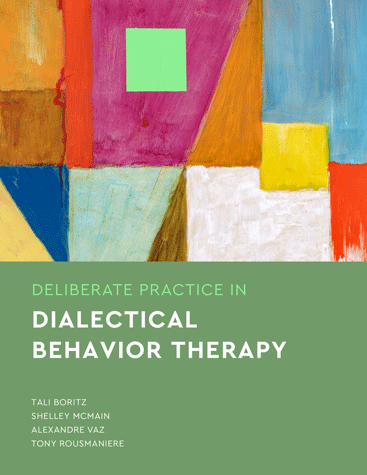
Dialectical Behavior Therapy
DBT problem-solving and emotional exposure require a precision that is hard to develop from textbook study alone. These three Practice Time episodes walk through formal problem assessment, problem solving, and informal emotional exposure as Marsha Linehan's manual describes them. For the deeper deliberate practice training with the DBT book authors and the matching exercise set, see the Deliberate Practice in DBT page.
Ep 18: Informal Emotional Exposure
Ep 17: Problem Solving
Ep 16: Problem Assessment
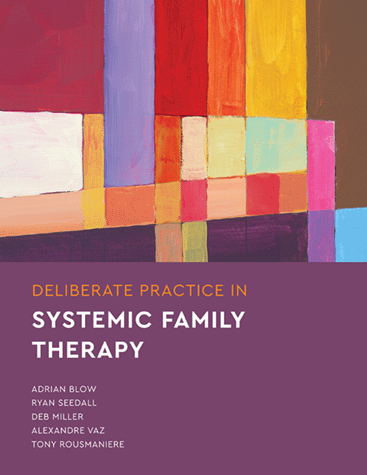
Systemic Therapy
Systemic and family therapy skills are difficult to rehearse alone because the clinical unit is the whole family in the room. These three Practice Time episodes break out three high-leverage skills: holding boundaries inside the session, de-escalating active conflict, and refusing to be pulled into triangulation by one family member against another. For the deeper skills page, see the Systemic Therapy page.
Ep 15: Systemic De-escalation
Ep 14: Systemic Boundaries
Ep 13: Avoiding Triangulation
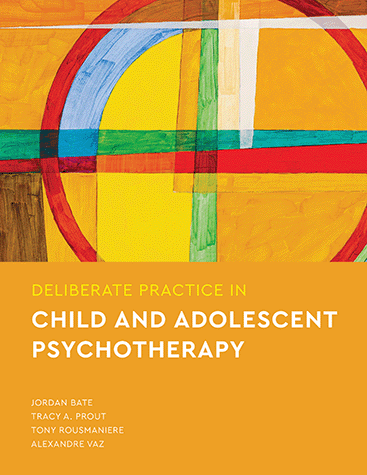
Child Therapy
Therapy with children calls for a different rhythm: emotional vocabulary that meets the child where they are, identity exploration without leading, and limit-setting that holds without rupturing the alliance. These three Practice Time episodes demonstrate each move in turn. For the deeper child-therapy skills page, see the Child Therapy page.
Ep 12: Setting Limits
Ep 11: Exploring Identity
Ep 10: Naming Feelings
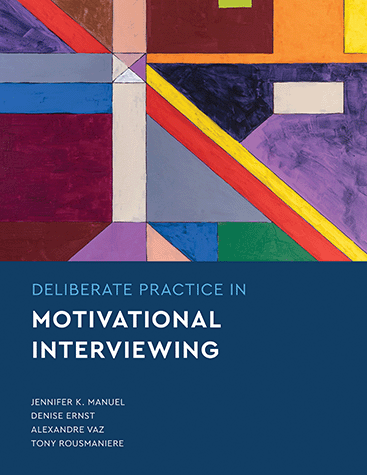
Motivational Interviewing
Motivational Interviewing lives or dies on the quality of the therapist's reflections. These three Practice Time episodes walk through the three skills that distinguish MI from generic supportive listening: reflection and open questions, eliciting change talk in the patient's own words, and double-sided reflections that hold ambivalence rather than collapsing it. For the deeper webinar with senior MINT trainer Robert Scholz, see the Deliberate Practice in MI page.
Ep 9: Double Sided Reflections
Ep 8: Eliciting Change Talk
Ep 7: Reflection and Questions
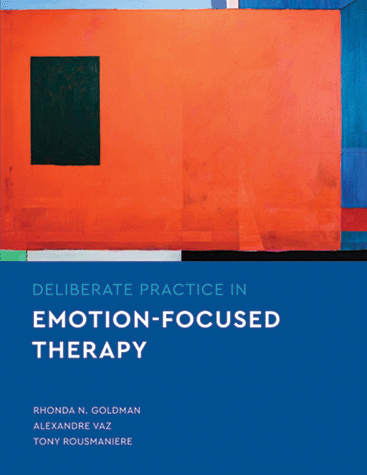
Emotion-Focused Therapy
Emotion-Focused Therapy is built on the therapist's ability to track and deepen affect in real time. These three Practice Time episodes (the originals that launched the series) demonstrate empathic understanding, exploratory questioning, and empathic affirmation. For the longer-format deliberate practice webinar with the EFT book authors, see the Deliberate Practice in EFT page.
Ep 3: Empathic Affirmation
Ep 2: Exploratory Questions
Ep 1: Empathic Understanding
How to use Practice Time! with peers or supervisors
Each Practice Time episode is short enough to drop into a peer practice group or a supervision hour. A two-session rhythm works well: in the first session watch one of the demonstrations together and discuss how it would fit your current caseload; in the second session, run the exercise live. One person plays the therapist, one plays the client, and a third observes and offers structured feedback against a specific behavioral target named in the video. Five to ten minutes of focused rehearsal followed by feedback tends to produce more growth than thirty minutes of unstructured roleplay. Licensed clinicians can also join Sentio's ongoing deliberate practice consultation group, which meets regularly and is open to clinicians worldwide. Supervisors learning the method itself can join the six- or twelve-month Clinical Supervisor Training.
Frequently asked questions
What is Practice Time! and who is it for?
Practice Time! is a free YouTube series produced by Sentio University in which therapists Amy DeSmidt and Jamie Manser demonstrate short, focused deliberate practice exercises drawn from the APA book series The Essentials of Deliberate Practice. It is built for clinicians, graduate students, and supervisors who want to see real skill rehearsal rather than only read about it. For the rest of Sentio's free training catalog, see the Free Therapist Training hub.
Is Practice Time! really free?
Yes. Every episode is free to watch on YouTube and is embedded on this page so you do not need a Sentio account or login. The series is sponsored by Sentio University as part of the wider Free Therapist Training initiative, which also includes free webinars, podcasts, and AI tools for therapists.
Who hosts Practice Time!?
Amy DeSmidt, LMFT, and Jamie Manser, LMFT, both clinicians and faculty at Sentio University, host the series. Each episode pairs them with a guest demonstration or has them rotate roles between therapist and client.
How are the episodes organized?
The episodes are grouped on this page by therapy model: Schema, Dialectical Behavior Therapy, Systemic Therapy, Child Therapy, Motivational Interviewing, and Emotion-Focused Therapy. Each model section cross-links to its dedicated deliberate practice page where the longer-format webinar and book content live.
What is deliberate practice?
Deliberate practice is the structured rehearsal of specific clinical skills under feedback, rather than relying only on case discussion and clinical hours to develop those skills. Each skill is broken into a behaviorally defined target, rehearsed in short repetitive cycles, and refined with corrective input from a supervisor or peer. For a longer introduction, see What is Deliberate Practice.
How do I use Practice Time! with a supervision or peer group?
Watch an episode together, pause at the demonstrated skill, and rehearse it live in roles. One person plays the therapist, one plays the client, and a third observes and gives structured feedback against the named target. Five to ten minutes of focused rehearsal plus feedback tends to outproduce thirty minutes of unstructured roleplay. For supervisors who want a deeper grounding in the method itself, see the Clinical Supervisor Training.
Where can I find longer-format deliberate practice webinars for each model?
Each model section above links to a dedicated page with the full-length deliberate practice webinar for that model. See Schema, DBT, Motivational Interviewing, TEAM-CBT, and EFT.
Is there a graduate program that uses deliberate practice?
Yes. The Sentio MFT Program is the first hybrid Marriage and Family Therapy program in California to integrate deliberate practice across the entire curriculum. Students rehearse the skills demonstrated in Practice Time! and the wider book series as a core part of clinical training, not as an optional add-on.
I am a licensed supervisor. How do I learn to use deliberate practice in supervision?
Sentio runs a six- or twelve-month Clinical Supervisor Training built around the principle that deliberate practice supervision, like any clinical skill, has to be practiced under feedback to be learned. The program is open to supervisors licensed in California or Washington State.
Where can I find the rest of Sentio's free therapist training?
Return to the Free Therapist Training hub for the complete catalog: model-specific deliberate practice webinars, the Learn Psychotherapy podcast, the DP Consultation Group, and research on deliberate practice.