
On the road to licensure
This post covers steps 12 and 16 of 22: taking the Law and Ethics Exam in your first year and passing it before your registration reaches six years. See every step and form
California BBS Law and Ethics Exam for MFT: What to Expect and How to Prepare
The California BBS Law and Ethics Exam is a required milestone on the path to becoming a Licensed Marriage and Family Therapist (LMFT) in California. Every associate marriage and family therapist (AMFT) must take this exam during their first year of registration and must pass it before receiving a subsequent associate registration or achieving full licensure. The exam is 75 multiple-choice questions long (50 scored, 25 experimental), with 90 minutes allotted. It covers California law as it applies to MFT practice (44%) and professional ethics (56%), including confidentiality, mandated reporting, therapeutic relationships, and business practices. Passing this exam is not just a bureaucratic hurdle; it signals that a clinician understands the legal and ethical framework that protects clients and practitioners alike. This post walks through what the exam covers, when you take it, how to prepare, what happens if you need to retake it, and how your graduate training can influence your readiness. For where this exam sits in the wider sequence, see how therapist licensure works in California.
Last updated: October 20, 2026
What Does the California BBS Law and Ethics Exam Actually Cover?
The exam is developed and administered by the California Board of Behavioral Sciences (BBS) through the testing vendor Pearson Vue. There is a separate exam for each license type; this post focuses on the LMFT version. The content is divided into two broad domains. The Law section (44% of scored questions) tests your knowledge in three areas: Consent, Confidentiality, and Privilege (16%); Limits to Confidentiality and Mandated Reporting (16%); and Legal Standards for Professional Practice (12%). The Ethics section (56% of scored questions) spans Professional Competence and Integrity (16%); Responsibility to Clients and Counseling Relationships (24%); and Practice Policies and Professional Responsibilities (16%). The questions are presented as clinical vignettes. Rather than asking you to recite statutes, the exam asks you to apply legal and ethical principles to realistic situations. A question might describe a client disclosing information that raises a mandated reporting question and ask what the therapist should do first. This applied format means that rote memorization of statutes is not enough; candidates need to understand how the law and professional ethics interact in practice. The BBS stopped publishing official passing scores in 2018. Based on data from when scores were publicly available (2016 to 2018), the passing range was historically approximately 33 to 36 correct out of 50 scored items, which corresponds roughly to the upper 60s to lower 70s percentage range (Therapist Development Center, 2024). The 25 experimental questions are unscored and are scattered throughout the exam without identification.
When Can You Take the Law and Ethics Exam in California?
You become eligible to apply for the California MFT Law and Ethics Exam as soon as you receive your associate registration number from the BBS. You are required to take the exam at least once during each annual registration renewal cycle until you pass. You do not have to pass to renew your registration for the first time, but you do have to have taken it. Once you pass, you do not need to take it again to renew your registration, but if you have not passed the Clinical Exam within seven years of your first attempt at it, you must pass the current version of the Law and Ethics Exam before you can take the Clinical Exam again. Passing the Law and Ethics Exam is also a prerequisite for receiving a subsequent associate registration and for taking the Clinical Exam; it is not required before you submit your Application for Licensure after you have completed your supervised experience hours. The application process runs through BreEZe, the BBS online portal, or by paper mail. Online applications are processed faster. Paper applications can take four to six weeks. Because of this processing time, candidates are advised to apply early rather than waiting until they are close to a renewal deadline. If you are requesting testing accommodations, the BBS recommends submitting that application at least 90 days before your anticipated exam date. The current application fee for the exam is $75, a temporary reduction from $150 that runs from July 1, 2026, through June 30, 2030. Exam sittings are scheduled through Pearson Vue at testing centers throughout California. Popular testing windows can fill up, so planning ahead is important if you have a specific timeline in mind.
What Are the Most Effective Study Strategies for the BBS Exam?
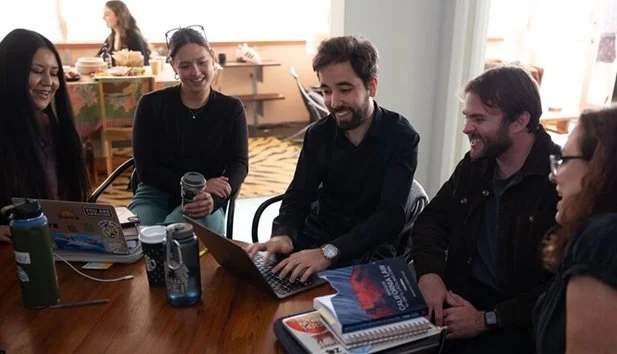
Because the exam tests applied judgment rather than pure recall, the most effective study approaches mirror the format of the exam itself. Candidates who perform well generally combine content review with extensive practice testing. The BBS publishes a Law and Ethics Exam Candidate Handbook and the Pearson Vue website provides the LMFT Law and Ethics Examination Outline, which lists all 147 areas of knowledge the BBS uses when developing questions. Reviewing these documents early gives you a map of the entire exam domain. Commercial study programs from providers such as the Therapist Development Center and High Pass Education offer structured content review aligned to BBS exam weighting, full-length practice exams, and rationales for answer choices. Rationale review is particularly important: understanding why a distractor is wrong often builds more durable knowledge than simply confirming why a correct answer is right. Research on learning more broadly suggests that passive review has a limited effect on professional skill development. As Jennifer M. Taylor and Greg J. Neimeyer have noted, "passive learning from didactic presentation does not facilitate long-term learning and registers minimal impact on skill acquisition or client outcomes" (Taylor & Neimeyer, 2016, p. 233). Applied to exam preparation, this finding supports an approach that emphasizes repeated self-testing and case scenario analysis rather than re-reading outlines. Peer study groups can also reinforce learning, particularly for topics like dual relationships and mandated reporting thresholds where discussing case scenarios aloud helps candidates articulate their reasoning rather than pattern-matching answers. The BBS also offers extended testing time for candidates who speak English as a second language (1.5x the standard 90 minutes) and disability-related accommodations through Pearson Vue. Candidates who may benefit from accommodations should initiate that process early.
How Does a Strong Graduate Program Prepare You for the Licensing Exam?
What Happens If You Don't Pass the BBS Exam on the First Attempt?

A Closer Look: How One California MFT Program Approaches Law and Ethics Training
Sentio University, a California-based nonprofit graduate school offering a Master of Arts in Marriage and Family Therapy, integrates law and ethics content throughout its curriculum rather than confining it to a single required course. The program's approach draws on the Deliberate Practice framework developed by co-founders Tony Rousmaniere, PsyD, and Alexandre Vaz, PhD, which emphasizes repeated skill practice with structured feedback over passive content exposure. For a full overview of the program's structure, visit the Sentio MFT program overview.
In practice, this means that trainees at Sentio's associated counseling clinics encounter applied ethical and legal questions in supervised client work from early in the program. Ethics case consultations are embedded in supervision rather than treated as a separate academic topic. Faculty with extensive clinical experience in California help trainees work through real situations involving mandated reporting, informed consent, and professional boundaries during their practicum hours.
The program's curriculum is designed to build the applied judgment the BBS Law and Ethics Exam tests, not to teach to the exam directly. Whether that approach produces better exam outcomes than other program structures is an empirical question that Sentio has not yet published data on.
For a full description of Sentio's program requirements, curriculum, and faculty credentials, see the MFT Program Overview and the Academic Catalog.
Making Your Own Decision
The California BBS Law and Ethics Exam is a fixed requirement, and how you prepare for it is ultimately a personal decision that depends on your learning style, your timeline, and the foundation your graduate training has built. No single study approach or program background guarantees a first-attempt pass, and the exam rewards genuine understanding of applied professional judgment over surface memorization. For guidance on what to prioritize when evaluating programs, see how to evaluate a therapy graduate program.
As you evaluate MFT programs and licensure preparation resources, the most useful thing you can do is look past the marketing materials and see the actual educational experience for yourself. Every school should allow, and even encourage, prospective students to sit in on a live or recorded class before applying. This is true whether the program is large or small, well-established or newer, campus-based or online. If a school is unwilling to let you observe a real class, that itself is useful information. Asking to visit a session is one of the most direct ways to cut through how a program describes itself and see whether its teaching approach actually matches what you need. To compare programs on these dimensions, see our directory of MFT programs in California directory.
For more information about Sentio University's program, visit the FAQ page or the MFT Program Overview. For current BBS exam requirements, always consult the official BBS website at bbs.ca.gov.
On the road to licensure
Previous: What an AMFT does · Next: AMFT employment rules · All 22 steps
Keep reading
How therapist licensure works in California, where the exam sits in the full sequence.
California LMFT supervised hours explained, the 3,000-hour requirement.
How to evaluate a therapy graduate program, judging ethics training beyond a standalone course.
MFT programs in California, every BBS-approved program in the state.
LMFT exam pass rates by program, the Board's first-time results for the programs in our California directory.
Frequently Asked Questions About the California BBS Law and Ethics Exam
Is the California BBS law and ethics exam the same as the clinical exam?
No, they are two separate exams. The Law and Ethics Exam tests knowledge of California statutes, BBS regulations, and professional ethics as they apply to MFT practice. The California Clinical Exam (also called the LMFT Clinical Exam) tests clinical judgment and therapeutic competence. You must pass both to become licensed, but they are taken at different points in the licensure process. Most candidates take the Law and Ethics Exam during the associate registration period and the Clinical Exam after completing all required supervised experience hours. Those are also the years when you are earning least while working hardest.
When in the licensure process do you take the law and ethics exam?
You are eligible to apply for the Law and Ethics Exam as soon as you receive your AMFT (Associate Marriage and Family Therapist) registration number from the BBS. You are required to take the exam at least once during your first year of registration and at least once during each subsequent renewal cycle until you pass it. You must pass the Law and Ethics Exam before the BBS will approve a subsequent associate registration or approve you for the Clinical Exam, but you can submit your Application for Licensure before you pass. For more on what the AMFT registration involves, see our post on AMFT registration in California.
How long do you have to wait to retake the BBS exam if you don't pass?
The BBS requires a 90-day waiting period between exam attempts. You may submit your re-examination application at any time after a failed attempt, but the BBS will not transmit your eligibility to Pearson Vue until the 90 days have passed. The re-examination fee is $75 from July 1, 2026, through June 30, 2030. Because of the processing time for re-exam applications, you should apply as soon as possible after a failed attempt to minimize additional delays beyond the required waiting period.
What study materials do most MFT candidates use to prepare for the BBS exam?
Most candidates use a combination of the official BBS and Pearson Vue materials (the Candidate Handbook and the LMFT Law and Ethics Examination Outline), a commercial study guide updated for the current exam year, and full-length practice exams with detailed rationales. Study guides published annually by High Pass Education and the Therapist Development Center are among the most widely used. Candidates whose first language is not English should also be aware that time-and-a-half accommodations are available from the BBS upon application.
Does taking a strong academic MFT program help you pass the licensing exam faster?
There is no published research establishing a direct causal link between attending any particular type of MFT graduate program and first-attempt pass rates on the BBS Law and Ethics Exam. What the broader training literature does suggest is that programs integrating applied ethical reasoning into clinical supervision, rather than delivering ethics content only in standalone courses, may build more durable professional judgment. That judgment is what the exam ultimately tests. Individual preparation, using high-quality study materials in the months before the exam, remains the most direct variable under your control. For guidance on evaluating whether a program is building genuine clinical skill, see our post on whether your MFT program is teaching therapy.
How many questions are on the California MFT Law and Ethics Exam and how long do you have?
The exam consists of 75 multiple-choice questions. Of those, 50 are scored and 25 are experimental (unscored) questions that the BBS uses for future exam development. The experimental questions are not identified on the exam. Candidates have 90 minutes (one hour and thirty minutes) to complete the exam. The exam is administered as a computer-based test at Pearson Vue testing centers throughout California.
What happens if I do not pass the Law and Ethics Exam before my six-year registration period ends?
Associate registrations in California have a six-year time limit from the date of initial registration. If you have not passed the Law and Ethics Exam by the time your registration expires, your registration closes and there are no exceptions. This means that any supervised experience hours accumulated during that period may be affected. If you are approaching the end of your registration period without having passed the exam, contact the BBS directly to understand your specific options.
Are there continuing education requirements related to law and ethics after licensure?
Yes. California LMFTs are required to complete continuing education (CE) in law and ethics as part of their license renewal requirements. The BBS specifies the number of hours required and approved provider categories. Taylor and Neimeyer have noted that professional licensing jurisdictions across the United States have increasingly formalized CE mandates, with 46 U.S. licensing jurisdictions now having CE mandates for psychology license renewal (Taylor & Neimeyer, 2016, p. 222), reflecting a broader recognition that ethical knowledge must be regularly updated, not just acquired once during training. For current California CE requirements, consult the BBS website directly at bbs.ca.gov.
References
Brand, J., Miller-Bottome, M., Vaz, A., & Rousmaniere, T. (2025). Deliberate practice supervision in action: The Sentio Supervision Model. Journal of Clinical Psychology, 1-11. https://doi.org/10.1002/jclp.23790
Rousmaniere, T. (2019). Mastering the inner skills of psychotherapy: A deliberate practice manual. Gold Lantern Press. ISBN: 978-1-7325657-0-8. https://www.amazon.com/Mastering-Inner-Skills-Psychotherapy-Deliberate/dp/1732565708
Rousmaniere, T., Goodyear, R. K., Miller, S. D., & Wampold, B. E. (2017). Improving psychotherapy outcomes: Guidelines for making psychotherapist expertise development routine and expected. In T. Rousmaniere, R. K. Goodyear, S. D. Miller, & B. E. Wampold (Eds.), The cycle of excellence: Using deliberate practice to improve supervision and training (pp. 267-275). John Wiley & Sons. ISBN: 978-1-119-16556-9. https://doi.org/10.1002/9781119165590.ch13
Rousmaniere, T., & Vaz, A. (2025). Sentio's clinic-to-classroom method: Bridging deliberate practice and clinical training. Psychotherapy Bulletin, 60(2), 79-84. https://societyforpsychotherapy.org/sentios-clinic-to-classroom-methodbridging-deliberate-practice-and-clinical-training/
Taylor, J. M., & Neimeyer, G. J. (2016). The ongoing evolution of continuing education. In C. E. Watkins Jr. & D. L. Milne (Eds.), The Wiley international handbook of clinical supervision (pp. 219-248). John Wiley & Sons. ISBN: 978-1-118-84636-0. https://doi.org/10.1002/9781118846360.ch11
Therapist Development Center. (2024). California MFT law and ethics exam. https://therapistdevelopmentcenter.com/product/california-mft-law-ethics
Vaz, A., & Rousmaniere, T. (2022). Clarifying deliberate practice for mental health training. Sentio University. https://drive.google.com/file/d/1MFdWU-fRl-2EKN2rdvFsExPcJ8-O0C_A/view
California Board of Behavioral Sciences (BBS): https://www.bbs.ca.gov
BBS Exams page: https://www.bbs.ca.gov/exams/
BBS Law and Ethics Exam information: https://www.bbs.ca.gov/exams/calaw_ethics.html
Pearson Vue California BBS Exam scheduling: https://home.pearsonvue.com/cabbs
About the Authors
Tony Rousmaniere, PsyD is the President of Sentio University and Executive Director of the Sentio Counseling Center. He is Past-President of the psychotherapy division of the American Psychological Association and the author of over 20 books on deliberate practice and psychotherapy training, including The Essentials of Deliberate Practice book series (APA Books). He is a licensed psychologist in California and Washington. Learn more
Alexandre Vaz, PhD is the Chief Academic Officer of Sentio University and cofounder of the Deliberate Practice Institute. He is co-editor of The Essentials of Deliberate Practice book series (APA Books) and the author of over a dozen books on deliberate practice and psychotherapy training. Dr. Vaz is the founder and host of Psychotherapy Expert Talks. He is a licensed clinical psychologist in Portugal. Learn more