

The Sentio Culture of Radical Transparency
Most graduate programs in marriage and family therapy rely on lectures, textbook exams, and traditional academic assessments. Students can succeed by studying and performing well on paper. At Sentio University, a California-based MFT program, the learning model is fundamentally different, and that difference demands a fundamentally different culture.
Our MFT program is built on Deliberate Practice, a training methodology rooted in decades of research on expert performance. Deliberate Practice requires students to rehearse clinical skills on video, review those videos with faculty, receive precise feedback on specific moments in their sessions, and do it all over again. When students begin seeing clients at the Sentio Counseling Center, every session is recorded so that supervisors can provide targeted, video-based clinical feedback.
This is not a passive academic experience. It requires vulnerability. It requires a willingness to show your work at its most imperfect. It requires watching yourself struggle on camera and then sharing that footage with a teacher who will help you get better.
Not every student wants this. And that is perfectly fine.
Because Deliberate Practice asks so much of students, we have built our entire institution around a principle we call radical transparency. We believe that if our training model requires this level of openness from students, then students deserve that same level of openness from us, beginning on day one of the admissions process. This is a defining feature of therapist training at Sentio University in California, and it shapes every part of the student experience.
Transparency Starts at Admissions
At most graduate programs, the admissions process is designed to sell you on the school. At Sentio, the admissions process is designed to help you figure out whether this California MFT program is truly the right fit for you. Every element described below is unique to Sentio and, to our knowledge, not offered by any other MFT program in the state.
1. Visit a Live Class Before You Apply
We encourage every prospective student to attend and observe a live Sentio class before submitting an application. You will see real instruction, real Deliberate Practice exercises, and real student interactions, not a rehearsed admissions presentation. This is the single best way to cut through the marketing and see what a graduate program is actually like. We encourage applicants to request the same opportunity at every program they are considering. If a school will not allow you to observe a real class, ask yourself why.
2. Meet 100% of Our Students Face to Face
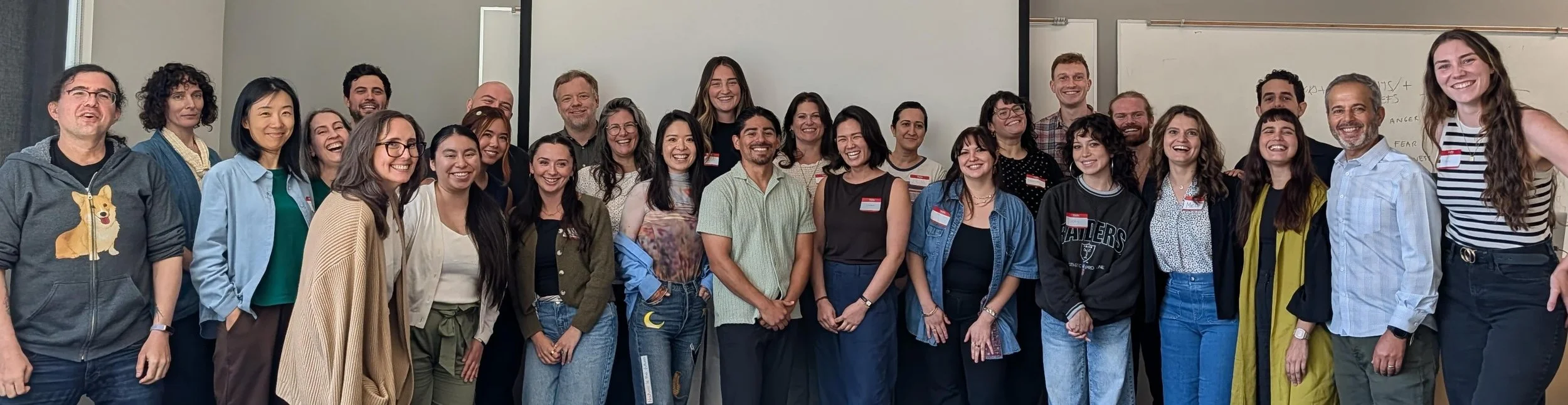
Prospective students are invited to attend an in-person residency in Los Angeles, California, where they can meet every current Sentio student face to face. This is not a curated panel of hand-picked ambassadors. You will have the opportunity to speak with all of our students, ask unfiltered questions about their experiences, and hear directly what it is like to train at Sentio. We are not aware of any other therapist training program in California that offers this level of direct access to its entire student body during the admissions process.
3. We Openly Discuss Why Sentio May Not Be Right for You
Sentio is more rigorous and more intensive than traditional MFT programs in California. We know this is not what every student is looking for, and we do not pretend otherwise. Below is a detailed comparison table that honestly outlines the reasons Sentio may or may not be a good fit, covering everything from the intensity of the program to videotaping requirements to employment constraints. We want every student who enrolls to do so with full knowledge of what they are signing up for.
4. All Faculty Receive Weekly Video-Based Feedback
Transparency at Sentio does not just flow in one direction. Every Sentio faculty member completes specialized training in Deliberate Practice pedagogy and then receives weekly feedback on their own class videos. Just as students are asked to show their clinical work on camera, faculty are held to the same standard with their teaching. This creates a culture where feedback is not something that happens to students; it is something that happens to everyone. No other MFT program in California requires this level of ongoing accountability from its faculty.
5. All Clinical Supervisors Receive Weekly Video-Based Feedback
The same principle applies to clinical supervision. Every supervisor at the Sentio Counseling Center completes advanced training in Deliberate Practice supervision and receives weekly feedback on their supervision session videos. This means that when a supervisor gives a student feedback on a clinical moment, that supervisor’s own supervision skills are also being observed, refined, and improved. No other clinical training program in California that provides this level of ongoing quality assurance for its supervisors.
Ready to see Sentio for yourself?
| Sentio may be good for you if... | Sentio may not be a good fit for you if... | |
|---|---|---|
| Intensity | You are looking for an immersive, full-time 20-month program. | You want to attend graduate school part-time or spread your graduate training out over a longer period. |
| Clinical Experience | You want to achieve at least 400 hours of clinical experience in your graduate program. (These hours count towards BBS requirements for licensure.) | You are fine having less clinical experience in your graduate program. |
| Videotape | You are ok with your work with clients being videotaped for precise supervision and clinical feedback. | You don’t feel comfortable with your clinical work being videotaped. |
| Outcome data | You want to see empirical data regarding your clients’ progress in therapy. | You don’t feel comfortable with using outcome data in therapy. |
| Employment | You do not need to have full-time employment while you attend graduate school. | You need to have full-time employment while you attend graduate school. |
| Rigorous and intensive | You are looking for rigorous and intensive experiential training that includes over 400 hours of Deliberate Practice skill rehearsal. | You prefer a less-demanding graduate program. |
| Academic formats | You want a hybrid model of academics that include in-person intensives and weekly online coursework. | You prefer either fully in-person or fully online academic formats. |
| Financing | You can pay tuition out-of-pocket or qualify for an institutional merit or need based scholarship. | You need federal student loans to pay for graduate school. We do offer both need and merit based scholarships. |
| Residency & Licensure | You will be a resident of California while you attend graduate school, and you intend to get licensed in California. | You are unsure where you will reside while attending graduate school and/or where you want to get licensed as a therapist. |
Governance Policies
Nonprofit Tax / IRS Forms
Sentio University, EIN: 86-1578923
Contact Us
Mikaela Abundez
Director of Operations and Compliance
310-916-9378
Monday - Friday 9am - 5pm