Free Safe & Ethical Use of AI Course for Mental Health Professionals
This course is not part of the Sentio University MFT degree program and does not carry graduate credit.
Millions of people are already using AI tools like ChatGPT for mental health support. Sentio's research shows this is not a future scenario. It is happening now, at massive scale, and most clinicians have never been trained to work with it safely, ethically, or effectively.
This free, on-demand course from Sentio University gives you the practical frameworks you need to respond to this moment. Whether you are a licensed therapist, a clinical supervisor, an MFT trainee, or a mental health educator, this 4-part training will help you understand how AI actually works, where the real risks are, and how to use these tools as a responsible clinical thinking partner.
Over 2,000 clinicians from around the world have already downloaded this course.
Why Sentio Created This Safe & Ethical Use of AI Course
Over the past year, the Sentio AI Research Team has been studying how people actually use AI for mental health support. The findings are staggering: AI is already functioning as one of the largest mental health providers in the world, yet the clinical workforce has almost no training in how to engage with it.
Our Chief Academic Officer, Dr. Alexandre Vaz, created this 4-part training course to close that gap. The materials draw from books Sentio is publishing with the American Psychological Association that offer structured, practical frameworks for integrating AI into clinical training and client care.
We originally planned to sell this as a $199 course. But we believe every therapist and every training program should have access to these safety frameworks right now. So we are releasing it for free. Please take it, use it, and share it with your colleagues, students, supervisees, and department.
What You Will Learn
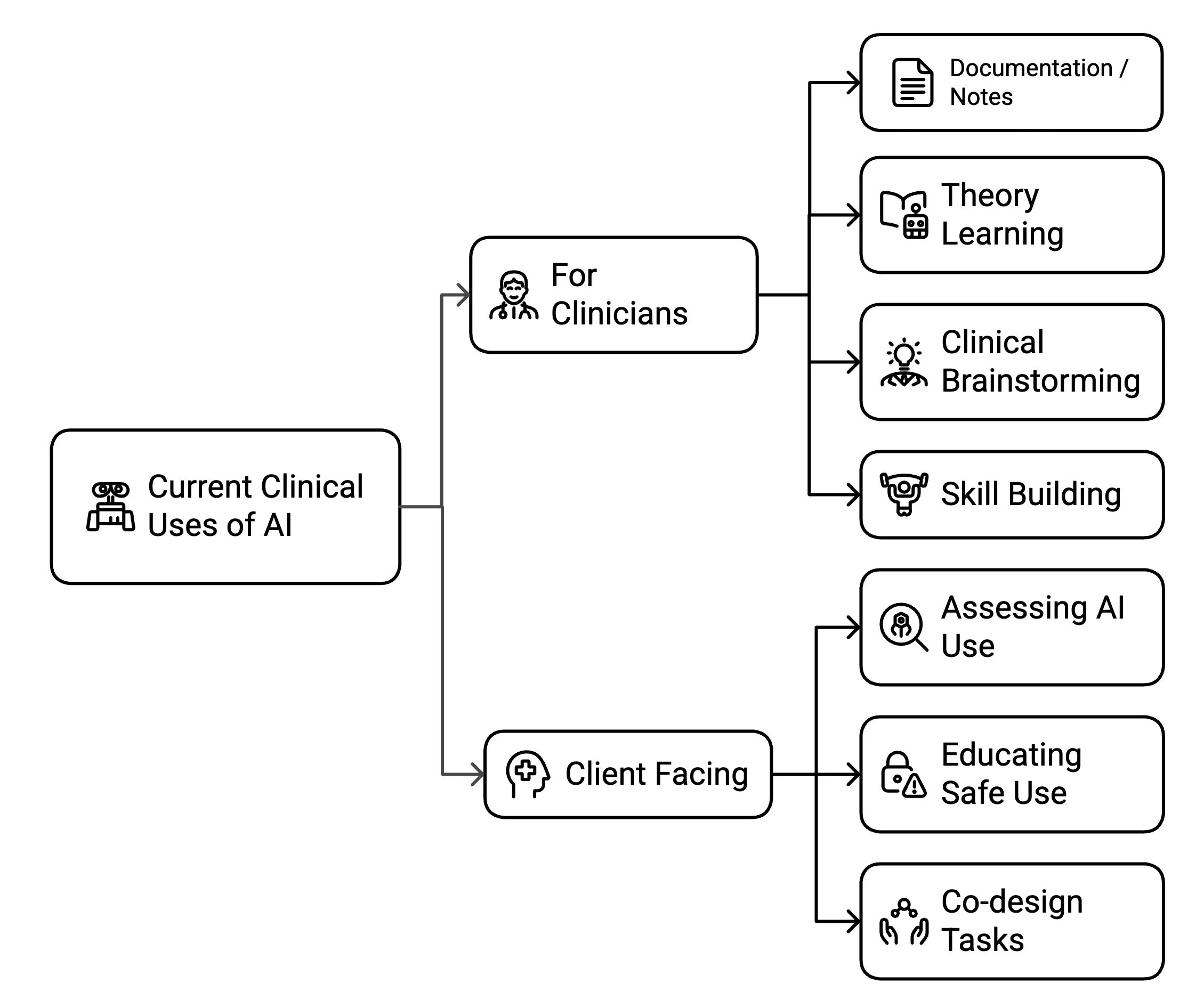
This course teaches you how to use general-purpose AI tools like ChatGPT as a clinical thinking and supervision support, with clear safety guardrails and ethical boundaries at every step. The four-week curriculum covers the following topics.
Week 1: How AI Actually Works and What Is Changing in Mental Health
Understand the basics of large language models, what they can and cannot do, and why AI's rapid adoption for mental health support matters for your clinical practice right now.
Week 2: Risks, Ethics, Safety Guardrails, and Hallucination Spotting
Learn to identify the real dangers of AI in clinical contexts, including confidentiality risks, AI hallucinations, and bias. Build a personal safety framework for ethical AI use in your practice.
Week 3: AI for Safe Clinical Brainstorming and Between-Session Client Integration
Discover how to use AI as a clinical brainstorming partner for case conceptualization, treatment planning, and between-session integration, all while keeping client data safe through proper de-identification.
Week 4: AI for Deliberate Practice Skill Building
Explore how to use AI tools to support your ongoing professional development through deliberate practice exercises, building a sustainable routine for clinical skill growth.
What Is Included
This on-demand materials bundle gives you full access to the course materials from Sentio's live "AI in Mental Health: Introductory Certification" 4-week training. The package includes:
- 4 full video recordings covering each week of the curriculum, taught by Dr. Alexandre Vaz.
- 4 slide decks (PDFs) with all presentation materials from each session.
- Clinical handouts and exclusive Sentio materials, including AI safety and ethics guidelines, clinical brainstorming prompts with structured frameworks, case de-identification templates for protecting client data, and Sentio's AI competency checklist tools.
- Prompt templates you can use immediately in your own clinical brainstorming and training.
The Book Behind This Course

The course draws on A Clinician’s Guide to AI-Supported Therapy Homework: Ethical and Safe Use of AI Between Sessions, by Dr. Alexandre Vaz and Dr. Tony Rousmaniere, forthcoming from the American Psychological Association in November 2026.
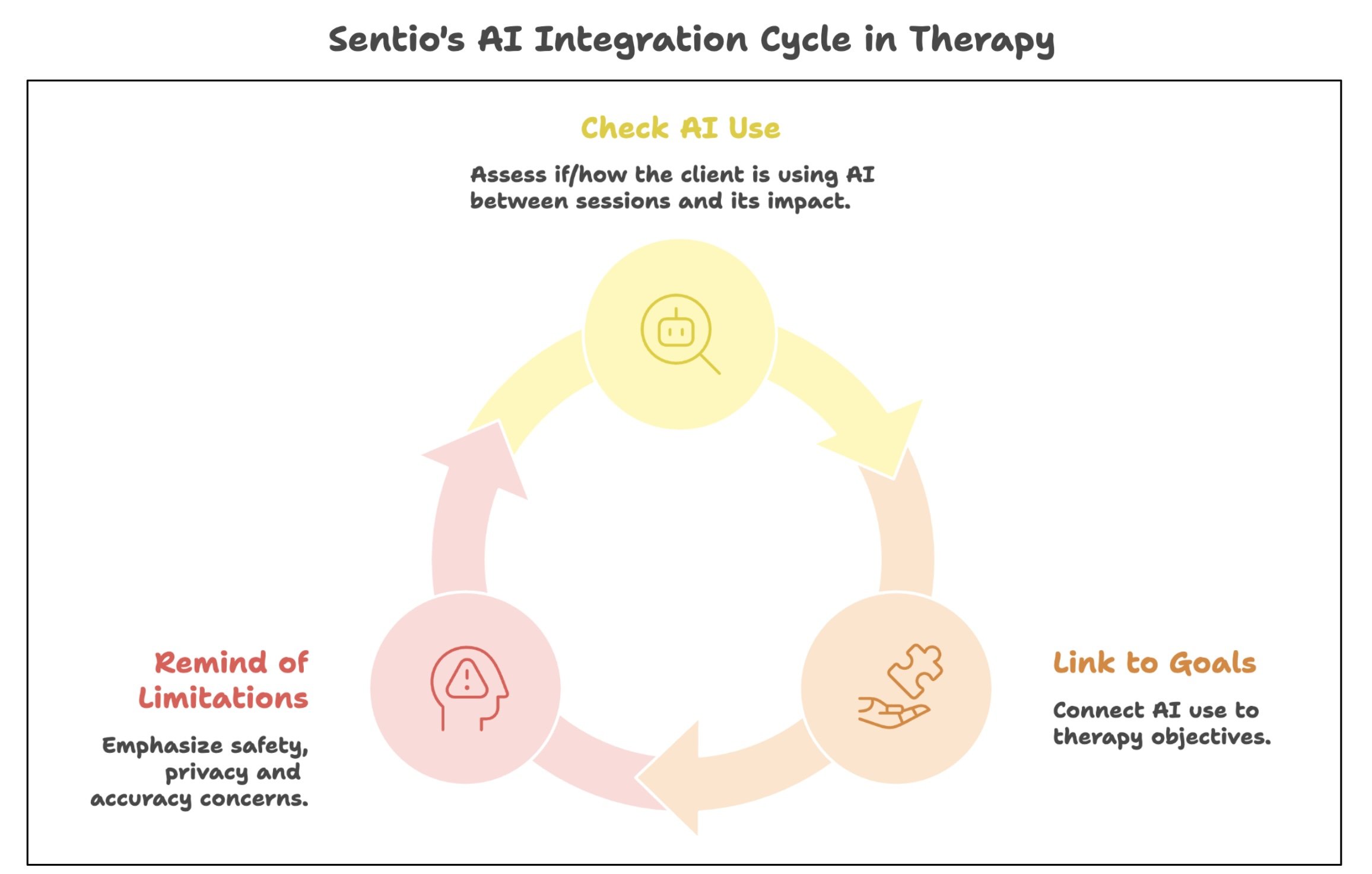
The book sets out a step-by-step method for helping clients use AI between sessions in ways that support therapy rather than replace it. It reviews the research on how and why clients turn to AI chatbots and what they do and do not get from them, translates those findings into ethical principles and practical guardrails, and works through three roles AI can play in homework: reinforcing client motivation, guiding clients through tasks, and logging activity for review in the next session. Case examples and therapist checklists carry the process from the first conversation with a client about AI through to reviewing the results together in session.
Preorder from the American Psychological Association or from Amazon. Paperback, 297 pages, ISBN 978-1-4338-5031-8.
What Clinicians Are Saying
"I had been curious about AI but honestly nervous about using it with anything clinical. This course gave me a concrete framework I could trust. I now use AI as a brainstorming tool for case conceptualization every week, and it has genuinely improved the quality of my clinical thinking. I have recommended it to every therapist in my consultation group."
Licensed Marriage and Family Therapist, California
About the Trainer

Alexandre Vaz, PhD is cofounder and Chief Academic Officer of Sentio University, a nonprofit graduate institution in Los Angeles offering a Master of Arts in Marriage and Family Therapy built around Deliberate Practice methodology. Dr. Vaz provides advanced clinical training and supervision to clinicians around the world. He is the author and co-editor of over 20 books on deliberate practice and psychotherapy training, including the Essentials of Deliberate Practice series (APA Press) and an upcoming APA book on safe AI integration in psychotherapy. He has held multiple committee roles for the Society for the Exploration of Psychotherapy Integration (SEPI) and the Society for Psychotherapy Research (SPR), and is the founder and host of Psychotherapy Expert Talks, an acclaimed interview series with distinguished psychotherapists and therapy researchers.
Get the Course
This course is completely free. Click the button below to access all four video recordings, slide decks, clinical handouts, prompt templates, and Sentio's exclusive AI competency tools.
Frequently Asked Questions
Is this course really free?
Yes. This course was originally developed as a $199 training package, but Sentio University is releasing it at no cost because we believe every therapist and training program should have access to safe, ethical AI frameworks right now.
Who is this course for?
This course is designed for licensed therapists, counselors, marriage and family therapists, clinical supervisors, psychology students, and mental health educators who want to learn how to use AI tools safely and ethically in clinical practice.
What AI tools does this course cover?
The course covers how to use general-purpose large language models (LLMs) like ChatGPT as clinical thinking and supervision support tools. You will learn safety guardrails, ethical frameworks, clinical brainstorming techniques, and how to spot AI hallucinations.
Does this course offer continuing education credits?
This free introductory course does not offer CEUs. For CE-eligible AI training, explore the full AI Certification for Therapists at Sentio University.
Can I share this course with my colleagues or training program?
Absolutely. We encourage you to share this course with colleagues, students, supervisees, and your entire department. The more clinicians who have access to these frameworks, the safer AI integration will be for everyone.