

Clinical Supervisor Training in California
Sentio University offers a free Deliberate Practice Supervision Training Program for licensed clinical supervisors in California and Washington, available in a 6-month or 12-month track. This is the only supervisor training program in the country that fully integrates video-based feedback, structured skill rehearsal, and routine outcome monitoring into every supervision session. Both tracks qualify you to apply for the Deliberate Practice Supervisor certification from the International Deliberate Practice Society.
This training program is not part of the Sentio University MFT degree program and does not carry graduate credit.
Program at a Glance
6 or 12
Months
Includes foundational training and weekly video-based supervision practice.
Up to 50
CEU Credits
For LMFTs, LCSWs, LPCCs, and LEPs in California. 50 in the 12-month track, 25 in the 6-month track.
Free
Work-Trade Model
No tuition, no fees. Comparable programs charge $2,000 or more.
3
Hours per Week
2 hours supervising trainees plus 1 hour of group mentoring.
100%
Online via Zoom
All training, supervision, and mentoring conducted remotely.
Certification
DP Supervisor
Qualifies you to apply to the International Deliberate Practice Society.
Open to licensed LMFTs, LCSWs, LPCCs, LEPs, Psychologists, and Psychiatrists in California and Washington State. Learn more about the Sentio MFT Program.
Two Ways to Train: Choose Your Pathway
Both pathways teach the same Sentio Supervision Model through weekly, small-group, video-based supervision training. You supervise two Sentio Counseling Center trainees under your license and review supervision video with senior Sentio trainers each week. The difference is length and start schedule.
6-Month Track
Starts twice a year, in January and September. About 25 CE credits. Designed for experienced supervisors who want a focused, practice-based immersion in Deliberate Practice supervision. Meets the International Deliberate Practice Society minimum of 20 supervision sessions, so you finish qualified to apply for the DP Supervisor certification.
12-Month Track
Rolling admission, start when space allows. About 50 CE credits. Designed for supervisors who want sustained practice, deeper integration of the model, and more time to make it their own. Includes everything in the 6-month track plus extended mentoring and additional video review.
Both tracks are free through the same work-trade arrangement, and both use the same application.
What You Will Learn
✓ Increase skill rehearsal
Learn to structure supervision so that trainees actively practice clinical skills, not just talk about them.
✓ Use video recordings
Learn to use session vides to provide targeted clinical feedback and guide trainees through repeated practice of challenging skills.
✓ Calibrate training to each trainee's zone of proximal development
Learn to assess and adjust the difficulty of exercises so they are neither too easy nor too challenging.
✓ Create Deliberate Practice exercises for specific therapeutic models
Learn to use Deliberate Practice with multiple modalities, including evidence-based treatments and common factors.
✓ Integrate routine outcome monitoring into supervision
Learn how to use session-by-session outcome measures to inform supervision decisions and track trainee development over time.
| Sentio DP Training | Weekend / Self-Paced Online | CAMFT Certified Supervisor | |
|---|---|---|---|
| Cost | $0 Free | $75 to $600 | $269 to $319 |
| Total CE/CEU Hours | 25 to 50 | 6 to 15 | 18 |
| Format | Live video (Zoom), 6 or 12 months | Text/PDF or recorded audio, completed in days | On-demand video coursework, then 104 hours of supervision over at least 52 weeks with consultation |
| Live Instruction | Yes, weekly | Rarely | No |
| Ongoing Mentorship | Yes, 6 or 12 months | No | Yes, monthly consultation over at least 52 weeks |
| Video-Based Feedback Training | Yes | No | No |
| Routine Outcome Monitoring | Yes | No | No |
| BBS CE/CEU Credits Accepted | Yes | Varies by provider | Yes |
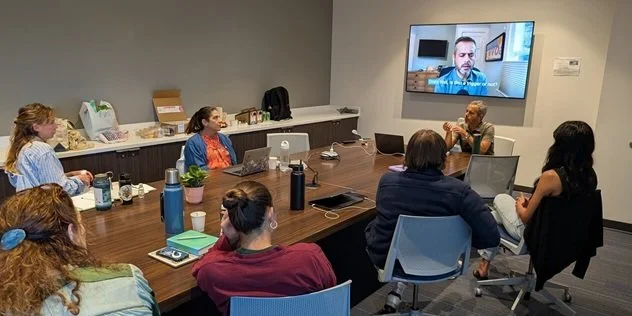
"What I observed in these DP Sup-of-Sup meetings was not like anything I had seen in supervision before. It was challenging, refreshing, and impactful."
Hanna Levenson, PhD
Professor at the Wright Institute | Fellow of APA Division 29 | Author of APA's Essentials in Supervision video and book series
Dr. Levenson, one of the most published scholars in clinical supervision, attended the Sentio Supervision-of-Supervision meetings planning to observe one or two sessions. She stayed for a year and a half. In her account published in Psychotherapy Bulletin (APA Division 29), she describes nine ways that Deliberate Practice supervision goes beyond traditional supervision, including the use of video to focus on specific observable moments, the emphasis on repeated skill rehearsal rather than abstract discussion, and a "playful vibe" that lowers trainee anxiety and shame. Read the full article

Program Structure: Foundational Training Plus Supervised Practice
The Deliberate Practice Supervision Training Program includes foundational training in the core principles of DP supervision, the Sentio Supervision Model, and the mechanics of video-based feedback, followed by weekly supervised practice that runs about six months in the 6-month track and a full year in the 12-month track. Participants provide two hours per week of individual, videotaped supervision to MFT trainees who are providing online therapy through the Sentio Counseling Center. Participants also attend one hour per week of group mentoring, during which they receive feedback on their own supervision videos and engage in group DP skill-building exercises. Each participant supervises two trainees who work under their license and is responsible for the standard work of clinical supervision, including evaluations. The total weekly time commitment is approximately three hours. All training and supervision is conducted online.
Continuing Education (CEU) Credits
Participants in the DP Supervision Training Program may earn up to 50 continuing education credits in the 12-month track and about 25 in the 6-month track.
These credits can be applied to the six hours of supervision-specific CEs required by the California BBS for license renewal as well as to non-specific CE requirements.
Sentio University CEs are accepted by the California Board of Behavioral Sciences for LMFTs, LCSWs, LPCCs, and LEPs.
“I had a transformative experience over the course of my Sentio DP Supervision Residency. I felt challenged, stimulated, and supported. The Sentio Model was very grounding and structured and offers a really new and innovative approach to psychotherapy supervision, which happened to be very in line with how I was trained in graduate school. Incorporating video recording footage of my supervisee’s clients is invaluable and the role-play behavioral rehearsal exercises were so engaging and effective. Mastering these techniques of experiential learning has changed how I supervise and teach trainees and I witnessed the model impact my trainees on a personal level. The residency supervisors are so sharp and helpful. I could not recommend this training more to any clinician who wants to make their supervision more effective and empirically-based!”
Cost: Free Supervisor Training Through Work-Trade
The DP Supervision Training Program is offered at no cost through a work-trade arrangement. Supervisors provide clinical supervision to Sentio Counseling Center trainees in exchange for advanced training, weekly mentoring, CE credits, and DP Supervisor certification. There is no tuition, no application fee, and no hidden cost. Most comparable supervisor training programs charge over $2,000 for far fewer hours of instruction and no ongoing mentorship. Sentio's model is free because supervision is integral to Sentio's program, and training excellent supervisors directly benefits the quality of care that clients receive.
Who Leads the Supervisor Training Program
The DP Supervision Training Program is led by two of Sentio's most experienced Deliberate Practice trainers, both of whom are licensed clinicians in California with deep expertise in clinical supervision, video-based feedback, and therapist skill development.
Jason Brand, LCSW is a Senior Deliberate Practice Trainer and Faculty at Sentio University. He is a Licensed Clinical Social Worker in California and holds certification in Deliberate Practice Supervision through the International Deliberate Practice Society. Jason received his Master of Social Work with an emphasis in Community Mental Health from California State University East Bay. In his private psychotherapy practice, he specializes in working with couples and men, and he is certified in PACT (Psychobiological Approach to Couples Therapy). Jason hosts The Human Nurture Podcast, which explores the learning process of becoming a couples therapist, and facilitates Fathers' Forum, a men's group for fathers of young children. Learn more about Jason at jasonbrand.com.
MacKenzie Stuart, LMFT is a Senior Deliberate Practice Trainer and Faculty at Sentio University. She is a Licensed Marriage and Family Therapist in California who received her Master of Arts in Counseling Psychology from John F. Kennedy University. MacKenzie works with adults, couples, partners, and families, and specializes in nontraditional relationship structures, chronic depression and suicidality, LGBTQIA2-S and GNC/non-binary communities, and psychodynamic case conceptualization. She brings additional expertise in dialectical behavioral therapy (DBT), cognitive-behavioral therapy (CBT), narrative and solution-focused interventions, and biofeedback. MacKenzie is also a member of the core faculty at The Wright Institute in Berkeley and leads a private practice in Alameda.
Tony Rousmaniere, PsyD is the President of Sentio University and Executive Director of the Sentio Counseling Center. He is Past-President of the psychotherapy division of the American Psychological Association and the author of over 20 books on deliberate practice and psychotherapy training, including The Essentials of Deliberate Practice book series (APA Books). He is a licensed psychologist in California and Washington. Learn more



What Supervisors Say About the Program
"It was the most impactful experience of my career and work as a supervisor."
Lynndal Daniels, PhD · DP Supervision Residency Graduate · Read his full testimonial
"I love the model and wish I'd had the benefit of DP supervision when I was learning 35 years ago!"
Sarah Ackerman, PhD · DP Supervision Residency Graduate
"The weekly supervision and ongoing support were unparalleled."
Alycia O'Connell, LCSW · DP Supervision Residency Graduate · Read her full article
Why Sentio: Research-Backed, Peer-Reviewed, and Transparent
Sentio University is a nonprofit graduate institution in Los Angeles offering a Master of Arts in Marriage and Family Therapy built around Deliberate Practice methodology. The university's faculty are active scholars whose research appears in peer-reviewed journals including the Journal of Clinical Psychology. Sentio leadership co-edits the APA-published book series The Essentials of Deliberate Practice, which now includes over 16 volumes covering psychotherapy modalities from CBT to psychodynamic therapy to multicultural orientation.
The Sentio Counseling Center is a 501(c)(3) nonprofit providing sliding-scale therapy starting at $15 per session to individuals and couples across California. It is the only counseling center in California that fully integrates Deliberate Practice methodology and clinical outcome data into every level of its training and supervision. Every client session is informed by validated Routine Outcome Monitoring data. Every supervision session incorporates video review of real clinical work. And every supervisor completes advanced training in a structured DP supervision model.
What makes this program unique is Sentio's commitment to radical transparency and continuous improvement at every level. Just as Sentio's MFT students receive weekly video-based feedback on their clinical work, supervisors in the training program receive weekly feedback on their own supervision sessions. This parallel process, where everyone from trainees to supervisors to faculty engages in ongoing skill development, is central to what sets Sentio apart from traditional therapist training programs.
Sentio University is also the first graduate program in mental health to formally implement safe and ethical AI training for students and is an affiliate of the International Association for Safe and Ethical AI (IASEAI). The Sentio AI Research Team conducts studies on AI safety in mental health contexts in collaboration with the Digital Safety Research Institute (DSRI) at UL Research Institutes.
“My residency with Sentio was unlike anything I’ve experienced in other intensive training programs. The weekly supervision and ongoing support were unparalleled. I always felt fully backed in my learning and encouraged every step of the way. Beyond the support, the residency gave me a practical model that transformed how I approach both supervision and my own clinical practice. I left with more confidence, concrete skills, and a commitment to deliberate practice that continues to shape my growth. The generosity and ongoing resources from Sentio have made this program truly invaluable. I cannot think of a better way to better your practice.”
Safe & Ethical use of AI in Clinical Supervision
Beyond traditional supervision models, Sentio University is at the forefront of preparing supervisors—including LMFTs, LCSWs, LPCCs, Psychologists, and psychiatrists—to navigate the rapidly evolving landscape of artificial intelligence in mental health. We provide specialized training on how to utilize AI as a safe and ethical "clinical thinking partner" to enhance supervision and clinical brainstorming while maintaining the highest standards of safety and ethics. Supervisors learn to implement essential guardrails, such as spotting AI hallucinations and using structured de-identification templates to protect client confidentiality. By integrating these tools, supervisors can support their supervisees in case conceptualization and treatment planning with greater precision and ethical oversight. To help you lead your team into this new era of practice, we invite you to explore our Free AI Course for Therapists and stay updated on the latest developments through our AI Research page.
How to Meet California BBS Supervision Requirements
If you are becoming a clinical supervisor in California for the first time, the BBS requires completion of a supervision training course. The specific hour requirement depends on your license type and when you were licensed, but most new supervisors need at least 15 hours of supervision-focused coursework covering topics such as supervisor responsibilities, California law and ethics in supervision, multicultural competence, the supervisory relationship, and documentation requirements.
The Sentio DP Supervision Training Program provides up to 50 CE hours across six or twelve months, covering all of these foundational topics and going far beyond them. Rather than completing a weekend course and immediately supervising on your own, Sentio supervisors learn through extended practice with real trainees, receive weekly feedback from experienced mentors, and develop genuine competence in a research-backed supervision methodology.
If you have already completed a 15-hour course elsewhere, the Sentio program still offers significant value as advanced professional development. Your Sentio CE credits count toward your BBS renewal requirements and also toward the 6-hour supervision CE renewal requirement described below.
California's 6-Hour Supervision CE Renewal Requirement
All active supervisors in California must complete at least 6 hours of continuing education in supervision during each license renewal cycle. This requirement applies to LMFTs, LCSWs, LPCCs, and LEPs who are currently supervising trainees or associates.
Most supervisors satisfy this requirement by purchasing a self-paced online course for $40 to $80 every two years. The Sentio DP Supervision Training Program provides up to 50 CE hours, far exceeding the 6-hour minimum. These credits are accepted by the California BBS and can be applied to both the supervision-specific requirement and your general CE renewal hours.
Rather than treating the 6-hour requirement as something to get through as quickly as possible, Sentio offers an opportunity to use those hours (and many more) to genuinely strengthen your practice.
Only need the six hours this cycle?
If you just need to satisfy California's six-hour supervision CE requirement, our focused 6-Hour Deliberate Practice Supervision CE meets it directly: $249, recognized by the California BBS, with rolling start dates.
Explore the 6-Hour Supervision CESupervisor Training for California LMFTs
Licensed Marriage and Family Therapists in California are among the most common supervisors of MFT trainees and associates. To supervise, LMFTs must hold an active, unrestricted California license and have been licensed for at least two years. LMFTs must also complete supervision-focused CE/CEU hours as described above.
The Sentio program was designed with MFT supervision at its core. Our training is grounded in the Deliberate Practice methodology originally developed for psychotherapy skill building, and our faculty includes the co-editors of the APA Essentials of Deliberate Practice book series. Sentio's affiliated counseling center primarily trains MFT trainees, so supervisors who join the program will work directly with MFT associates gaining hours toward licensure. Apply for the free Sentio DP Supervision Training Program
Supervisor Training for California LCSWs
Licensed Clinical Social Workers in California may supervise ASW (Associate Social Worker) trainees. LCSWs must hold an active California license, meet the post-licensure experience requirement, and complete supervision-specific CE/CEU hours.
The Sentio program welcomes LCSW supervisors and provides training that applies across therapeutic orientations and clinical populations. Our Deliberate Practice methodology focuses on building concrete clinical skills through observation, feedback, and rehearsal, which is relevant to social work supervision regardless of practice setting. Sentio CE/CEU credits are accepted by the California BBS for LCSW license renewal. Apply for the free Sentio DP Supervision Training Program
Supervisor Training for California LPCCs
Licensed Professional Clinical Counselors may supervise APCC (Associate Professional Clinical Counselor) trainees in California. LPCCs must hold an active California license, meet the post-licensure experience requirement, and complete supervision-specific CE/CEU hours.
The Sentio program provides LPCC supervisors with the same comprehensive training offered to LMFT and LCSW supervisors: a six- or twelve-month, video-based Deliberate Practice methodology with weekly mentoring, routine outcome monitoring instruction, and DP Coach certification. Sentio CE/CEU credits are accepted by the California BBS for LPCC license renewal. Apply for the free Sentio DP Supervision Training Program
“I feel incredibly fortunate to have participated in the Sentio residency program, which provided a transformative year-long immersion in Deliberate Practice supervision that fundamentally revolutionized my approach to clinical supervision. The evidence-based DP model equipped me with systematic, targeted methodologies that have demonstrably enhanced my supervisees’ clinical competencies while simultaneously increasing my own confidence in delivering meaningful, impactful supervision that genuinely accelerates professional development. Beyond the exceptional clinical training, the Sentio supervisory team created a learning environment characterized by unwavering support, genuine kindness, and consistent encouragement that fostered both professional growth and personal resilience. I highly recommend the Sentio Supervisor Residency program to any supervisor wanting to elevate their supervisory skills!”
Published Research on Deliberate Practice Supervision
The Sentio Supervision Model has been described and evaluated in peer-reviewed publications and professional journals. Supervisors considering this program are encouraged to review the following:
The Sentio Supervision Model
Deliberate Practice Supervision in Action: The Sentio Supervision Model
Journal of Clinical Psychology
The foundational paper describing the seven-step Sentio Supervision Model, including how video review, skill rehearsal, and routine outcome monitoring are integrated into every supervision session.
Deliberate Practice Supervision Series from the Sentio MFT Program
Psychotherapy Bulletin, APA Division 29
The introductory article for a multi-part series in which Sentio supervisors and trainees describe their experiences with the model.
Rethinking Psychotherapy Training and Supervision: The Case for Deliberate Practice
A broader argument for why traditional supervision models need to evolve and how Deliberate Practice addresses their limitations.
Supervisor and Trainee Perspectives
What Deliberate Practice Supervision Has to Offer Traditional Supervision: Nine Take-Home Messages
Psychotherapy Bulletin, APA Division 29
Hanna Levenson, PhD, one of the most widely published scholars in clinical supervision, describes nine ways DP supervision goes beyond traditional approaches after observing the Sentio model for over a year.
A Supervisor's Deliberate Practice Journey
Psychotherapy Bulletin, APA Division 29
MacKenzie Stuart, LMFT, describes her personal transformation as a supervisor after joining the Sentio DP Supervision Training Program, from initial discomfort with video review to finding that the model reinvigorated her clinical work.
The Leap Towards Deliberate Practice Supervision
A first-person account of transitioning from traditional supervision to the DP model and the challenges and rewards involved.
Outcomes Research
Peer-reviewed research demonstrating that therapists who regularly review client outcome data achieve better clinical results, supporting the routine outcome monitoring component of the Sentio model.
“The Sentio Supervisor Residency has been a transformational learning experience for me professionally. Counseling skills are separate from supervision skills and this program has taught me ways to interact, coach and supervise counselors develop skills that they can use with their clients. I highly recommend this program to anyone looking to establish or sharpen their supervision skills. I feel confident as a supervisor and sharper as a therapist because of this program!”
Free Training Resources from Sentio University
Even before applying to the training program, licensed supervisors and other mental health professionals can access a growing library of free Deliberate Practice training tools through the Sentio Innovation Lab. Resources include DP exercise instructions and demonstration videos for multiple therapeutic modalities:
- Schema Therapy
- Dialectical Behavior Therapy (DBT)
- Motivational Interviewing
- Interpersonal Psychotherapy
- Rational Emotive Behavior Therapy (REBT)
- Multicultural Orientation
- Therapist Inner Skills
Additional resources include recorded webinars on Deliberate Practice and AI in mental health, and information about the Therapist Throwdown, a live demonstration event designed to normalize showing clinical work and receiving constructive feedback. All Innovation Lab materials are released under an open-source format and are free for use by clinicians, supervisors, and training programs worldwide.
“My time at Sentio learning DP Supervision was engaging and supportive. I met so many wonderful people and really was part of a highly skilled, curious, warm, and humble team. I am grateful for the learning that I received and I would highly recommend this training to anyone wanting to become a better supervisor and clinician.”
Frequently Asked Questions About MFT Supervisor Training
What is Deliberate Practice in clinical supervision?
Deliberate Practice is a research-backed training method, originally studied by K. Anders Ericsson, that builds skill through targeted repetition, expert feedback, and progressive difficulty. In supervision it means moving beyond case discussion to structured skill rehearsal, video review of therapy sessions, and measurable outcome tracking. The Sentio Supervision Model is one of the first published frameworks for applying these principles to clinical supervision.
Is the supervisor training program really free?
Yes. There is no tuition, no application fee, and no cost of any kind, in either the 6-month or the 12-month track. The program runs on a work-trade arrangement: you provide supervised clinical hours to Sentio Counseling Center trainees, and in return you receive advanced training, weekly mentoring, CE credits, and preparation to apply for DP Supervisor certification. Comparable programs typically charge more than $2,000 for fewer hours and no ongoing mentoring.
How many CE credits does the program provide?
The 12-month track provides up to 50 continuing education credits and the 6-month track provides about 25. Each weekly one-hour small-group training session counts as one CE credit hour. These credits are accepted by the California BBS for LMFTs, LCSWs, LPCCs, and LEPs, and can be applied to the six-hour supervision CE requirement as well as general renewal hours.
What is the difference between the 6-month and 12-month tracks?
Both tracks teach the same Sentio Supervision Model through weekly, small-group, video-based supervision training, and in both you supervise two Sentio Counseling Center trainees under your license. The 6-month track is a focused immersion of about 25 CE credits and meets the International Deliberate Practice Society minimum of 20 supervision sessions, so you finish qualified to apply for the DP Supervisor certification. The 12-month track covers the same material with more sustained practice, deeper integration, and about 50 CE credits.
When do the supervisor training programs start?
The 12-month track uses rolling admission, so you can begin when a space opens. The 6-month track runs as scheduled groups that begin twice a year, in January and September. If you want to start right away, the 12-month track is usually the faster entry point. If you prefer a set start alongside a group beginning at the same time, choose a January or September 6-month start.
What are the BBS requirements to become a clinical supervisor in California?
The California Board of Behavioral Sciences requires that supervisors hold an active California license, have practiced at least two years post-licensure (requirements vary by license type), and complete specific supervision training. The Sentio program satisfies and exceeds the BBS continuing education requirements for supervisors.
How many hours of supervision training do I need in California?
The BBS requires six hours of supervision-specific continuing education per renewal cycle. Both Sentio tracks far exceed this minimum, providing about 25 hours in the 6-month track and up to 50 in the 12-month track. First-time supervisors may have additional post-licensure experience and training requirements depending on license type.
What is the difference between AAMFT Approved Supervisor and CAMFT Certified Supervisor?
The AAMFT Approved Supervisor designation is a national credential from the American Association for Marriage and Family Therapy. The CAMFT Certified Supervisor is a California-specific designation from the California Association of Marriage and Family Therapists. Both are voluntary, and neither is required by the BBS to supervise in California. The Sentio program is distinct and qualifies you to apply for the Deliberate Practice Supervisor certification from the International Deliberate Practice Society, along with CE credits that count toward BBS renewal.
Can I complete the program entirely online?
Yes. All training, supervision, and mentoring sessions take place online via Zoom. There is no in-person requirement. You will need a reliable internet connection, a private space for supervision, and comfort with Zoom screen sharing and recording.
What is the weekly time commitment?
During the foundational phase (about 3 weeks) the commitment is roughly one hour per week. During the supervised-practice phase the commitment is about three hours per week: two hours of individual supervision with two trainees and one hour of small-group video-based training. The 6-month track runs about six months and the 12-month track about a year.
What credential do I earn upon completion?
Completing the program qualifies you to apply for the Deliberate Practice Supervisor certification from the International Deliberate Practice Society. Certification itself is granted by the Society after a competency review of your supervision videos.
Who are the supervisor trainers and mentors?
The program is co-led by Jason Brand, LCSW and MacKenzie Stuart, LMFT, both senior Deliberate Practice trainers and faculty at Sentio University. Sentio's leadership includes the co-editors of the APA Essentials of Deliberate Practice book series and researchers whose work has appeared in the Journal of Clinical Psychology and APA Division 29's Psychotherapy Bulletin.
Is this program available to supervisors outside California?
The program is open to licensed supervisors in California and Washington State. Washington supervisors must hold an active Washington license. Because CE recognition varies by state, supervisors elsewhere should confirm with their licensing board before applying.
How does this compare to a 15-hour BBS supervision training course?
Most commercial 15-hour courses focus on regulatory compliance and provide the minimum hours for $200 to $600. The Sentio program provides hands-on training that goes well beyond compliance: a complete, research-backed supervision methodology practiced under expert mentoring, preparation to apply for DP Supervisor certification, and more CE credits than a typical course. And it is free.
How do I apply?
Licensed supervisors in California or Washington State can apply through the online application form. You are welcome to share the opportunity with eligible colleagues.
How does video-based supervision training work?
Trainees record their therapy sessions (with client consent) via Zoom. In supervision, the supervisor and trainee watch selected clips together, identify specific moments to improve, and rehearse those moments live. During the weekly small-group training, participants review clips of their own supervision sessions and receive feedback from senior Sentio trainers.
What is routine outcome monitoring and why does it matter for supervision?
Routine Outcome Monitoring uses validated questionnaires given to clients each session to track symptom change. Supervisors use this data to see which clients are improving, stuck, or deteriorating, so supervision can be targeted rather than relying only on verbal report. Research shows therapists who review outcome data achieve better results. The program teaches supervisors to integrate this into their supervision workflow.
Can I use these CE credits for my BBS license renewal?
Yes. Sentio University CE credits are accepted by the California BBS and can be applied to the six-hour supervision requirement and to general renewal hours. They are valid for LMFTs, LCSWs, LPCCs, and LEPs. They are not accepted for psychologists or psychiatrists, and agencies outside California may not recognize them.
About the Authors
Tony Rousmaniere, PsyD is the President of Sentio University and Executive Director of the Sentio Counseling Center. He is Past-President of the psychotherapy division of the American Psychological Association and the author of over 20 books on deliberate practice and psychotherapy training, including The Essentials of Deliberate Practice book series (APA Books). He is a licensed psychologist in California and Washington. Learn more
Alexandre Vaz, PhD is the Chief Academic Officer of Sentio University and cofounder of the Deliberate Practice Institute. He is co-editor of The Essentials of Deliberate Practice book series (APA Books) and the author of over a dozen books on deliberate practice and psychotherapy training. Dr. Vaz is the founder and host of Psychotherapy Expert Talks. He is a licensed clinical psychologist in Portugal. Learn more