
LMFT vs. LCSW in California: Comparing Two Mental Health Career Paths
LMFT vs. LCSW in California: Comparing Two Mental Health Career Paths
If you are considering a career as a licensed therapist in California, two credentials will appear in nearly every job posting, program directory, and licensing board document: the Licensed Marriage and Family Therapist (LMFT) and the Licensed Clinical Social Worker (LCSW). Both licenses authorize independent clinical practice. Both require a graduate degree and thousands of supervised hours. Yet they emerge from different professional traditions, require different graduate programs, and often lead practitioners toward different work settings and clinical identities. This post compares the LMFT and LCSW licenses across six dimensions that matter most to prospective students: core purpose, training requirements, scope of practice, salary, practice setting, and clinical fit. The goal is not to recommend one path over the other, but to help you ask sharper questions as you evaluate programs. As of September 2024, California had 55,380 LMFTs and 40,297 LCSWs, making both among the most prevalent behavioral health licenses in the state (California Board of Behavioral Sciences, 2024). For a structured way to compare MFT programs specifically, see a fuller comparison including LPCC and LP.
Last updated: September 2026
What Is the Core Difference Between the LMFT and LCSW Licenses in California?
The LMFT license is rooted in systems theory and relational practice. California's MFT statute (Business and Professions Code Section 4980) defines the scope of practice as the diagnosis and treatment of mental, emotional, and relational disorders, with an explicit emphasis on marriage, family, and relationship contexts. This systemic orientation means MFT training programs concentrate heavily on how individuals are shaped by their relational environments and how change occurs within those systems.
The LCSW license is rooted in the social work profession's person-in-environment framework. California's LCSW statute (Business and Professions Code Section 4996) authorizes clinical assessment, diagnosis, and psychotherapy, but it also connects to a broader tradition of advocacy, case management, and community-based service. Social work education typically integrates macro-level content alongside clinical training, preparing graduates for roles that may span direct service, program administration, and policy.
In practical terms, a licensed LMFT and a licensed LCSW in California can both provide individual psychotherapy, couples counseling, family therapy, and group treatment. The differences show up most clearly in graduate training, clinical emphasis, and the professional communities each license plugs you into.
How Do the Training Programs and Degree Requirements Compare?
To become an LMFT in California, candidates must complete a qualifying master's or doctoral degree in marriage and family therapy, psychology, or a related field from a program that meets requirements set by the California Board of Behavioral Sciences (BBS). The degree must include specific coursework in MFT theory, human development, psychopathology, research methods, and diversity. After graduation, candidates complete the 3,000 supervised hours the license requires (up to 1,300 of them can be earned before the degree) under an approved supervisor before sitting for the California Clinical Exam. The California Law and Ethics Exam comes earlier, during the associate years: registrants take it before each annual renewal of their registration until they pass. For a complete breakdown of each step in this process, see our guide to California MFT licensure requirements.
To become an LCSW, candidates must complete a master's degree in social work (MSW) from a CSWE-accredited program. California's degree requirement is the MSW itself, with additional required instruction in areas such as substance dependency, spousal or partner abuse, human sexuality, child abuse assessment and reporting, and aging and long-term care, along with 3,000 supervised post-degree hours, though the category requirements for those hours differ from the LMFT track. Associates take the California Law and Ethics Exam during their supervised years and the ASWB Clinical Exam once the hours are complete.
Both paths require roughly the same total investment in graduate education and supervised experience. The meaningful distinction is in what that education emphasizes. MFT programs are structured around relational and systemic models. MSW programs blend clinical content with policy, community organizing, and macro practice. Students who know they want to focus exclusively on clinical therapy often find MFT programs more tightly aligned with that goal from day one. Students who want flexibility to move between direct service, agency leadership, and policy work often find the MSW more versatile.
Research on psychotherapy training suggests that the structure of clinical education matters as much as its content. As Tony Rousmaniere, PsyD, and colleagues have written, "The field of psychotherapy has been strong on the teaching of theory but weak on the teaching of craft. As a result, students often know theory but not how to put it in practice" (Rousmaniere, 2019, p. 49). When evaluating any graduate program, prospective students should ask not just what is taught but how clinical skills are practiced and evaluated across the curriculum. For a closer look at how one MFT program structures this skill development, visit the Sentio MFT program overview.
What Are the Scope of Practice Differences That Matter for Day-to-Day Work?
Both LMFTs and LCSWs in California are authorized to diagnose mental disorders using the DSM-5-TR and to provide psychotherapy across a wide range of presenting concerns. In most outpatient, community mental health, and private practice settings, the day-to-day clinical work performed by each license holder is substantially similar.
Differences emerge in contexts that extend beyond the therapy room. LCSWs are often preferred in hospital settings, child protective services, substance use programs, and government agencies partly because of MSW training in case management, documentation systems, and interdisciplinary teamwork. LMFTs are more commonly found in community mental health agencies that emphasize family systems work, school-based services, and private practice specializing in couples and family therapy. Students interested in the highest-paying MFT setting specifically can read our post on school-based MFT careers and salary in California.
Research on what actually drives therapy outcomes is relevant here regardless of which license you hold. Studies suggest that therapists' relational skills have more than ten times the impact on therapy outcomes than their choice of treatment model (Rousmaniere, 2019, p. 3). This finding holds implications for how seriously any prospective student should weigh the clinical training quality of a program, not just its license track.
Creating conditions for ongoing skill development after graduation is also a well-documented predictor of therapist effectiveness. Goldberg et al. (2016) found that creating a deliberate practice climate in training and supervision settings is associated with improved therapist outcomes over time. Neither license guarantees that graduates will practice in a climate that supports continued skill development; that depends on the training culture of individual programs and workplaces.
How Do LMFT and LCSW Salaries Compare Across California?
Salary comparisons between LMFTs and LCSWs in California are complicated by the fact that earnings vary significantly by work setting, geographic region, years of experience, and whether a practitioner is employed or in private practice. For a detailed breakdown of MFT compensation data by region and setting, see our California MFT salary guide.
For MFTs specifically, the Bureau of Labor Statistics (2024) reports that the statewide mean annual wage for marriage and family therapists in California is $69,780, and California employs more MFTs than any other state, with 30,890 employed in the profession. Within California, earnings differ by metropolitan area. San Francisco and the Bay Area consistently show higher wages than the statewide mean, while inland regions and smaller markets tend to fall below it.
MFT employment is projected to grow 14% nationally between 2025 and 2035, a rate far above the average for all occupations (Bureau of Labor Statistics, 2026). This growth reflects increasing recognition of mental health as a public health priority, expanded insurance reimbursement for outpatient therapy, and ongoing demand for family-focused services.
LCSW salary data from BLS is reported under a different occupational category (social workers, healthcare) and is not directly comparable on a per-license basis. In general, LCSWs employed in hospital systems, managed care organizations, and government agencies may have access to structured pay scales and benefits that differ from the more variable earnings of private practice. LMFTs in private practice in high-cost urban markets like San Francisco and Los Angeles can earn substantially more than the statewide mean, particularly once they have established a full caseload.
Prospective students should treat salary data as a general orientation, not a prediction. The most important salary variable over a career is likely to be clinical effectiveness, which shapes reputation, referrals, and long-term earning capacity in any setting.
Which License Is More Common in Private Practice vs. Agency Settings in California?
Both licenses support private practice in California, and both are recognized by major insurance panels. In practice, LMFTs make up a large share of independent practitioners in California, particularly those specializing in couples therapy, family systems work, and relational issues. This reflects both the systemic orientation of MFT training and the strong professional culture of the California Association of Marriage and Family Therapists (CAMFT), which has historically advocated for private practice rights.
LCSWs are well represented in private practice as well, particularly in urban markets like San Francisco, Los Angeles, and San Diego where the broader social work professional network is dense. LCSWs also hold a significant share of clinical positions in community mental health centers, hospitals, child welfare agencies, and VA settings, where the person-in-environment training of the MSW is particularly valued.
Students who are drawn specifically to private practice should research insurance credentialing processes for both licenses, which can take six months to a year after licensure. Neither license has a significant structural advantage for private practice in California; the more relevant variables are clinical niche, geographic market, and business development skills that no graduate program teaches in depth.
How Do You Choose Between an MFT and MSW Program Based on Your Clinical Goals?
The most useful framing for this decision is not "which license is better" but "which training tradition fits the kind of clinician I want to become."
If your primary interest is individual, couples, and family therapy, and you want your graduate training to be built entirely around clinical skill development, relational theory, and systemic practice, MFT programs are designed with that focus from the start. If you are drawn to work that combines direct clinical service with advocacy, program development, or policy, or if you anticipate working in settings where a social work identity carries professional currency (hospitals, child welfare, international development), an MSW program may be a better fit. For help organizing your evaluation across multiple MFT programs, see our directory of MFT programs in California.
Research on what makes clinical training effective is relevant regardless of the license track. Alexandre Vaz, PhD, Chief Academic Officer of Sentio University, and Tony Rousmaniere, PsyD, have written that "deliberate practice (DP) is arguably the most evidence-based set of learning principles to predict the development of professional expertise across different fields" (Vaz and Rousmaniere, 2022, p. 2). Prospective students evaluating any program should ask how that program structures clinical skill rehearsal, not just clinical observation and theoretical discussion.
Vaz and Rousmaniere (2022) further clarify that "mastering therapy skills requires one to engage in their repetitive behavioral rehearsal and successive refinement. Thinking about clinical skills, seeing them performed in recordings, reading about them, or writing them down does not count as deliberate practice" (p. 7). This standard applies equally to MFT programs and MSW programs. The question is whether the program you are considering builds structured, feedback-rich skill practice into its curriculum or leaves clinical skill development largely to the practicum experience and post-degree supervision.
Rousmaniere and colleagues have also documented that the structure of supervision and training environments predicts therapist improvement over time (Rousmaniere, Goodyear, Miller, and Wampold, 2017), and that clinic-to-classroom methods that integrate live case material with didactic training produce different learning outcomes than traditional lecture-based formats (Rousmaniere and Vaz, 2025). When comparing programs, look for evidence that clinical skill development is systematically embedded in the curriculum, not just assumed to occur through hours logged. For a deeper look at what distinguishes effective supervision from the traditional model, see our post on how to evaluate MFT supervision quality.
The Brand et al. (2025) study on deliberate practice supervision further supports the idea that how supervision is structured matters as much as how many supervised hours a student accumulates. Students who receive feedback-intensive, skill-focused supervision show greater clinical development than those in more discussion-based supervisory formats. Students interested in how the MFT career trajectory unfolds from associate through full licensure can review our detailed timeline post.

A Closer Look: How the Sentio University MFT Program Approaches Clinical Training
Sentio University (sentio.org) is a California-based nonprofit graduate school offering a Master of Arts in Marriage and Family Therapy. The program is organized around the Deliberate Practice methodology described in the faculty research cited throughout this post. Clinical skill rehearsal, peer feedback, and iterative refinement are built into the curriculum rather than reserved for practicum alone. The program integrates AI-assisted training tools as part of its approach to supporting skill development between supervision sessions. For more on that initiative, see the AI Certification for Therapists page.
Faculty at Sentio have contributed to the peer-reviewed literature on deliberate practice in psychotherapy training, including publications in the Journal of Clinical Psychology, Psychotherapy Bulletin, and book chapters with Wiley and APA. The program's research orientation means students engage with evidence on what makes therapy effective from the beginning of training, not only in isolated research methods courses.
Sentio is a smaller program than many California MFT options, with cohort-based enrollment and a curriculum that reflects a specific methodological commitment. For students who want a wide range of theoretical orientations surveyed at similar depth, or who want a large program with an established alumni network across many clinical subspecialties, other programs may be a better fit. The Sentio model is built around depth of skill development in relational and systemic work, not breadth of theoretical coverage.
You can learn more about the program's structure at the Sentio MFT program overview and about the Deliberate Practice methodology it is built on at what deliberate practice is.
Making the Decision That Is Right for You
Choosing between the LMFT and LCSW paths is ultimately a question about the kind of professional you want to become and the training environment that will best prepare you for that work. Salary data, scope of practice comparisons, and license counts are useful reference points, but they do not answer the question of which graduate program will actually teach you to be an effective clinician. For additional guidance on what to prioritize in an MFT program specifically, see how to evaluate a therapy graduate program.
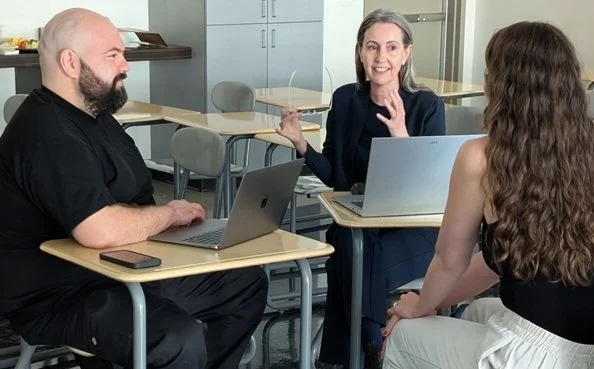
One of the most useful and underused tools available to prospective students is the live class visit. Every program you are seriously considering should be willing to let you sit in on a class, a supervision session, or a clinical skills lab, either in person or online. Watching how faculty teach, how students are treated, how clinical disagreements are handled, and how feedback is delivered will tell you more about a program's culture than any brochure or admission interview. The best programs should not merely allow this; they should actively encourage it. If a program is reluctant to let prospective students observe real training in action, that reluctance itself is informative. Ask every school you are considering: "Can I visit a live class before I apply or before I commit?"
Keep reading
Which therapy credential is right for you in California, LMFT, LCSW, LPCC and LP compared.
What a therapy career pays in California, what each path pays statewide.
MFT programs in California, every BBS-approved program in the state.
Changing careers to become a therapist, if you are arriving from another field.
Frequently Asked Questions
Can an LMFT in California do the same work as an LCSW?
In most outpatient psychotherapy contexts, yes. Both licenses authorize independent clinical practice, diagnosis using the DSM-5-TR, and provision of individual, couples, family, and group therapy. Differences appear in specific institutional settings. Some hospitals and government agencies require or strongly prefer the LCSW because of its social work training in case management, interdisciplinary documentation, and systems navigation. LMFTs may encounter fewer of these institutional barriers in private practice, community mental health, and school-based settings.
Which license is better for working with children in California?
Neither license is categorically better for child and adolescent work. Both LMFTs and LCSWs work extensively with children, adolescents, and families in California. LMFTs often specialize in child and family systems work because of the relational and developmental emphasis in MFT training. LCSWs frequently work in child welfare, foster care, and school settings where the social work framework is well established. The more relevant factor is the quality of clinical training in child and adolescent modalities, which varies by individual program regardless of license track.
Is an MSW or MFT degree more portable nationally?
Both degrees face licensure portability challenges because U.S. mental health licensing is state-regulated and varies significantly. MSW graduates seeking LCSW licensure in other states must meet that state's specific hour and coursework requirements, which differ from California's. MFT graduates face similar variation. All states license marriage and family therapists, but the education, hour and examination requirements vary, so California MFT graduates who relocate must meet the destination state's rules. Students who anticipate relocating should research the licensure requirements in their target states before selecting a degree program. A dedicated resource on this topic is available at California licensure requirements.
Do MFT programs and MSW programs share any required coursework in California?
There is significant content overlap in core clinical areas including psychopathology, human development, multicultural counseling, research methods, and professional ethics. Both types of programs must meet BBS or CSWE standards that require coverage of these topics. The differences are in emphasis and orientation: MFT programs build their curriculum around relational and systemic theory throughout, while MSW clinical programs integrate clinical content within a broader social work framework that includes policy, community practice, and macro-level content. Students who complete an MFT degree and later pursue LCSW licensure, or vice versa, may need to complete additional coursework to satisfy the other board's requirements.
Which license do most therapists in private practice in San Francisco hold?
Both licenses are well represented in San Francisco private practice. The Bay Area has a large and established community of both LMFTs and LCSWs in independent practice. LMFTs are particularly visible in practices that specialize in couples therapy, sex therapy, and family systems work. LCSWs are prominent across a wide range of presenting concerns and also hold a significant share of positions in the region's large hospital systems and nonprofit behavioral health sector. There is no reliable public data source that breaks down San Francisco private practice by license type at a granular level.
Can I get both an LMFT and LCSW license in California?
Yes, though it requires completing the degree and supervised hour requirements for each license separately. Some clinicians pursue dual licensure over the course of their careers, particularly if they move between practice settings that value different credentials. It is not common to pursue both simultaneously as a graduate student, as each requires its own degree program. If dual licensure is a long-term goal, it is worth consulting directly with the California BBS about how hours and coursework from one track may or may not count toward the other.
Where can I find Sentio University's frequently asked questions about the MFT program?
Sentio University maintains a general FAQ page at our FAQ covering admissions, program structure, and licensing requirements in California.
References
Brand, J., Miller-Bottome, M., Vaz, A., and Rousmaniere, T. (2025). Deliberate practice supervision in action: The Sentio Supervision Model. Journal of Clinical Psychology, 1-11. https://doi.org/10.1002/jclp.23790
Bureau of Labor Statistics. (2024, April 3). Occupational employment and wages, May 2023: Marriage and family therapists. https://www.bls.gov/oes/2023/may/oes211013.htm
Bureau of Labor Statistics. (2026, August 27). Occupational outlook handbook: Marriage and family therapists. https://www.bls.gov/ooh/community-and-social-service/marriage-and-family-therapists.htm
California Board of Behavioral Sciences. (2024, November 14). Board meeting materials: Attachment B1: Licensing population. https://www.bbs.ca.gov/pdf/board_minutes/2024/20241114-15_item9.pdf
Goldberg, S. B., Rousmaniere, T., Miller, S. D., Whipple, J., Nielsen, S. L., Hoyt, W. T., and Wampold, B. E. (2016). Creating a climate for therapist improvement: A case study of an agency focused on outcomes and deliberate practice. Psychotherapy, 53(3), 367-375. https://doi.org/10.1037/pst0000060
Rousmaniere, T. (2019). Mastering the inner skills of psychotherapy: A deliberate practice manual. Gold Lantern Press. ISBN: 978-1-7325657-0-8. https://www.amazon.com/Mastering-Inner-Skills-Psychotherapy-Deliberate/dp/1732565708
Rousmaniere, T., Goodyear, R. K., Miller, S. D., and Wampold, B. E. (2017). Improving psychotherapy outcomes: Guidelines for making psychotherapist expertise development routine and expected. In T. Rousmaniere, R. K. Goodyear, S. D. Miller, and B. E. Wampold (Eds.), The cycle of excellence: Using deliberate practice to improve supervision and training (pp. 267-275). John Wiley & Sons. ISBN: 978-1-119-16556-9. https://doi.org/10.1002/9781119165590.ch13
Rousmaniere, T., and Vaz, A. (2025). Sentio's clinic-to-classroom method: Bridging deliberate practice and clinical training. Psychotherapy Bulletin, 60(2), 79-84. https://societyforpsychotherapy.org/sentios-clinic-to-classroom-methodbridging-deliberate-practice-and-clinical-training/
Vaz, A., and Rousmaniere, T. (2022). Clarifying deliberate practice for mental health training. Sentio University. https://drive.google.com/file/d/1MFdWU-fRl-2EKN2rdvFsExPcJ8-O0C_A/view
California Board of Behavioral Sciences: https://www.bbs.ca.gov
Bureau of Labor Statistics, Occupational Outlook Handbook, Marriage and Family Therapists: https://www.bls.gov/ooh/community-and-social-service/marriage-and-family-therapists.htm
About the Authors
Tony Rousmaniere, PsyD is the President of Sentio University and Executive Director of the Sentio Counseling Center. He is Past-President of the psychotherapy division of the American Psychological Association and the author of over 20 books on deliberate practice and psychotherapy training, including The Essentials of Deliberate Practice book series (APA Books). He is a licensed psychologist in California and Washington. Learn more
Alexandre Vaz, PhD is the Chief Academic Officer of Sentio University and cofounder of the Deliberate Practice Institute. He is co-editor of The Essentials of Deliberate Practice book series (APA Books) and the author of over a dozen books on deliberate practice and psychotherapy training. Dr. Vaz is the founder and host of Psychotherapy Expert Talks. He is a licensed clinical psychologist in Portugal. Learn more