

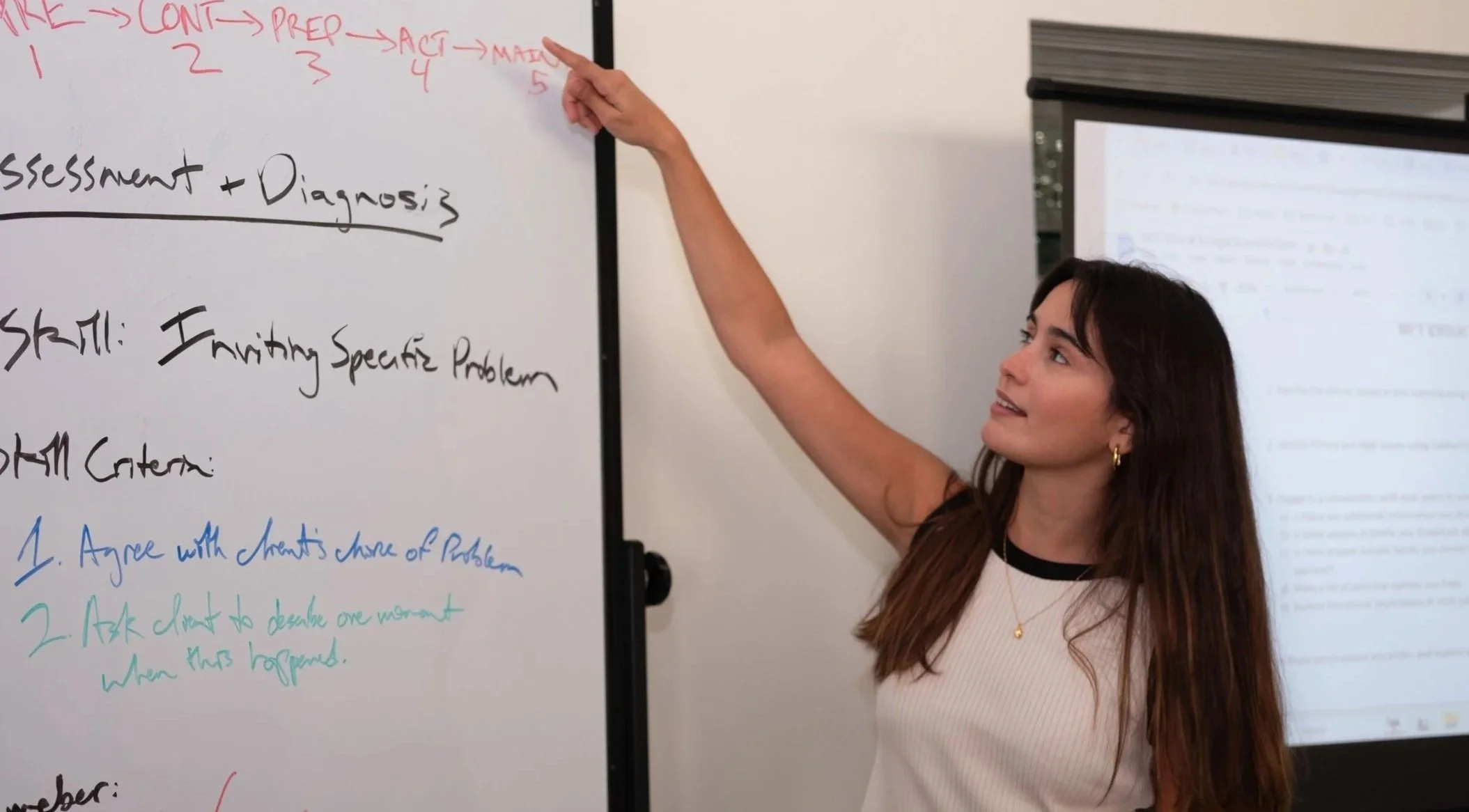
Sentio University Master of Arts in Marriage and Family Therapy
The Sentio University 20-month online/hybrid Master of Arts in Marriage and Family Therapy Program (MFT) is based in Los Angeles. It provides rigorous and intensive hybrid on-line and in-person training. The program is comprised of five major components:
Five semesters of online coursework in small classes with a maximum of sixteen students per class.
Five Intensive In-Person Residencies (one Residency at the beginning of each semester).
Over 400 hours of supervised clinical experience at our guaranteed practicum site, Sentio Counseling Center, where students provide online counseling for diverse, low-income clients.
A Clinical Research Project based on student’s personal clinical outcome data from their work with clients.
Therapist career development that prepares students to succeed post-licensure.
“I will recommend Sentio 100x to my peers. The training and skills that I have gained thus far is owed to my experience with Sentio. The supervision and skills lab enable me to conceptualize and think of things to incorporate in my sessions.”
– Jomil Conste, counselor at Sentio Counseling Center
Sentio University MFT Program: Master Clinical Excellence
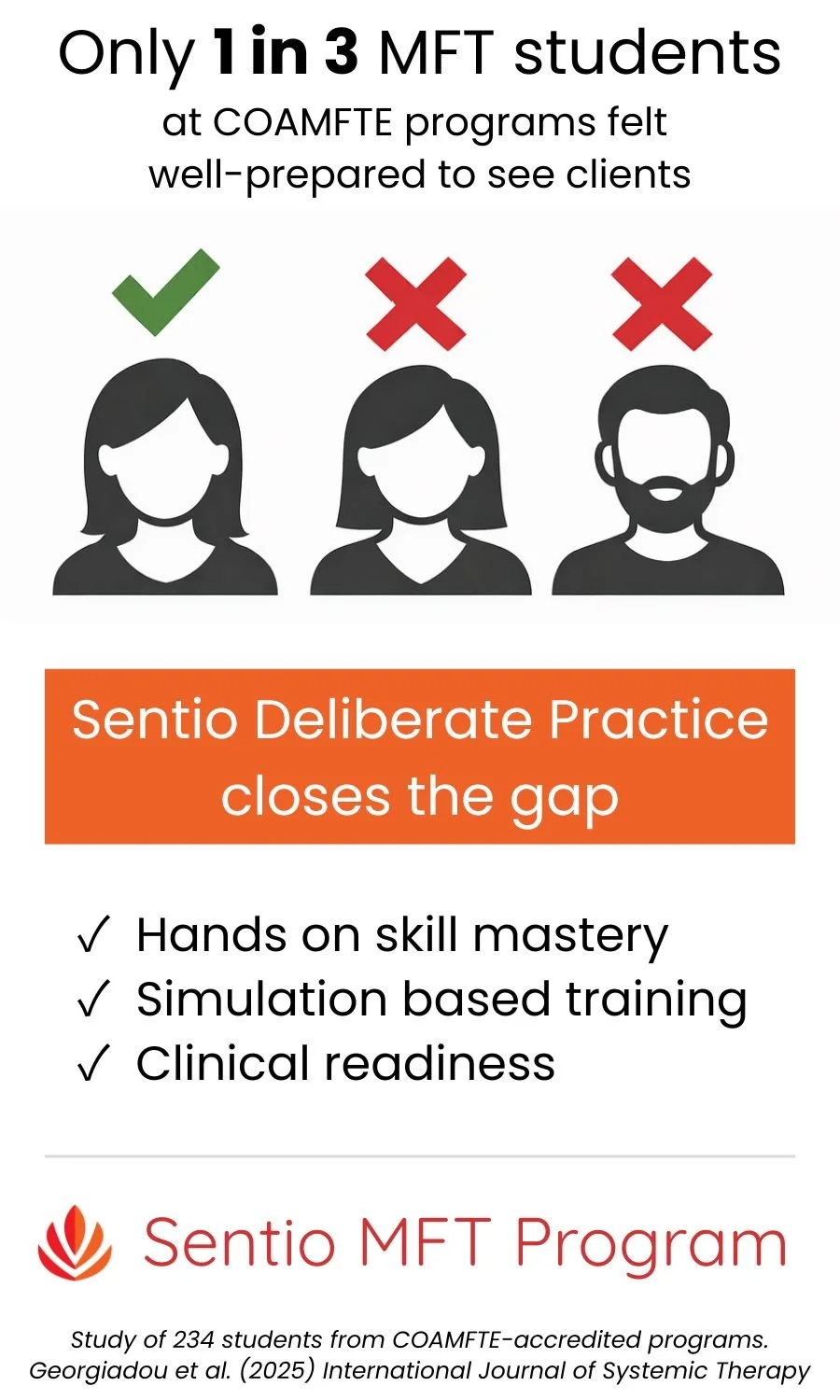
Discover a revolutionary approach to therapist training with Sentio University’s Master of Arts in Marriage and Family Therapy (MFT). In this video, Sentio President Dr. Tony Rousmaniere explains how our program moves beyond traditional theory to prioritize Deliberate Practice—a data-driven method for mastering clinical skills.
Designed for prospective students seeking MFT programs in California, our 20-month hybrid curriculum combines online flexibility with intensive in-person residencies in Los Angeles. Unlike traditional graduate schools, Sentio offers a unique 4:1 student-to-faculty ratio and a guaranteed practicum at the Sentio Counseling Center, ensuring you gain the 500+ clinical hours required for LMFT licensure.
Learn how our focus on "micro-skills," real-time feedback, and performance-based training prepares you to be a more effective, confident therapist from day one. Whether you are a career-changer or a psychology graduate, Sentio University provides the modern tools necessary to bridge the gap between academic knowledge and clinical mastery.
Therapy Models Taught at Sentio MFT Program
Cognitive Behavioral Therapy (CBT)
Emotion Focused Therapy (EFT)
Internal Family Systems (IFS)
Emotionally Focused Therapy for Couples (EFCT)
Schema Therapy
Psychodynamic Psychotherapy
Motivational Interviewing (MI)
Eye Movement Desensitization Reprocessing (EMDR)
Common Factors Therapy
Sentio University offers an integrated and sequential learning experience that provides clinical skill development, personal growth, and professional development necessary for a successful career as a psychotherapist. Through academic coursework, students learn a broad range of evidence-based theories and models, analyze peer-review literature, and conduct empirical research on clinical data. Through Deliberate Practice skill rehearsal , students acquire clinical skills and develop their personal characteristics and professional identity. Through supervised clinical practice, students implement MFT principles along ethical and professional standards with diverse populations of clients. This degree program prepares students for employment in a wide range of settings, including private practice, community mental health, medical settings, and non-profit agencies.
The program uses a cohort model, with a new cohort starting each Fall. Cohorts and classes are limited to sixteen students to maximize personal mentorship and feedback for each student. In their first semester, Sentio students prepare to see their first clients by engaging in hundreds of hours of Deliberate Practice skill rehearsal. The second through fifth semester, students gain supervised clinical experience at our guaranteed practicum site, the Sentio Counseling Center, a 100% online clinical training site. The Sentio University training model emphasizes clinical skill development through close mentorship and video-based feedback from supervisors with advanced training in Deliberate Practice. All students are required to complete a minimum of 400 direct clinical contact hours, 100 of which must qualify as relational hours. All of these hours can be counted toward licensure in the state of California.
Sentio MFT Program Curriculum
| Semester | Course | Credits | Length |
|---|---|---|---|
| Fall | MFT541: Assessment and Diagnosis | 3 | 12 weeks |
| MFT542: Ethical and Legal Issues | 3 | 12 weeks | |
| MFT543: Substance Use and Addiction | 3 | 12 weeks | |
| MFT551: Theories & Models I | 3 | 12 weeks | |
| Spring | MFT544: Case Conceptualization and Treatment Planning | 3 | 12 weeks |
| MFT545: Trauma & Crisis Intervention | 3 | 12 weeks | |
| MFT552: Theories & Models II | 3 | 12 weeks | |
| MFT591: Practicum I | 3 | 17 weeks | |
| Summer | MFT553: Theories & Models III | 3 | 12 weeks |
| MFT554: Theories & Models IV | 3 | 12 weeks | |
| MFT546: Human & Family Development | 3 | 12 weeks | |
| MFT592: Practicum II | 3 | 19 weeks | |
| Fall | MFT555: Theories & Models V | 3 | 12 weeks |
| MFT556: Theories & Models VI | 3 | 12 weeks | |
| MFT561: Person of the Therapist | 3 | 12 weeks | |
| MFT593: Practicum III | 3 | 17 weeks | |
| Spring | MFT652: Psychopharmacology | 3 | 12 weeks |
| MFT563: Supervision & Consultation | 3 | 12 weeks | |
| MFT564: Therapist Career Development | 3 | 12 weeks | |
| MFT594: Practicum IV | 3 | 17 weeks | |
| Total Credits | 60 | 0 |

Sentio University's program, based in Los Angeles, uniquely combines hybrid online and in-person residencies. Our career-focused curriculum is designed to equip students for success post-graduation and licensure. With 12-week semesters, students engage in weekly Zoom classes, participating in lectures, group discussions, video demonstrations, and Deliberate Practice skill rehearsals. Our 17-week practicum courses (19 weeks for summer terms) offer hands-on clinical experience. Students utilize client session videos and outcome data for feedback, enhancing their clinical training. To meet California law requirements, practicum classes run concurrently with client sessions, ensuring a continuous and uninterrupted experience throughout semesters two to five. At Sentio University, we prioritize a structured course sequence, and while we don't offer electives, our comprehensive program ensures a focused and dynamic learning journey.
Program Learning Outcomes
Upon completion of the Master of Arts in Marriage and Family Therapist, students will be able to:
Examine clinical cases to determine appropriate psychotherapy treatment approaches.
Assess individual work as a psychotherapist to self-identify baseline skill levels and areas for clinical growth.
Evaluate clinical outcome data from psychotherapy treatment.
Analyze ethical and legal challenges that commonly arise in the field of marriage and family therapy.
Synthesize clinical models and theories as applied to the practice of psychotherapy.
Practicum at the Sentio Counseling Center
Practicum is the period of graduate school where students begin working with their first clients, gaining expirence and developing their clinical skills. While graduate program courses provide a strong understanding of theories within the field, practicum is where students gain hands-on experience and essential training. Selecting the right practicum site is a big decision, arguably the most important part of a therapist's early career.
These videos have descriptions of the Sentio Counseling Center by students. The entire videos are presented without editing. We encourage people who are considering applying to Sentio to attend and observe one of our weekly classes, so you can see if Sentio is a good fit for you. Applicants should ask to visit a class for every graduate program they are considering applying to. This is best way to cut through the marketing and see what a graduate program is really like!
At Sentio University, we understand the significance of this phase in your professional development, which is why we ensure students will get their practicum training at the Sentio Counseling Center (SCC). The SCC is an online counseling center based in Los Angeles and has a mission to provide the most rigorous psychotherapy training in the country, while providing valuable mental health services to marginalized communities throughout California. The SCC’s integrative & outcome-focused training program is the first to fully integrate Deliberate Practice into training and supervision. The practicum training is 100% online, and includes mentorship in skills from Cognitive Behavioral Therapy, Emotion Focused Therapy, Motivational Interviewing, trauma-informed therapy, systemic therapy, Schema Therapy, and more.
At the SCC all client sessions are videotaped, and outcome data is collected throughout treatment. Session videos and client outcome data is used to provide students with precise clinical feedback. SCC supervision is provided in one-on-one, triadic, and small group formats by supervisors with advanced training in Deliberate Practice. Unlike most training programs, all supervision sessions are videotaped so students can go back and study them, if they wish. Sentio faculty and supervisors engage in ongoing, video-based, intensive professional development.
Is Sentio University a Good Fit for You?
Sentio is a brand-new training program that has significant differences from other schools regarding student experience, cost, limits on licensure, and more. We recognize that Sentio will not be a good fit for many students. We encourage you to compare Sentio to other MFT programs in California and carefully consider which program will be the best fit for your personal preferences and needs.
| Sentio may be good for you if... | Sentio may not be a good fit for you if... | |
|---|---|---|
| Intensity | You are looking for an immersive, full-time 20-month program. | You want to attend graduate school part-time or spread your graduate training out over a longer period. |
| Clinical Experience | You want to achieve at least 400 hours of clinical experience in your graduate program. (These hours count towards BBS requirements for licensure.) | You are fine having less clinical experience in your graduate program. |
| Videotape | You are ok with your work with clients being videotaped for precise supervision and clinical feedback. | You don’t feel comfortable with your clinical work being videotaped. |
| Outcome data | You want to see empirical data regarding your clients’ progress in therapy. | You don’t feel comfortable with using outcome data in therapy. |
| Employment | You do not need to have full-time employment while you attend graduate school. | You need to have full-time employment while you attend graduate school. |
| Rigorous and intensive | You are looking for rigorous and intensive experiential training that includes over 400 hours of Deliberate Practice skill rehearsal. | You prefer a less-demanding graduate program. |
| Academic formats | You want a hybrid model of academics that include in-person intensives and weekly online coursework. | You prefer either fully in-person or fully online academic formats. |
| Financing | You can pay tuition out-of-pocket or qualify for an institutional merit or need based scholarship. | You need federal student loans to pay for graduate school. We do offer both need and merit based scholarships. |
| Residency & Licensure | You will be a resident of California while you attend graduate school, and you intend to get licensed in California. | You are unsure where you will reside while attending graduate school and/or where you want to get licensed as a therapist. |
| Guaranteed Practicum | You prefer to have a guaranteed practicum site that is tightly integrated with the academic program. | You want to find a separate practicum site. |
| AI Integration | You want a program that teaches you how to use AI for clinical work safely and ethically. | You don’t care or want to learn about AI. |
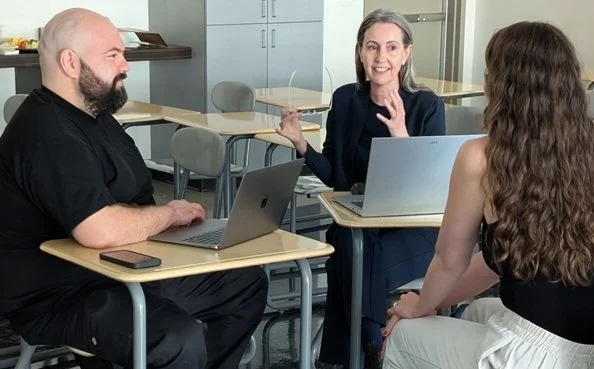
Intensive In-Person Residencies
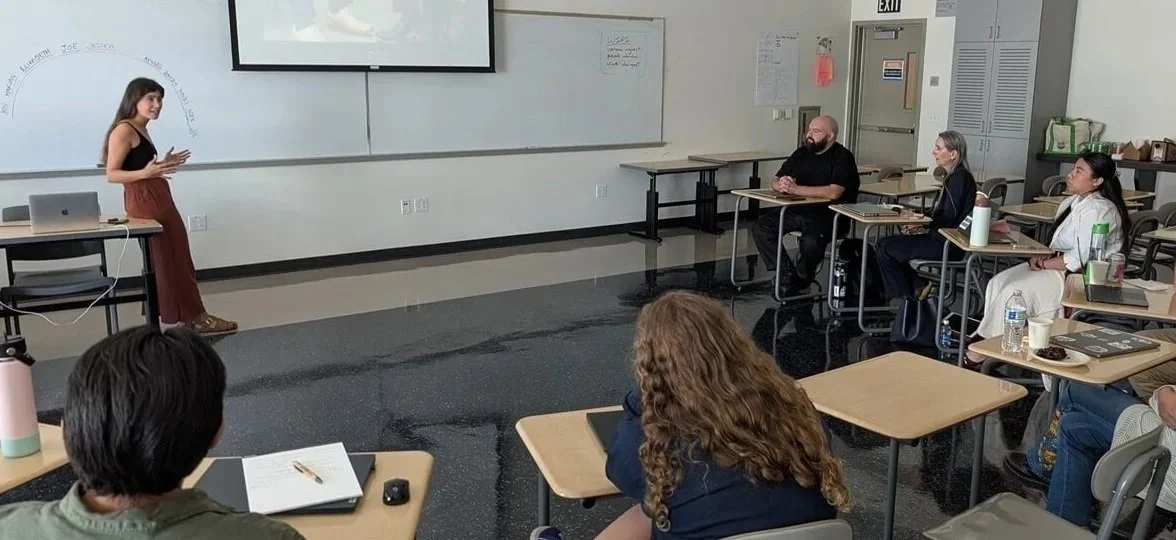
ntensive In-Person Residencies are immersive learning experiences in Los Angeles. Residencies are designed to accelerate clinical skill development through concentrated Deliberate Practice and academic study. Residencies include supervised rehearsal of major therapy models & challenging clinical scenarios, lectures on special topics, student presentations, peer discussion, development of the “person of the therapist”, and individual advising. The first residency of each academic year includes an Orientation for new students and has an emphasis on preparing students to see clients in the second semester. Residencies foster community and cohesiveness at Sentio University and provide opportunities to meet students from all cohorts in person. Residencies also feature guest lectures by a select group of prominent mental health experts and offer valuable networking opportunities for career advancement.
Sentio University hosts three Intensive In-Person Residencies per year, at the beginning of each semester. Lunch is provided by the University. Students are responsible for travel, housing, meals (except lunch), and all other expenses.
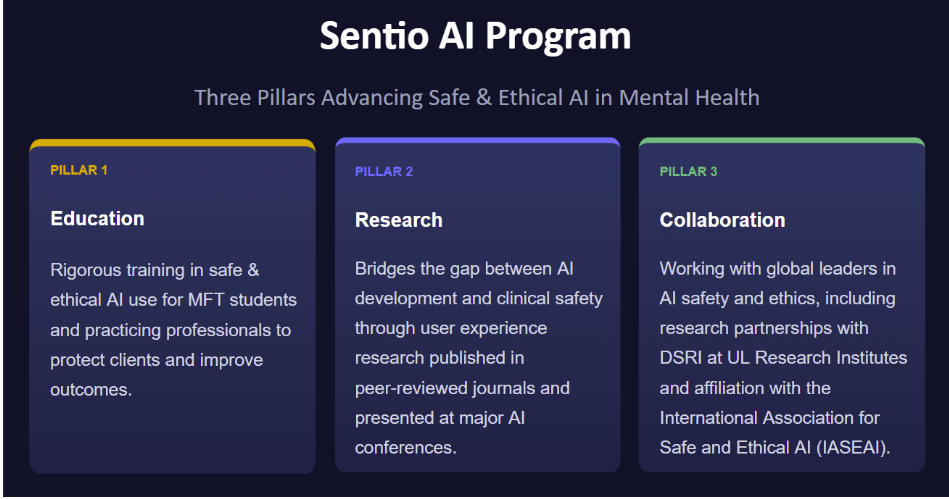
Sentio AI Program
Sentio University advances the scientific discourse on safe AI, built upon a foundation of peer-reviewed research and partnerships with world-leading AI safety organizations.
Setting Educational Standards: We are the first to develop a hands-on AI Certification Course that trains clinicians to use major general-use AI programs safely and ethically as tools for clinical reasoning without sacrificing human empathy.
Leading with Evidence-Based Research: Our broad range of research includes a national survey identifying AI as a major mental health provider, a clinical safety evaluation comparing how leading LLMs handle crisis scenarios, and one of the largest qualitative studies on how users actually experience AI for mental health support.
Collaborating with Global AI Safety Leaders: Through our collaboration with the Digital Safety Research Institute (DSRI) at UL Research Institutes and as an affiliate of International Association for Safe and Ethical AI (IASEAI), Sentio is working to ensure that the specific needs of the mental health field are represented in global AI governance discussions.
See the Sentio Statement on AI and sign up for email list to be alerted of new events and research.
See free recorded webinars on AI in Mental Health on our YouTube channel.
K. Anders Ericsson Memorial Scholarship
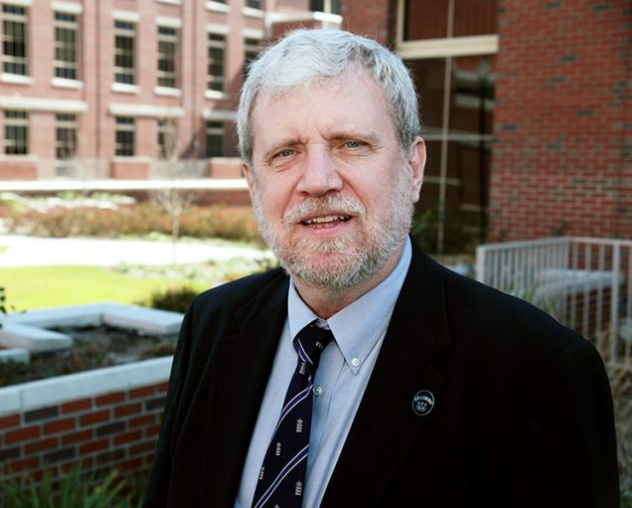
Sentio University offers the K. Anders Ericsson Memorial Scholarship, dedicated to honoring Ericsson's legacy and providing support for students in the Marriage and Family Therapy Program. Funding ranges from $1,000 to $67,200 with a handful of scholarships available per tier, per cohort, aimed at easing tuition costs and making training more accessible. This merit-based scholarship recognizes outstanding academic performance, relevant experience, and notable accomplishments within the field of mental health. With a limited number of scholarships available, applicants are encouraged to apply early as early applicants will be considered first for the scholarship. Showcase your academic and professional achievements in your application to the Marriage and Family Therapy program to be considered for this prestigious award.
Level of Aid Scholarship Range
Tier 1 $16,800
Tier 2 $33,600
Tier 3 $50,400
Jeremy Safran Scholarship
Sentio University offers a need-based scholarship for our Marriage and Family Therapy students, dedicated to honoring Safran’s legacy and providing support for students in the Marriage and Family Therapy Program. The scholarship operates across three tiers of financial assistance. The scholarships are allocated based on the level of demonstrated financial need, with a handful of scholarships available per tier, per cohort. Applications are currently open and prospective students are encouraged to apply early, as funds are limited. Scholarship consideration will be given on a first come first serve basis so apply today as a part of your application to the MFT Program!
Level of Aid Scholarship Range
Tier 1 $16,800
Tier 2 $33,600
Tier 3 $50,400

Attend an Open House
May 11
Come get your questions about our Master of Arts in Marriage and Family Therapy Program answered! You will also get the chance to meet some of Sentio University’s esteemed Faculty and Staff, register here.
May 20
Come get your questions about our Master of Arts in Marriage and Family Therapy Program answered! You will also get the chance to meet some of Sentio University’s esteemed Faculty and Staff, register here.
Upcoming Deadlines
May 25th
The Final Enrollment Deadline for Sentio University’s MFT program is May 25th 2026. Admissions and scholarship decisions will be announced on or after this date for qualifying applicants. Click here to apply!
Clinical Research Project

Students complete their Clinical Research Project (CRP) in their final semester. The CRP is a scholarly endeavor for which students are provided research methods to create an original empirical work at a quality level suitable for peer-review publication. Students are assigned a Faculty Research Advisor and are guided by the Sentio University academic research standards.
Students are given a specific research topic and methodology to use in completing their project. The information studied is based on the student’s individual outcome data at Sentio Counseling Center. The CRP is structured to provide students with first-hand experience transforming outcome data into meaningful information to share with future employers and gain insights into individualized clinical performance and strengths. Examples of CRP deliverables can be found below and on the website of Sentio University President and Program Director Dr. Tony Rousmaniere.
Accreditation Information
The Sentio MFT program, based in Los Angeles, has a completely new graduate program with training philosophy and methods that are significantly different than traditional therapist training. Being a new graduate program permits us the flexibility to maximize experiential training in small cohorts and provide mentorship with personalized feedback for each student. We founded Sentio in California because the California therapist licensing rules are more friendly to new training programs than most other states. Importantly, the rules for therapist licensing in most other states are more conservative in that they do not recognize degrees from a new graduate program until it receives national or regional accreditation. Sentio is approved to operate in California by the BPPE. This means that students who graduate from the Sentio MFT program may not qualify for licensure in states other than California. Thus, Sentio only accepts applicants who live in California and intend to obtain licensure in California. To learn more about accreditation, we recommend www.mftcalifornia.com/accreditation.
Due to the unique nature of Sentio education, Sentio does not accept transfer of credits from other graduate programs. The acceptance of earned transfer credits from Sentio to other programs is determined by the receiving institution.

“I've had a wonderful experience at Sentio! The support and learning I have experienced is beyond what I expected at a site. Everyone feels like family.”
– Nawal Rashid, counselor at the Sentio Counseling Center
.
Take the Next Step
Get in Touch
Fill out our Request Information form to learn more about our program and be put in contact with an admissions advisor.
Start Your Application
Applications for Sentio University’s Marriage and Family Therapy Program, Fall 2026 start date, are open now! Cohorts are capped at 16 students. Once we enroll 16 accepted students, remaining applications will be accepted on a waitlist basis. Click below to start your application today!
Attend an Open House
Come get your questions about our Master of Arts in Marriage and Family Therapy Program answered! You will also get the chance to meet some of Sentio University’s esteemed Faculty and Staff, register here.
Contact Us
Mikaela Abundez
Director of Student Services
310-916-9378
Monday - Friday 9am - 5pm
Statement required by the California Bureau for Private Postsecondary Education:
“Notice to Prospective Degree Program Students
This institution is provisionally approved by the Bureau for Private Postsecondary Education to offer degree programs. To continue to offer this degree program, this institution must meet the following requirements:
• Become institutionally accredited by an accrediting agency recognized by the United States Department of Education, with the scope of the accreditation covering at least one degree program.
• Achieve accreditation candidacy or pre-accreditation, as defined in regulations, by 7/25/2025, and full accreditation by 7/25/2028.
If this institution stops pursuing accreditation, it must:
• Stop all enrollment in its degree programs, and
• Provide a teach-out to finish the educational program or provide a refund.
An institution that fails to comply with accreditation requirements by the required dates shall have its approval to offer degree programs automatically suspended."
The California Bureau for Private Postsecondary Education can be reached at https://www.bppe.ca.gov/
(CEC §94913 and 5, CCR §74117)