
Why One-Weekend Supervisor Trainings Fall Short: The Case for Intensive, Year-Long Supervision Training
Last updated: September 2026
The Case for Intensive, Year-Long Supervision Training
If you are a licensed therapist in California considering the next step into clinical supervision, you have probably already started comparing training options. The choices range widely: a single weekend workshop, a multiweek online course, or a year-long training with video review and ongoing mentorship. Most of these options exist because the regulatory floor for becoming a supervisor is remarkably low. As Rousmaniere, Goodyear, Miller, and Wampold (2017) documented in The Cycle of Excellence, "Becoming a supervisor commonly requires little formal training or role induction beyond attending 5 to 10 hours of lecture-style learning" (p. 271). That finding should give any prospective supervisor pause. Five to ten hours is the length of a single continuing education workshop. It is not the length of a training that produces competence in a role as complex and consequential as clinical supervision.
This post examines what the research actually says about how supervision skill develops, why brief trainings consistently fall short of producing lasting behavior change, and what a more rigorous alternative looks like in practice. The question is not whether short trainings meet the minimum regulatory requirements. Most do. The question is whether meeting that minimum prepares you to do the job well, and whether the supervisees and clients downstream of your supervision will benefit from the training you received. If you are comparing supervisor training programs in California, the evidence suggests that the format and duration of your training matter far more than most practitioners realize. For a broader look at how deliberate practice applies to therapist and supervisor development, Sentio University's research faculty have written extensively on this topic.
What Does the Research Say About Supervision as Currently Practiced?
The first question worth examining is whether supervision, in its typical form, reliably improves the work of the therapists it is designed to support. The answer from the research literature is not reassuring. Rousmaniere, Goodyear, Miller, and Wampold (2017) summarized the state of the evidence directly: "data suggest that supervision, as currently practiced, does not have a reliable impact on client outcome" (p. 271). This is not a minor caveat. It is a finding about the core function of the role. Supervision exists to improve client care through the development of therapist skill. If it does not reliably accomplish that, the training that prepares people for the supervisory role deserves serious scrutiny.
The data behind this conclusion are substantial. In one study of 6,521 clients seen by 175 therapists under 23 supervisors at a large Canadian counseling center, supervisors accounted for less than .01% of the variance in psychotherapy outcome, a finding described by a colleague as "horrifying" (Rousmaniere, 2017, pp. 11-12). To put that number in context: who your supervisor was had essentially no detectable effect on how well your clients did. This does not mean supervision is inherently useless. It means that the way supervision is commonly conducted, and by extension the way supervisors are commonly trained, is not producing the results the field assumes it produces.
Other findings compound the concern. Research indicates that 93% of supervisees are in "inadequate supervision" and over half have received harmful clinical supervision (Rousmaniere, 2017, p. 35, citing Ellis et al., 2014). Separately, 84% of trainees reported withholding information from their supervisors, with a negative perception of supervision being the most common topic concealed (Rousmaniere, 2017, p. 10, citing Mehr, Ladany, and Caskie, 2010). These numbers describe a system in which supervision is widely experienced as inadequate or unsafe, and in which the information flowing from supervisee to supervisor is incomplete by default. A weekend training that teaches conceptual frameworks for supervision without addressing these structural problems is unlikely to change the pattern.
The broader context makes the picture even starker. A landmark longitudinal study following 170 therapists and more than 6,591 clients over up to 18 years found that therapists on the whole became slightly less effective over time, even as their years of experience grew (Goldberg, Rousmaniere, Miller, Whipple, Nielsen, Hoyt, and Wampold, 2016, p. 7). The authors identified a crucial implication: the field had been "assessing only the quantity of experience, with no measure of the quality of experience" (Goldberg, Rousmaniere et al., 2016, p. 8). If therapists do not automatically improve with experience, and if supervision as commonly practiced does not reliably improve client outcomes, then the training supervisors receive is not a minor administrative detail. It is a systemic bottleneck. For prospective supervisors evaluating their options, the Deliberate Practice Supervision Training at Sentio represents one model designed to address these documented gaps. Understanding feedback-informed treatment and how outcome data can be used in supervision is a useful starting point for any clinician considering the supervisory role.
Why Don't Short-Format Supervisor Trainings Produce Lasting Skill Change?
If the research shows that supervision as currently practiced underperforms, a natural follow-up question is whether the brief trainings that prepare most supervisors are part of the problem. The evidence from the broader literature on professional development suggests they are. Taylor and Neimeyer (2017), writing in The Cycle of Excellence, documented that "the majority of CE programs are offered as didactic seminars, even though research indicates that passive learning from didactic presentation does not facilitate long-term learning and registers minimal impact on skill acquisition or client outcomes" (p. 233). This finding applies directly to supervision training. A weekend lecture on supervisory models, no matter how well delivered, operates within the same format that decades of research have shown to be ineffective at producing durable skill change.
The reason is not that the content is wrong. Most short-format trainings cover useful material: supervisory models, ethical obligations, developmental frameworks, legal requirements. The problem is the delivery mechanism. Skill acquisition, whether in surgery, music, athletics, or psychotherapy, requires repeated behavioral practice with corrective feedback over an extended period. As Rousmaniere, Goodyear, Miller, and Wampold (2017) wrote in The Cycle of Excellence, researchers have found that achieving expert performance "requires thousands of hours of deliberate practice, often requiring 10 to 30 years of sustained effort and focus" (p. 9, citing Ericsson, 2006). No one claims that a weekend workshop produces surgical competence or concert-level musicianship. The assumption that a similar format can produce competent clinical supervisors reflects the field's historical underinvestment in this particular role.
Data from the study of therapist expertise reinforces this point. Miller, Hubble, and Chow (2017) reported that in the first eight years of professional work, the top-performing therapists spent nearly 2.8 times more time engaged in deliberate practice than those in the bottom three quartiles (p. 35, citing Chow et al., 2015). The pattern is consistent: what separates improving professionals from stagnating ones is not more experience or more information, but sustained, structured practice at the edge of current competence. A weekend training provides information. It does not provide the repeated behavioral rehearsal, the corrective feedback loop, or the sustained engagement over time that the expertise research consistently identifies as necessary for genuine skill development.
There is also a self-assessment problem that brief trainings cannot address. Taylor and Neimeyer (2017) reviewed research showing that physicians' self-assessment of their own competence is systematically inaccurate: "those who performed the poorest, as measured through objective assessments, had some of the most inaccurate self-assessments" (p. 234, citing Davis et al., 2006). This Dunning-Kruger pattern means that the supervisors who most need intensive training may be the least likely to recognize that a brief workshop was insufficient. Without ongoing external feedback on actual supervisory performance, which short-format trainings do not provide, a supervisor has no reliable mechanism for identifying gaps in their own practice. For those exploring how deliberate practice methodology applies across the full arc of therapist and supervisor development, Sentio University's MFT program integrates these principles from day one of graduate training, and Sentio's published research on deliberate practice provides a detailed evidence base.

What Does Effective Supervisor Training Actually Require?
If passive, didactic formats do not produce lasting skill change, what does? The research literature on expertise development across fields points to a consistent set of components: direct observation of actual performance, specific corrective feedback tied to observable behavior, repeated behavioral rehearsal, sustained practice over time, and ongoing measurement of outcomes. These are the elements that define deliberate practice, and they stand in sharp contrast to the lecture-and-discussion format that dominates most supervisor training programs.
The distinction between declarative knowledge and procedural skill is central to understanding this gap. Rousmaniere and Vaz (2025) described the problem clearly in Psychotherapy Bulletin: "many graduate programs produce students who can talk or write about therapy quite adeptly yet still struggle to perform therapy optimally. This gap is precisely what deliberate practice aims to fill by consolidating declarative knowledge into procedural skill" (p. 3). The same dynamic applies to supervisor training. A supervisor who can describe models of supervision, articulate ethical principles, and discuss developmental theory may still struggle to identify the precise moment in a supervision session where a trainee needs behavioral correction, or to deliver that correction in a way that actually changes the trainee's clinical behavior. Knowing what good supervision looks like and being able to do it reliably are fundamentally different competencies.
A parallel from medical education illustrates the point. McGaghie (2017), writing in The Cycle of Excellence, described a study in which attending physicians with "an average of over 13 years of clinical experience" were assessed on a basic procedural skill: central venous catheter insertion. Only 18% met or exceeded the minimum passing standard for one approach, and just 24% met the standard for another (p. 256). Experience alone had not maintained competence. When the same institution implemented simulation-based mastery learning, a training model built on deliberate practice principles, the result was dramatic: an 85% drop in catheter-related bloodstream infection rates in the intensive care unit (p. 257, citing Barsuk, Cohen, Feinglass, McGaghie, and Wayne, 2009). The takeaway is not that experienced professionals are incompetent. It is that competence erodes without structured maintenance, and that training models built on deliberate practice can produce measurably better outcomes than experience or lecture alone. For clinicians interested in how these principles translate to psychotherapy, Sentio University offers a Deliberate Practice Supervision training that applies this same logic to the development of supervisory skill.
Rousmaniere, Goodyear, Miller, and Wampold (2017) drew the connection to supervision explicitly: "Since the days of Freud, it has been assumed that experience as a clinician is sufficient to make one an effective supervisor. This assumption stands in contrast to many other fields, which define the role of a coach as clearly distinct from that of a performer and do not assume that great performers are automatically effective coaches" (p. 271). The coaching analogy is instructive. In athletics, the skills required to perform and the skills required to develop performance in others are recognized as distinct competency sets that require separate training. In psychotherapy, the assumption has historically been that clinical experience qualifies one to supervise, with little additional training required. The research suggests this assumption is unfounded.
What effective supervisor training requires, based on the evidence, is a model that mirrors what the expertise research shows works across all skilled domains: real practice, observed by someone qualified to provide corrective feedback, repeated over a duration long enough to produce genuine behavior change. A one-year model, rather than a one-weekend model, is not an arbitrary preference for length. It is a reflection of what the science of skill acquisition consistently demonstrates is necessary. The Sentio University MFT program is built on these same principles, integrating deliberate practice throughout its curriculum and clinical training.
What Does a Year-Long Supervisor Training Model Look Like in Practice?
Sentio Counseling Center's Deliberate Practice Supervision training is one concrete example of what an intensive, year-long supervisor training model looks like when it is built on the principles the research identifies as necessary for genuine skill development. It is included here not as the only possible model but as an illustration of how the components described above can be implemented in a structured training program. The training is designed for licensed supervisors who want to develop the ability to use deliberate practice methods in their supervision (Rousmaniere and Vaz, 2025). It now runs in six- and twelve-month tracks, and the twelve-month track is the year-long format described here.
Hanna Levenson, PsyD, a psychotherapy training expert who observed the Sentio Supervision Model's supervision-of-supervision meetings over a year and a half, described the training culture she encountered. Levenson, who has "taught over two thousand graduate students and supervised several hundred of them" over more than 40 years (Levenson, 2024, p. 1), offered a blunt assessment of the broader field: "In the past, I have written about how supervision has been the most closeted component of psychotherapy training, no one records or shows their supervision sessions. In these Sup-of-Sup meetings, however, the door is thrown wide open!" (Levenson, 2024, p. 2). The contrast Levenson draws is between the opacity that characterizes most supervision training and the radical transparency of a model in which supervisors' own work is recorded, reviewed, and discussed openly.
The structure of the training reflects the components the expertise research identifies as essential. Behavioral rehearsal begins "at the half-way point of a 50-minute supervision session" (Levenson, 2024, p. 2), meaning that at least half of every supervision session involves the supervisor and trainee actively practicing specific clinical skills rather than discussing cases conceptually. Deliberate practice homework consists of "the exact same skill rehearsed in supervision to practice on their own for at least 10 minutes" between sessions (Levenson, 2024, p. 3). This solo practice component is significant: as Levenson noted, "solitary practice has been shown to be a critical factor in achieving expertise" (p. 3, citing Ericsson and Pool, 2016). Every supervision session is recorded and available for review. Supervisors participate in weekly group mentoring meetings led by senior trainers, in which their actual supervision sessions are examined. This creates multiple layers of observation and feedback: the therapist's clinical work is reviewed in supervision, and the supervisor's supervisory work is reviewed in supervision of supervision.
Levenson captured a principle that distinguishes this model from traditional approaches: "The supervisor isn't doing the training; the skill rehearsal is doing the training" (Levenson, 2024, p. 4, reporting a statement by Rousmaniere and Vaz). This reframing matters. In a traditional supervision model, the quality of the supervision depends heavily on the individual supervisor's intuition, experience, and interpersonal skill. In a deliberate practice model, the structured process of behavioral rehearsal with corrective feedback becomes the primary engine of skill development, and the supervisor's role is to manage that process effectively. The practical result, documented in a peer-reviewed case study, showed a first-year MFT trainee's client whose outcome data initially flagged risk of deterioration. Over nine sessions of supervision using this model, the client's self-reported distress dropped measurably and suicidal ideation decreased from "sometimes" to a steady "rarely" across the treatment period (Brand, Miller-Bottome, Vaz, and Rousmaniere, 2025). More information about the DP Supervision training, including application details, is available through the Sentio Counseling Center practicum page.
What Should You Look for When Choosing a Supervisor Training Program?
If you are comparing clinical supervision training programs in California, the research reviewed above suggests a set of concrete questions that will tell you more about a training's likely impact than its marketing materials or the credentials of its presenter. These questions apply whether you are evaluating a weekend workshop, an online course, or a year-long training.
First, ask whether the training includes video review of your actual supervision sessions. A training that teaches supervisory concepts without ever observing you doing supervision is analogous to a music program that discusses technique without ever listening to a student play. The research consistently shows that direct observation of performance is a prerequisite for meaningful corrective feedback, and corrective feedback is the mechanism through which skill change occurs. Second, ask whether the training includes behavioral rehearsal. Does it give you structured opportunities to practice specific supervisory interventions, receive feedback, and try again? Or does it rely primarily on lecture, discussion, and case consultation? The distinction matters: as the deliberate practice literature demonstrates, talking about a skill and performing it are different cognitive activities that produce different learning outcomes.
Third, ask about duration. How long does the training last? Is there any ongoing contact, feedback, or mentorship after the initial training concludes? The expertise research is clear that durable skill change requires sustained practice over time, not a single concentrated exposure. Fourth, ask whether the training uses outcome data. Does it teach supervisors to track their supervisees' client outcomes and use that data to guide supervisory decisions? Outcome monitoring is one of the few interventions shown to reliably improve client results in psychotherapy, and its integration into supervision practice is a concrete indicator of a training's evidence base. Fifth, ask whether the training itself is supervised. Is there a supervision-of-supervision structure in which your supervisory work is reviewed by an experienced trainer? If not, how will you receive feedback on your actual performance as a supervisor?
Finally, ask to observe. Just as you would want to watch a training session before committing to any significant educational investment, asking to observe a supervision meeting or a training session will tell you more about the training's culture and rigor than any brochure. The willingness of a program to open its doors to prospective participants is itself a signal worth paying attention to. Programs built on transparency and direct observation should be eager, not reluctant, to let you see how they work. For a concrete example of this kind of openness, Sentio University publishes its deliberate practice exercises and demonstration videos freely, and its MFT program overview describes the training model in detail.

Keep reading
How to become a clinical supervisor in California, BBS requirements, training hours, and next steps.
15-hour clinical supervision course in California, what to look for and how to choose.
CAMFT Certified vs. AAMFT Approved supervisor, which credential fits which audience.
LMFT vs. LCSW vs. LPCC supervisor requirements, the three license paths compared.
Frequently Asked Questions
What are the BBS requirements for becoming a clinical supervisor in California?
The California Board of Behavioral Sciences requires licensed therapists (LMFTs, LCSWs, LPCCs) to complete a supervision training course no later than 60 days after they first begin supervising. The specific requirements include holding an active license for a minimum period, completing a qualifying course in clinical supervision, and meeting other criteria described in the BBS FAQ on supervisor qualifications. However, the formal training requirement is often limited to a brief course. As Rousmaniere, Goodyear, Miller, and Wampold (2017) documented, the typical preparation for the supervisory role involves only "5 to 10 hours of lecture-style learning" (p. 271). The BBS sets a regulatory floor, but meeting that floor does not by itself indicate that a supervisor has been trained to the level the role demands. Prospective supervisors who want to develop genuine competence should look beyond the minimum and seek training that includes video review, behavioral rehearsal, and sustained mentorship over time.
Can I become a competent supervisor in a single weekend?
You can complete a training that satisfies regulatory requirements in a weekend. Whether that training will make you competent is a different question. Research on expertise development across fields consistently shows that durable skill change requires repeated practice with corrective feedback over an extended period. The top-performing therapists in one study spent nearly 2.8 times more time engaged in deliberate practice than their lower-performing peers over the first eight years of their careers (Miller, Hubble, and Chow, 2017, p. 35). Supervision is a distinct skill set that requires its own training trajectory. A weekend can introduce concepts and frameworks, but the behavioral fluency to apply those concepts in real supervisory sessions, under the pressure and complexity of live clinical work, requires far more sustained training than a single weekend provides.
What is deliberate practice supervision?
Deliberate practice supervision is an approach to clinical supervision that integrates the principles of deliberate practice, a model of skill acquisition originally studied by K. Anders Ericsson, into the supervisory process. In practice, this means that supervision sessions are structured to include behavioral rehearsal of specific clinical skills, with corrective feedback from the supervisor tied to directly observed performance rather than self-report alone. Deliberate practice supervision also typically involves the use of video recordings of therapy sessions, routine outcome monitoring to track client progress, and homework assignments that require the supervisee to practice specific skills between sessions. The Sentio Supervision Model, described in a peer-reviewed case study by Brand, Miller-Bottome, Vaz, and Rousmaniere (2025), is one structured framework for implementing this approach. For a broader introduction to the concept, Sentio University's page on what is deliberate practice provides an accessible overview.
How does video-based supervisor training differ from lecture-based formats?
The primary difference is the source of learning. In a lecture-based format, the supervisor learns from information presented by an instructor: theoretical models, ethical guidelines, developmental frameworks, and case examples. This produces declarative knowledge, the ability to describe what good supervision looks like. In a video-based training, the supervisor's own supervisory work is recorded and reviewed, either by the supervisor themselves, by a trainer, or by a peer group. This creates the conditions for procedural learning: the supervisor sees what they actually did, receives specific feedback on observable behaviors, and practices alternative approaches. Hanna Levenson, PsyD, described the significance of this distinction after observing a year-long video-based supervisor training model: supervision has historically been "the most closeted component of psychotherapy training," and video-based models fundamentally change that by making supervisory behavior observable and discussable (Levenson, 2024, p. 2).
Is a longer training program worth the time investment?
The research suggests it is, particularly if your goal is to develop genuine supervisory competence rather than simply meet a regulatory requirement. The evidence reviewed in this post indicates that supervision as commonly practiced has limited measurable impact on client outcomes, that supervisors are typically prepared for the role through brief didactic trainings, and that brief didactic formats do not produce lasting skill change across any professional domain that has been studied. A longer training that includes direct observation, behavioral rehearsal, corrective feedback, and ongoing mentorship addresses each of these documented problems. The time investment is real, but it is proportional to the complexity of the role and the consequences of performing it poorly. Every client your future supervisees see will be affected, directly or indirectly, by the quality of the supervision you provide.
Does the quality of supervisor training affect client outcomes?
The evidence is suggestive, though direct research linking specific supervisor training formats to downstream client outcomes remains limited. What the research does show is that when an entire clinical system combines routine outcome monitoring, deliberate practice, and ongoing consultation, therapist effectiveness measurably improves. Goldberg, Babins-Wagner, Rousmaniere, and colleagues (2016) found that at an agency implementing these practices, client outcomes improved at a statistically significant rate over seven years, and that this improvement was attributable to within-therapist growth rather than hiring better therapists (p. 367). A peer-reviewed case study of supervision using the Sentio Supervision Model showed a client initially flagged for risk of deterioration whose outcomes improved substantially over nine sessions of deliberate practice supervision (Brand et al., 2025). While no study has yet isolated the effect of a specific supervisor training format on client outcomes in a controlled design, the available evidence points in a consistent direction: structured, observation-based, outcome-informed approaches to supervision are more likely to produce measurable benefits than traditional case discussion formats.
Choosing how to train for the supervisory role is a decision that extends well beyond your own professional development. The supervisees you train will carry your approach into their work with clients for years and potentially decades. If they learn that supervision means discussing cases from memory, that is the model they will reproduce. If they learn that supervision means reviewing recordings, tracking outcome data, and practicing specific skills through behavioral rehearsal, that is the model they will carry forward. The difference between these two cultures is not a matter of preference. It is a difference in whether supervision functions as a meaningful engine of clinical improvement or as a routine professional obligation with little measurable impact. Ask hard questions of any training program you consider. Ask to observe a session. Ask what evidence they can point to that their graduates supervise differently after completing the training. The DP Supervision training at Sentio is one model that welcomes this kind of scrutiny, and Sentio's broader MFT program is built on the same principle: training should be observable, measurable, and open to examination.
References
Brand, J., Miller-Bottome, M., Vaz, A., and Rousmaniere, T. (2025). Deliberate practice supervision in action: The Sentio Supervision Model. Journal of Clinical Psychology, 81(6), 462-472. https://doi.org/10.1002/jclp.23790
Goldberg, S. B., Babins-Wagner, R., Rousmaniere, T., Berzins, S., Hoyt, W. T., Whipple, J. L., Miller, S. D., and Wampold, B. E. (2016). Creating a climate for therapist improvement: A case study of an agency focused on outcomes and deliberate practice. Psychotherapy, 53(3), 367-375. https://doi.org/10.1037/pst0000060
Goldberg, S. B., Rousmaniere, T., Miller, S. D., Whipple, J., Nielsen, S. L., Hoyt, W. T., and Wampold, B. E. (2016). Do psychotherapists improve with time and experience? A longitudinal analysis of outcomes in a clinical setting. Journal of Counseling Psychology, 63(1), 1-11. https://doi.org/10.1037/cou0000131
Levenson, H. (2024). What deliberate practice supervision has to offer traditional supervision: Nine take-home messages. Psychotherapy Bulletin, 59(3), 55-59. https://societyforpsychotherapy.org/deliberate-practice-supervision-series-from-the-sentio-marriage-and-family-therapy-program/
McGaghie, W. C. (2017). Advances in medical education from mastery learning and deliberate practice. In T. Rousmaniere, R. K. Goodyear, S. D. Miller, and B. E. Wampold (Eds.), The cycle of excellence: Using deliberate practice to improve supervision and training (pp. 249-266). John Wiley and Sons. ISBN: 978-1-119-16556-9. https://onlinelibrary.wiley.com/doi/book/10.1002/9781119165590
Miller, S. D., Hubble, M. A., and Chow, D. (2017). Professional development: From oxymoron to reality. In T. Rousmaniere, R. K. Goodyear, S. D. Miller, and B. E. Wampold (Eds.), The cycle of excellence: Using deliberate practice to improve supervision and training (pp. 23-48). John Wiley and Sons. ISBN: 978-1-119-16556-9. https://onlinelibrary.wiley.com/doi/book/10.1002/9781119165590
Owen, J., Wampold, B. E., Kopta, M., Rousmaniere, T., and Miller, S. D. (2016). As good as it gets? Therapy outcomes of trainees over time. Journal of Counseling Psychology, 63(1), 12-19. https://doi.org/10.1037/cou0000112
Rousmaniere, T. (2017). Deliberate practice for psychotherapists: A guide to improving clinical effectiveness. Routledge. ISBN: 978-1-138-20320-4. https://doi.org/10.4324/9781315472256
Rousmaniere, T., and Vaz, A. (2025). Sentio's clinic-to-classroom method: Bridging deliberate practice and clinical training. Psychotherapy Bulletin, 60(2), 79-84. https://sentio.org/dpresearch
Rousmaniere, T., Goodyear, R. K., Miller, S. D., and Wampold, B. E. (2017). Improving psychotherapy outcomes: Guidelines for making psychotherapist expertise development routine and expected. In T. Rousmaniere, R. K. Goodyear, S. D. Miller, and B. E. Wampold (Eds.), The cycle of excellence: Using deliberate practice to improve supervision and training (pp. 267-276). John Wiley and Sons. ISBN: 978-1-119-16556-9. https://onlinelibrary.wiley.com/doi/book/10.1002/9781119165590
Rousmaniere, T., Goodyear, R. K., Miller, S. D., and Wampold, B. E. (2017). Introduction. In T. Rousmaniere, R. K. Goodyear, S. D. Miller, and B. E. Wampold (Eds.), The cycle of excellence: Using deliberate practice to improve supervision and training (pp. 3-22). John Wiley and Sons. ISBN: 978-1-119-16556-9. https://onlinelibrary.wiley.com/doi/10.1002/9781119165590.ch1
Taylor, J. M., and Neimeyer, G. J. (2017). The ongoing evolution of continuing education: Past, present, and future. In T. Rousmaniere, R. K. Goodyear, S. D. Miller, and B. E. Wampold (Eds.), The cycle of excellence: Using deliberate practice to improve supervision and training (pp. 219-248). John Wiley and Sons. ISBN: 978-1-119-16556-9. https://onlinelibrary.wiley.com/doi/book/10.1002/9781119165590
APA Essentials of Deliberate Practice Series: https://www.apa.org/pubs/books/browse
California Board of Behavioral Sciences (BBS): https://www.bbs.ca.gov
Sentio University Deliberate Practice Supervision training: https://sentio.org/suptraining
Sentio Counseling Center professional training: https://www.sentiocc.org/professional-training
Sentio University Research Publications: https://sentio.org/dpresearch
About the Authors
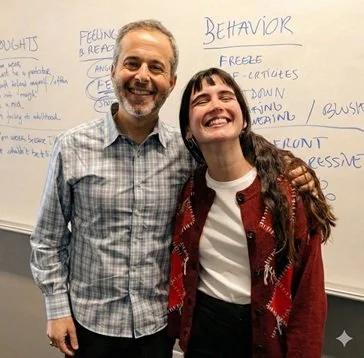
Tony Rousmaniere, PsyD is the President of Sentio University and Executive Director of the Sentio Counseling Center. He is Past-President of the psychotherapy division of the American Psychological Association and the author of over 20 books on deliberate practice and psychotherapy training, including The Essentials of Deliberate Practice book series (APA Books). He is a licensed psychologist in California and Washington. Learn more
Alexandre Vaz, PhD is the Chief Academic Officer of Sentio University and cofounder of the Deliberate Practice Institute. He is co-editor of The Essentials of Deliberate Practice book series (APA Books) and the author of over a dozen books on deliberate practice and psychotherapy training. Dr. Vaz is the founder and host of Psychotherapy Expert Talks. He is a licensed clinical psychologist in Portugal. Learn more