
How to Become a Clinical Supervisor in California: BBS Requirements, Training Hours, and Next Steps
Last updated: September 2026
Becoming a Clinical Supervisor in California
California's behavioral health workforce is growing rapidly. As of September 2024, approximately 15,812 Associate Marriage and Family Therapists, 17,399 Associate Social Workers, and 5,307 Associate Professional Clinical Counselors held active registrations with the Board of Behavioral Sciences (BBS Licensing Population Report, 2024). Every one of those registrants needs a qualified supervisor to accumulate the thousands of clinical hours required for full licensure. For licensed clinicians considering the supervisor role, this creates both an opportunity and a responsibility: the demand for qualified supervisors has never been higher, and the quality of supervision these associates receive will shape the next generation of California's mental health workforce.
The BBS has established a clear set of requirements for becoming a clinical supervisor, including credential prerequisites, initial training hours, and ongoing professional development. Meeting those requirements is the legal threshold for supervising. But the requirements themselves are minimal by design, and there is a meaningful gap between what the state requires and what the research literature suggests actually prepares someone to supervise effectively. This post walks through the full regulatory pathway step by step, examines what the research says about supervisor preparation, and offers guidance on how to evaluate training options. If you are a licensed LMFT, LCSW, or LPCC in California thinking about supervising for the first time, or if you have been supervising for years and want to deepen your skills, this is a practical starting point. For context on how supervision fits into the broader structure of MFT training, you can review Sentio University's MFT program overview, which describes how supervision is integrated into a deliberate practice training model from day one.
Who Can Become a Clinical Supervisor in California?
The BBS specifies who is eligible to supervise Associate Marriage and Family Therapists (AMFTs), MFT Trainees, Associate Clinical Social Workers (ASWs), and Associate Professional Clinical Counselors (APCCs). The license requirement is the first gate: you must hold a current and active California license in good standing, without suspension or probation, as one of the following: Licensed Marriage and Family Therapist (LMFT), Licensed Clinical Social Worker (LCSW), Licensed Professional Clinical Counselor (LPCC), Licensed Educational Psychologist (LEP), Licensed Psychologist, or Licensed Physician and Surgeon certified in Psychiatry by the American Board of Psychiatry and Neurology (BBS Summary of Supervisor Qualifications, 2024). LEPs face an additional restriction: they may only supervise up to 1,200 hours of experience, and those hours must consist of educationally related mental health services within the LEP scope of practice.
Beyond the license type, you must have held an active license in California or any other state for at least two of the last five years before you begin supervising. You must also have practiced psychotherapy during at least two of the last five years, or have provided direct supervision to registrants who perform psychotherapy during that same timeframe (BBS Summary of Supervisor Qualifications, 2024). This is not merely a checkbox: the BBS is establishing a minimum floor of recent clinical activity to ensure that supervisors are not returning to clinical oversight after extended absences from practice.
The BBS also prohibits specific relationships between supervisors and supervisees. A supervisor may not have ever provided therapeutic services to the supervisee. A supervisor may not be a spouse, domestic partner, or other relative of the supervisee. And a supervisor may not have a personal, professional, or business relationship with the supervisee that would undermine the authority or effectiveness of supervision (BBS Summary of Supervisor Qualifications, 2024). These prohibitions reflect the board's recognition that the supervisor role carries significant power over the supervisee's career trajectory and clinical development, and that dual relationships compromise that function. For a broader view of how California licensure requirements shape career planning, prospective supervisors and trainees can review how clinical hours and credentials transfer across states.
The 15-Hour Initial Training Requirement for New Supervisors
If you are an LMFT, LCSW, LPCC, or LEP beginning supervision for the first time in California on or after January 1, 2022, you must complete a minimum of 15 hours of supervision training or coursework. This training must be completed no later than 60 days after you begin supervising (BBS Summary of Supervisor Qualifications, 2024). The course must be taken from a government agency or from a continuing education provider accepted by the BBS. If taken from an approved CE provider, the hours may count toward your renewal cycle CE requirements as well.
The BBS specifies content areas that the 15-hour course must cover. These include competencies necessary for new supervisors, goal setting and evaluation, the supervisor-supervisee relationship, California law and ethics related to supervision, cultural variables including race, gender, social class, and religious beliefs, contextual variables such as treatment modalities, work settings, and the use of technology, supervision theories and literature, and documentation and record keeping for both client files and supervision records (BBS Summary of Supervisor Qualifications, 2024). The breadth of these content areas is notable. In 15 hours, a training program must address legal compliance, cultural competence, relational dynamics, theoretical frameworks, and administrative requirements.
There is also a maximum age restriction on the training. If taken from a government agency or approved CE provider, the course must have been completed no earlier than two years before you start supervising. If taken at the master's level or higher from a regionally or nationally accredited institution, or a school approved by the California Bureau for Private Postsecondary Education, the maximum age extends to four years (BBS Summary of Supervisor Qualifications, 2024). This means that a graduate-level supervision course taken during your master's or doctoral program may still satisfy the requirement if you begin supervising within four years of completing it.
In addition to the 15-hour training, new supervisors must complete and submit a Supervisor Self-Assessment Report to the BBS within 60 days of commencing supervision for the first time. This is a one-time submission that confirms the supervisor meets all qualifications specified in law (BBS Summary of Supervisor Qualifications, 2024). The self-assessment is a self-certification mechanism: the BBS relies on the supervisor to accurately verify their own qualifications rather than conducting an independent review. For licensed clinicians exploring the Sentio Supervision Residency, this initial training requirement is one part of a much larger investment in supervisor development. Psychologists licensed by the Board of Psychology and board-certified psychiatrists are exempt from both the 15-hour training and the ongoing professional development requirements, though the BBS strongly encourages all supervisors to complete training regardless of exemption status. Licensees who hold a valid and active approved supervisor certification from the American Association for Marriage and Family Therapy (AAMFT), the American Board of Examiners in Clinical Social Work (ABECSW), the California Association of Marriage and Family Therapists (CAMFT), or the Center for Credentialing and Education (CCE) are exempt from all three training requirements: the 15-hour course, the six hours owed on returning to supervision after two years away, and the ongoing CPD. The Board also accepts a certification from another entity where the licensee can demonstrate that its requirements meet or exceed those of the four named bodies (16 CCR 1834(d)).
The 6-Hour Continuing Professional Development Requirement
After completing the initial 15-hour training, supervisors who are LMFTs, LCSWs, LPCCs, or LEPs must complete six hours of continuing professional development (CPD) in supervision during each subsequent license renewal cycle in which they are providing supervision. Records of completion must be maintained by the supervisor (BBS Summary of Supervisor Qualifications, 2024). The BBS defines five categories of qualifying CPD activity: training or coursework specific to supervision from a government agency or approved CE provider, teaching a supervision course for one of those entities, authoring published research directly focused on supervision, collaboration with another board-qualified supervisor through mentoring or consultation with a signed documentation log, and attendance at supervisor peer discussion groups with documentation from the group leader or facilitator.
This six-hour requirement is the ongoing maintenance standard. It means that after the initial 15 hours, a supervisor in California is required to invest approximately three hours per year in supervision-specific professional development, assuming a standard two-year renewal cycle. The flexibility built into the CPD options is worth noting: peer discussion groups and one-on-one consultation with another qualified supervisor both qualify, which means that informal but documented professional learning counts toward the requirement. However, the total investment remains low relative to the complexity and responsibility of the supervisor role. We have argued this at length in our piece on why one-weekend supervisor trainings fall short.
One additional provision applies to supervisors who have taken a break from the role. If you previously served as a board-qualified supervisor but have not supervised for two or more years, you must complete six hours of supervision training or coursework within 60 days of resuming supervision (BBS Summary of Supervisor Qualifications, 2024). If the absence has been less than two years, no additional course is required. For clinicians returning to supervision after a hiatus, this is a minimal re-entry requirement, essentially equivalent to one renewal cycle of CPD. To understand how clinical supervision fits within a broader model of training and professional development, you can explore what deliberate practice means in the context of therapist skill building.
What 15 Hours of Training Can and Cannot Prepare You to Do
The BBS requirements described above represent the legal minimum for becoming a supervisor in California. They are clear, accessible, and achievable. A licensed clinician with two years of active practice can complete 15 hours of coursework over a weekend or across several online modules, submit a self-assessment form, and begin supervising within 60 days. This is by design: the regulatory framework is intended to be a floor, not a ceiling. But it is worth being honest about what that floor covers and what it does not.
The research literature on clinical supervision has raised persistent questions about whether traditional supervisor preparation is sufficient to produce meaningful changes in supervisee skill or client outcomes. Rousmaniere, Goodyear, Miller, and Wampold (2017) observed that becoming a supervisor "commonly requires little formal training or role induction beyond attending 5 to 10 hours of lecture-style learning" (p. 271). The 15-hour California requirement exceeds that baseline, but only modestly. And the format of most available training courses follows a familiar pattern: didactic instruction, lecture-style content delivery, and self-paced review of regulatory information.
Taylor and Neimeyer (2017) examined the broader evidence on passive continuing education formats and concluded that "passive learning from didactic presentation does not facilitate long-term learning and registers minimal impact on skill acquisition or client outcomes" (p. 233). This finding applies directly to supervisor training. If the majority of the 15-hour requirement is completed through lecture-based courses, the supervisor may emerge with a solid understanding of BBS regulations and supervisory ethics but with limited practical experience actually conducting supervision, giving corrective feedback, or identifying specific clinical behaviors in a supervisee's session recordings.
The data on supervision's impact on client outcomes adds further context. In a study of 6,521 clients seen by 175 therapists supervised by 23 supervisors over five years at a large Canadian counseling center, supervisors accounted for less than .01% of the variance in psychotherapy outcome, a finding that one colleague described as "horrifying" (Rousmaniere, 2017, pp. 11-12). This does not mean supervision is inherently ineffective. It means that supervision as currently and commonly practiced, often without direct observation, video review, or structured behavioral feedback, does not reliably improve the clinical work of the people being supervised. Hanna Levenson, PsyD, a psychotherapy training expert who observed the Sentio Supervision Residency model over a year and a half, captured the historical norm: "In the past, I have written about how supervision has been the most closeted component of psychotherapy training. No one records or shows their supervision sessions" (Levenson, 2024, p. 2). When supervision itself is unobserved, there is no mechanism for supervisors to receive feedback on their own supervisory behavior, and the quality of supervision becomes almost entirely self-assessed.
The gap is not between good supervisors and bad supervisors. The gap is between what the regulatory framework requires and what the research suggests is necessary to produce supervisors whose work actually changes clinical outcomes. As Rousmaniere, Goodyear, Miller, and Wampold (2017) put it: "Since the days of Freud, it has been assumed that experience as a clinician is sufficient to make one an effective supervisor. This assumption stands in contrast to many other fields, which define the role of a coach as clearly distinct from that of a performer and do not assume that great performers are automatically effective coaches" (p. 271). Fifteen hours of coursework addresses the regulatory need. It does not, on its own, address the skill-building need. For context on the research supporting more intensive approaches to supervision training, you can review published studies on deliberate practice in clinical supervision.
What Does Effective Supervisor Training Actually Look Like?
If 15 hours of didactic training sets the regulatory floor, the question becomes what sits above it. The research literature points toward several features that distinguish high-quality supervisor preparation from minimal compliance: direct observation of the supervisor's own work, structured behavioral rehearsal of supervision skills, integration of client outcome data into the supervisory process, and sustained engagement over months rather than hours.
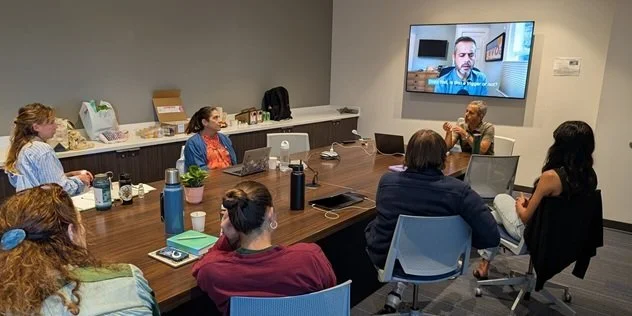
The most developed example of this approach in California is the Sentio Supervision Residency, a six- or twelve-month, video-based training program for clinical supervisors. Supervisors in the residency complete up to 50 CE hours of training in deliberate practice supervision, participate in weekly supervision-of-supervision meetings where their own supervisory sessions are reviewed on video, and receive certification as a Deliberate Practice Supervisor upon completion (Rousmaniere and Vaz, 2025). The structure is intentionally intensive: it treats supervisor development as a skill acquisition process comparable to learning a new clinical modality, not as a regulatory compliance task.
A peer-reviewed case study published in the Journal of Clinical Psychology illustrates how this model operates in practice. Brand, Miller-Bottome, Vaz, and Rousmaniere (2025) followed one first-year MFT trainee through nine supervision sessions using the Sentio Supervision Model (SSM). The supervisor, Jason Brand, MSW, described using video recordings of therapy sessions alongside client outcome monitoring data to guide each supervision session. Rather than relying on the trainee's verbal report of what happened in session, the supervisor could observe specific clinical moments directly. Brand wrote that the model "reminds the supervisor repeatedly not to get overly seduced by the internal and external siren song of conceptual gratification" (Brand, Miller-Bottome, Vaz, and Rousmaniere, 2025, p. 5). Over the course of nine sessions, the client's self-reported distress on a validated outcome measure dropped measurably, and suicidal ideation decreased from "sometimes" to a steady "rarely" across the treatment period (Brand et al., 2025, p. 10).
Levenson (2024) identified several features of the Sentio model that she found distinctive after observing it for over a year. She noted that behavioral rehearsal begins at the halfway point of each 50-minute supervision session, meaning that the supervisor and supervisee spend roughly equal time reviewing what happened and practicing what to do differently. She also noted that supervisees are assigned deliberate practice homework consisting of "the exact same skill rehearsed in supervision to practice on their own for at least 10 minutes" (Levenson, 2024, p. 3). In Levenson's assessment, this structure produces a fundamentally different learning experience than case discussion alone: "The supervisor isn't doing the training; the skill rehearsal is doing the training" (Rousmaniere and Vaz, as reported by Levenson, 2024, p. 4).
Research from the broader field supports the principle underlying this model. In a study of 17 therapists and 1,632 clients, the amount of time therapists spent specifically targeting therapeutic skill improvement was a significant predictor of client outcomes, while therapist experience level and therapy model were not (Rousmaniere, 2017, citing Chow et al., 2015). Miller, Hubble, and Chow (2017) found that top-quartile therapists spent nearly 2.8 times more hours engaged in deliberate practice than those in the bottom three quartiles. And a seven-year study at Calgary Counselling Centre demonstrated that an agency implementing routine outcome monitoring and deliberate practice support produced measurable within-therapist improvement over time, at an effect size of d = 0.034 per year (Goldberg, Babins-Wagner, Rousmaniere, Berzins, Hoyt, Whipple, Miller, and Wampold, 2016).
The implication for supervisor training is direct: a supervisor who has only completed regulatory-minimum coursework is not likely to have practiced the specific behavioral skills involved in effective supervision, including identifying critical moments on video, delivering corrective feedback in a way that promotes learning rather than defensiveness, and structuring sessions around behavioral rehearsal rather than case discussion. A year-long intensive training that includes video review, supervised practice of supervision, and ongoing mentorship addresses these gaps in a way that a single weekend course does not and cannot. For a closer look at how this model is integrated into clinical training at Sentio, you can explore the MFT program overview, which describes the role of supervision within the broader curriculum, or visit the Sentio Counseling Center practicum page for details on the clinical training site where supervisors apply these methods.
Questions to Ask When Choosing a Supervisor Training Program
The range of supervisor training options in California runs from self-paced online courses that can be completed in a single day to year-long residencies with weekly video review and mentorship. Both may satisfy the BBS 15-hour requirement. But they produce very different levels of preparation. When evaluating training options, the following questions can help you distinguish between programs designed for compliance and programs designed for competence.
- Does the training include direct observation of supervision? Specifically, will you be observed conducting supervision, either live or on video, and receive feedback on your supervisory behavior? If the training only discusses supervision in the abstract, you will leave with conceptual knowledge but no practiced skill.
- Is there behavioral rehearsal of supervision skills built into the program? Effective supervision training should include structured practice of specific supervisory interventions, not just lecture about what those interventions are. Look for programs that have you practice giving corrective feedback, reviewing video recordings, and structuring a supervision session around a specific learning goal.
- How does the training address client outcomes as a measure of supervision quality? If the training focuses exclusively on the supervisory relationship or on regulatory compliance without connecting supervision to measurable changes in client wellbeing, it may be missing the core purpose of clinical supervision.
- Is there ongoing mentorship, consultation, or peer support built into the program beyond the initial training hours? Skill development in any complex professional domain requires sustained practice over time. A single-weekend course, no matter how well designed, cannot replicate the learning that occurs through months of supervised supervisory practice.
- What is the evidence base for the training model used? Ask whether the program can point to published research supporting its approach. Programs grounded in deliberate practice, feedback-informed treatment, or video-based supervision models have a stronger empirical foundation than programs built primarily around lecture and discussion.
It is also worth asking whether you can observe a supervision session before committing to a training program. Watching how a trained supervisor works with a supervisee, particularly when video is being reviewed and behavioral rehearsal is taking place, will give you a clearer sense of what the training actually produces than any marketing description. Every program that takes supervisor development seriously should be willing to make this kind of observation possible. For an example of what an intensive, six- or twelve-month supervisor training model looks like in practice, you can review the Sentio Supervision Residency. For clinicians interested in shorter-format introductions to deliberate practice supervision methods, Sentio's certification courses offer structured entry points. You can also review how supervision is structured within the Sentio MFT program to see how these principles are applied in a graduate training context.
Keep reading
Why one-weekend supervisor trainings fall short, the case for year-long training.
15-hour clinical supervision course in California, what to look for and how to choose.
CAMFT Certified vs. AAMFT Approved supervisor, which credential fits which audience.
LMFT vs. LCSW vs. LPCC supervisor requirements, the three license paths compared.
Frequently Asked Questions
Can I supervise associates from a different license type than my own?
Yes, with some limits. An LMFT, LCSW, LPCC, Licensed Psychologist, and board-certified psychiatrist can all supervise AMFTs, ASWs, MFT Trainees, and APCCs under California law. Licensed Educational Psychologists may only supervise up to 1,200 hours and only for educationally related mental health services within the LEP scope of practice. Regardless of your license type, you must meet all other BBS supervisor qualifications including the training, practice, and licensure duration requirements.
What happens if I stop supervising for two or more years and want to start again?
If you have not supervised for two or more years, you must complete six hours of supervision training or coursework from a government agency or BBS-accepted CE provider within 60 days of resuming supervision. If your break from supervising has been less than two years, no additional coursework is required beyond your ongoing six-hour CPD obligation each renewal cycle. The BBS does not require you to repeat the full 15-hour initial training when returning after an absence.
Do the 15 hours of initial supervisor training count toward my CE renewal requirements?
Yes, if the training is taken from a BBS-accepted continuing education provider. The 15-hour initial course and the six-hour ongoing CPD may both apply toward the 36 hours of CE required for each renewal cycle for LMFTs, LCSWs, and LPCCs. However, if the training is taken from a government agency rather than an approved CE provider, it may not automatically count toward your CE total. Check with the specific provider before enrolling to confirm CE eligibility. For details on how continuing education requirements interact with licensure renewal, you can visit the Sentio University FAQ page for general guidance on the California licensure landscape.
Can I supervise if my license is on probation?
No. The BBS requires that supervisors hold a current and active California license that is not under suspension or probation. If your license is on probation for any reason, you are not eligible to serve as a clinical supervisor until the probation is resolved and your license is restored to good standing. This applies to all license types eligible for supervision.
What is the Supervisor Self-Assessment Report, and when do I submit it?
The Supervisor Self-Assessment Report is a form that confirms you meet all qualifications required by law to serve as a clinical supervisor. You must complete and submit it to the BBS within 60 days of commencing supervision for the first time. It is a one-time submission, not a recurring requirement. The form is available on the BBS Supervisor Resources page at bbs.ca.gov. In addition to the self-assessment, you must also complete a Supervision Agreement with each new supervisee within 60 days of beginning supervision. The signed agreement is retained by the supervisee, not submitted to the board.
Is there a difference between meeting the BBS minimum and being well-prepared to supervise?
Yes, and the research literature makes this distinction clearly. The BBS 15-hour requirement and six-hour CPD are regulatory standards designed to ensure a baseline level of knowledge about supervision law, ethics, and theory. They are not designed to produce supervisory expertise. Research shows that supervisors account for a negligible percentage of variance in client outcomes under standard supervision conditions (Rousmaniere, 2017), that therapists' self-assessment of their own performance is systematically inaccurate (Miller, Hubble, and Chow, 2017), and that passive didactic training has minimal impact on actual skill acquisition (Taylor and Neimeyer, 2017). Programs that include direct observation, video review, behavioral rehearsal, and outcome monitoring offer a substantially stronger foundation for supervisory competence. Meeting the BBS minimum qualifies you to supervise legally. Building the skills to supervise effectively is a separate and longer investment.
Becoming a clinical supervisor in California is a meaningful step in a clinician's career. The BBS has created a clear and accessible pathway, and the regulatory requirements are straightforward. But the most effective supervisors treat the 15-hour training as a starting point, not an endpoint. The research consistently shows that supervision quality depends on the same factors that drive clinical quality: direct observation, structured feedback, behavioral practice, and ongoing measurement of outcomes. If you are considering the supervisor role, invest the time to explore training options that go beyond compliance. Ask to observe supervision in action before you choose a program. And recognize that the quality of your supervision will shape not only the careers of the people you train but the outcomes of every client they see. For clinicians ready to explore what intensive supervisor training looks like, the Sentio Supervision Residency offers a six- or twelve-month, video-based model built on the principles described throughout this post. You can also explore Sentio University's MFT program to see how deliberate practice supervision is integrated into graduate training, or visit the faculty and supervisors page to learn about the clinicians and researchers leading the program.
References
Brand, J., Miller-Bottome, M., Vaz, A., and Rousmaniere, T. (2025). Deliberate practice supervision in action: The Sentio Supervision Model. Journal of Clinical Psychology, 81(6), 462-472. https://doi.org/10.1002/jclp.23790
Goldberg, S. B., Babins-Wagner, R., Rousmaniere, T., Berzins, S., Hoyt, W. T., Whipple, J. L., Miller, S. D., and Wampold, B. E. (2016). Creating a climate for therapist improvement: A case study of an agency focused on outcomes and deliberate practice. Psychotherapy, 53(3), 367-375. https://doi.org/10.1037/pst0000060
Goldberg, S. B., Rousmaniere, T., Miller, S. D., Whipple, J., Nielsen, S. L., Hoyt, W. T., and Wampold, B. E. (2016). Do psychotherapists improve with time and experience? A longitudinal analysis of outcomes in a clinical setting. Journal of Counseling Psychology, 63(1), 1-11. https://doi.org/10.1037/cou0000131
Levenson, H. (2024). What deliberate practice supervision has to offer traditional supervision: Nine take-home messages. Psychotherapy Bulletin, 59(3), 55-59.
Miller, S. D., Hubble, M. A., and Chow, D. (2017). Professional development: From oxymoron to reality. In T. Rousmaniere, R. K. Goodyear, S. D. Miller, and B. E. Wampold (Eds.), The cycle of excellence: Using deliberate practice to improve supervision and training (pp. 23-48). John Wiley and Sons. ISBN: 978-1-119-16556-9
Rousmaniere, T. (2017). Deliberate practice for psychotherapists: A guide to improving clinical effectiveness. Routledge. ISBN: 978-1-138-20320-4. Publisher page
Rousmaniere, T., and Vaz, A. (2025). Sentio's clinic-to-classroom method: Bridging deliberate practice and clinical training. Psychotherapy Bulletin, 60(2), 79-84.
Rousmaniere, T., Goodyear, R. K., Miller, S. D., and Wampold, B. E. (2017). Improving psychotherapy outcomes: Guidelines for making psychotherapist expertise development routine and expected. In T. Rousmaniere, R. K. Goodyear, S. D. Miller, and B. E. Wampold (Eds.), The cycle of excellence: Using deliberate practice to improve supervision and training (pp. 267-276). John Wiley and Sons. ISBN: 978-1-119-16556-9
Taylor, J. M., and Neimeyer, G. J. (2017). The ongoing evolution of continuing education: Past, present, and future. In T. Rousmaniere, R. K. Goodyear, S. D. Miller, and B. E. Wampold (Eds.), The cycle of excellence: Using deliberate practice to improve supervision and training (pp. 219-248). John Wiley and Sons. ISBN: 978-1-119-16556-9
California Board of Behavioral Sciences, Summary of Supervisor Qualifications (Revised September 2024): https://www.bbs.ca.gov/pdf/supervisor_qualifications.pdf
California Board of Behavioral Sciences, Supervisor Resources: https://bbs.ca.gov/licensees/supervisor.html
California Board of Behavioral Sciences, Licensing Population Report (September 2024): https://www.bbs.ca.gov/pdf/board_minutes/2024/20241114-15_item9.pdf
California Board of Behavioral Sciences, Continuing Education Requirements Summary (Revised May 2025): https://www.bbs.ca.gov/pdf/forms/cechart.pdf
APA Essentials of Deliberate Practice Series: https://www.apa.org/pubs/books/browse
About the Authors
Tony Rousmaniere, PsyD is the President of Sentio University and Executive Director of the Sentio Counseling Center. He is Past-President of the psychotherapy division of the American Psychological Association and the author of over 20 books on deliberate practice and psychotherapy training, including The Essentials of Deliberate Practice book series (APA Books). He is a licensed psychologist in California and Washington. Learn more
Alexandre Vaz, PhD is the Chief Academic Officer of Sentio University and cofounder of the Deliberate Practice Institute. He is co-editor of The Essentials of Deliberate Practice book series (APA Books) and the author of over a dozen books on deliberate practice and psychotherapy training. Dr. Vaz is the founder and host of Psychotherapy Expert Talks. He is a licensed clinical psychologist in Portugal. Learn more