
In-Person Residencies in Hybrid MFT Programs
The Role of In-Person Residencies in Hybrid MFT Programs: What to Look for and Why It Matters
Hybrid MFT programs have become increasingly common in California, and for good reason: they allow students to complete coursework online while still gaining supervised clinical experience. But "hybrid" covers a wide range of structures, and one of the most significant variables across programs is what actually happens during the in-person component. Some programs use their on-campus days primarily for orientation, administrative logistics, or traditional lectures. Others structure them as intensive skills training labs where students spend the majority of their time in behavioral rehearsal, receiving live corrective feedback from faculty. For prospective MFT students evaluating programs, this distinction is not a scheduling detail. It is a substantive training decision that shapes whether in-person time functions as a formality or as the centerpiece of clinical skill development. As of September 2024, there were approximately 48,679 active Licensed Marriage and Family Therapists and 15,812 active Associate MFTs in California (BBS Licensing Population Report, 2024), a large professional workforce trained under widely varying models. Understanding what a program's residency component involves, rather than simply confirming that one exists, can help you make a more informed decision about where to invest your time and tuition. For a concrete example of how one hybrid program structures its curriculum around in-person intensives and online coursework, see the Sentio University MFT Program Overview.
Why Does In-Person Contact Matter in a Field Built on Interpersonal Skill?
Psychotherapy is fundamentally an interpersonal act. The research literature has consistently found that the therapist's relational capacities are among the strongest predictors of whether clients improve. As Tony Rousmaniere, PsyD, summarized the evidence: "therapists' relational skills have more than ten times the impact on the outcome of therapy than their choice of a model or adherence to a model" (Rousmaniere, 2019, p. 3, citing Wampold and Imel, 2015). If that ratio is even approximately correct, it carries a direct implication for how training time should be spent. Relational skills are not abstract knowledge that can be absorbed from readings or lectures alone. They involve moment-to-moment behavioral capacities: how a therapist responds to silence, how they modulate their tone when a client becomes distressed, how they repair a rupture in the therapeutic relationship. These capacities are built through practice, observation, and corrective feedback in real time.
This is where the format of training matters. Online coursework is well suited for teaching theory, reviewing research, and facilitating case discussion. But there are dimensions of clinical skill that are difficult to develop without being in the same room as your peers and instructors. The subtle dynamics of interpersonal exchange, including posture, vocal tone, pacing, and the quality of eye contact, are experienced differently in person than through a screen. Rousmaniere and Vaz described the core problem that in-person skills training addresses: "many graduate programs produce students who can talk or write about therapy quite adeptly yet still struggle to perform therapy optimally. This gap is precisely what deliberate practice aims to fill by consolidating declarative knowledge into procedural skill" (Rousmaniere and Vaz, 2025, p. 3). The in-person residency, when designed well, is where that consolidation happens. It is where a student moves from understanding a concept intellectually to executing it under pressure with a peer playing the role of a challenging client, receiving specific behavioral feedback, and then trying again. For a deeper look at how deliberate practice works as a training methodology, Sentio University maintains an overview of the research and principles behind this approach.
Research on expertise development across fields has consistently shown that structured practice with feedback produces different results than passive learning. Taylor and Neimeyer, writing about continuing education in mental health, noted that "passive learning from didactic presentation does not facilitate long-term learning and registers minimal impact on skill acquisition or client outcomes" (Taylor and Neimeyer, 2017, p. 233). This finding applies to graduate training as well. If a program's in-person days are spent primarily in lecture format, students may leave with more information but not necessarily with stronger clinical skills. The mechanism that distinguishes effective training from ineffective training is not exposure to content but structured behavioral rehearsal with feedback, what K. Anders Ericsson termed deliberate practice. A growing body of research now supports the application of deliberate practice specifically to MFT training settings, with published studies showing that trainees who engage in structured skills rehearsal outperform those trained through standard methods.
What Does the Research Say About Training Formats and Skill Acquisition?
The broader research on psychotherapist development raises a challenging question about how training time is used. A landmark longitudinal study following 170 therapists and more than 6,591 clients over up to 18 years found that therapists on the whole became slightly less effective over time, even as their years of experience grew (Goldberg, Rousmaniere, Miller, Whipple, Nielsen, Hoyt, and Wampold, 2016, p. 7). The authors offered a sobering explanation: "One reason why we may have failed to detect improvements in outcomes in our sample overall could be due to assessing only the quantity of experience, with no measure of the quality of experience" (Goldberg, Rousmaniere et al., 2016, p. 8). In other words, simply accumulating clinical hours, even thousands of them, does not guarantee that a therapist is getting better. What appears to matter is how those hours are spent and whether they include structured mechanisms for feedback and correction.
Research on what distinguishes the most effective therapists from their peers points in a consistent direction. Data from the introductory chapter of The Cycle of Excellence found that highly effective therapists devoted 4.5 times more hours to activities specifically designed to improve their effectiveness than less effective therapists (Rousmaniere, Goodyear, Miller, and Wampold, 2017, p. 9, citing Chow et al., 2015). A related finding showed that in the first eight years of professional work, top-performing practitioners spent nearly 2.8 times more hours in deliberate practice than those in the lower three quartiles (Miller, Hubble, and Chow, 2017, p. 35, citing Chow et al., 2015). These findings suggest that improvement is not a function of time served but of time spent in focused, effortful skill development with feedback. In-person residencies, when they are structured around deliberate practice, create concentrated blocks of exactly this kind of training.
There is also a cultural dimension worth considering. Hanna Levenson, PsyD, a psychotherapy training expert who observed the supervision model at Sentio University over a year and a half, described a broader pattern in the field: "In the past, I have written about how supervision has been the most closeted component of psychotherapy training, no one records or shows their supervision sessions. In these Sup-of-Sup meetings, however, the door is thrown wide open!" (Levenson, 2024, p. 2). In-person residencies have the potential to counteract this pattern of professional isolation. When students practice skills together in a room, receive feedback in front of peers, and watch each other work, they build a norm of openness and transparency that can carry through the rest of their training and into their professional careers. This cultural shift is difficult to produce in an asynchronous online environment alone.
Rousmaniere noted a further dimension: "While professional dancers, musicians, athletes, orators, etc. would never expect to improve their performance without investing many, many hours in solitary deliberate practice, most psychotherapists will get through years of training, licensure, etc. without having spent even a full hour in solitary deliberate practice" (Rousmaniere, 2017, p. 10). In-person residencies that introduce students to structured practice methods, and require them to rehearse specific clinical micro-skills with immediate feedback, can establish the habit of deliberate practice early in training, before students enter the profession and face the well-documented pattern of stagnation.
What Varies Across Hybrid MFT Programs' In-Person Components?
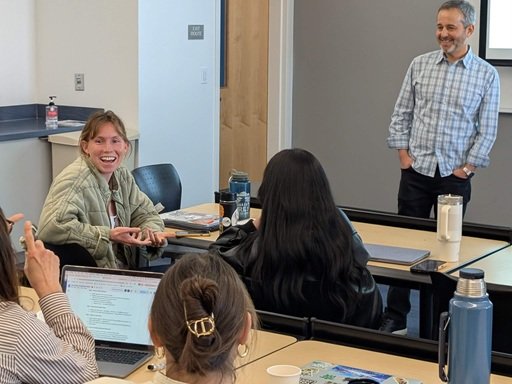
The term "hybrid" does not have a standardized definition in MFT education. It can refer to a program where students attend campus one weekend per month, a program with a single weeklong intensive each year, or a program with multiple multi-day residencies distributed across the full degree. What happens during those in-person days varies just as widely. Some programs use their residential component primarily for administrative purposes: orientation sessions, advising meetings, and introductions to the upcoming semester's coursework. Others fill the time with traditional didactic lectures, delivering content that could, in principle, be delivered online. And some programs structure their in-person time as intensive skills labs where the majority of hours are spent on behavioral rehearsal, live demonstration, peer practice, and faculty-coached feedback on specific clinical micro-skills.
These are fundamentally different experiences for students, even if they appear similar in a program brochure. A residency organized around lecture may feel productive because students are absorbing new information, but research suggests it may not translate into measurable skill gains. The research on continuing education in mental health professions has found that attendance at didactic presentations, the most common format for professional development, shows minimal connection to clinical performance or client outcomes (Taylor and Neimeyer, 2017). There is no reason to assume that the same format produces different results when used with graduate students rather than licensed professionals. The question for prospective students is whether the in-person time is designed to change what you can do in a therapy session or primarily to change what you know about therapy. Both matter, but they are not the same thing.
A related variable is the ratio of faculty to students during the in-person component. Skills training requires individualized feedback. A faculty member can observe and coach a student through a behavioral rehearsal exercise, identify a specific moment where the student's response could be refined, and guide a second attempt. This kind of feedback loop is practical with small groups but becomes increasingly difficult as the number of students grows. Programs that bring large cohorts together for residency weekends may offer a valuable community experience, but they face logistical constraints on how much individualized skills coaching any single student receives during that time. The structure of the residency, not just its existence on the calendar, determines what students actually gain from it. For a detailed look at how faculty credentials and training backgrounds shape the quality of clinical instruction, see the Sentio University faculty and supervisors page.
Because hybrid programs are not required to disclose the breakdown of their in-person time in any standardized format, prospective students cannot easily compare residency structures from program websites alone. Marketing materials may describe in-person residencies as "intensive" or "immersive" without specifying what activities fill the schedule. The most reliable approach is to ask concrete questions and, where possible, observe a residency session before enrolling. Sentio University maintains a program overview page that describes the specific components of its hybrid model, including the number and purpose of its in-person residencies, as one example of the kind of detail prospective students should look for.
What Should You Ask About In-Person Residencies When Comparing MFT Programs?
When evaluating hybrid MFT programs, the structure and purpose of in-person residencies are concrete enough to ask about directly. The following questions can help clarify what a program's residential component actually involves, rather than what it is called in promotional materials.
- How many total in-person residency days does the program require across the full degree? Are they distributed across semesters or concentrated in one or two blocks?
- What percentage of residency time is spent on behavioral skills practice versus lecture, administrative tasks, or orientation?
- Do students practice therapy skills with peers during residencies, receiving live corrective feedback from faculty? If so, how is that feedback structured?
- What is the student-to-faculty ratio during residency skills training sessions? Are faculty actively coaching individuals, or presenting to the full group?
- Is the residency content integrated into the course sequence, meaning it is tied to specific clinical skills being taught that semester, or is it a standalone event?
- Are residencies required for all students, or can they be waived or completed in an alternative format?
- Can you observe or attend part of a residency before enrolling? Can you speak with current students about their experience of the in-person component?
The willingness and specificity with which a program answers these questions will tell you something about how central the residency is to its training model. A program that views its in-person time as a core training mechanism will typically be able to describe in detail what happens during those days, what skills are practiced, and how the residency connects to the broader curriculum. A program that treats the residency as a logistical requirement may offer less specific answers.
How Does the Sentio MFT Program Structure Its In-Person Residencies?
The following section describes the in-person residency component at Sentio University's MA in Marriage and Family Therapy program as one concrete example of how residencies can be structured. Sentio is a small nonprofit program and represents one approach among several in California; it is included here to illustrate what an integrated, skills-focused residency model looks like in practice. Programs with different structures, resources, or educational philosophies may approach their in-person components differently.
Sentio's 20-month hybrid program includes five intensive in-person residencies in Los Angeles, one at the start of each semester. Rather than functioning as standalone orientation events, these residencies are designed as concentrated skills training intensives that connect directly to the clinical content students will encounter in the upcoming semester's coursework and practicum. The program uses a cohort model, with cohorts limited to a maximum of twenty-four students, which allows for individualized faculty coaching during skills practice sessions.
The design philosophy behind the residency component reflects the program's broader Clinic-to-Classroom method, described in a published article in Psychotherapy Bulletin: "Training effective psychotherapists requires more than just classroom instruction; it demands an integration of practical experience with theoretical learning" (Rousmaniere and Vaz, 2025, p. 1). At Sentio, roughly half of nearly every class session is dedicated to active skills training rather than lecture (Rousmaniere and Vaz, 2025, p. 2). The in-person residencies intensify this ratio. Students spend the majority of residency time in structured deliberate practice exercises: rehearsing specific clinical micro-skills with peers, receiving live corrective feedback from trained faculty, and repeating exercises until specific behavioral targets are met.
The residency also introduces students to the supervision and clinical practices they will use throughout the semester. According to a published description of the program: "All therapy sessions are videotaped; all counselors use routine outcome monitoring every session with every client; all counselors have weekly individual supervision, group supervision, and DP skills training; all supervision sessions are videotaped" (Rousmaniere and Vaz, 2025, p. 1, Editor's Note). During the residency, students begin to learn the specific skills they will need for this level of clinical transparency and structured feedback. This means that by the time students begin seeing clients at the Sentio Counseling Center, their guaranteed practicum site, they have already practiced the relevant clinical behaviors in a supported in-person environment.
Sentio supervisors are also trained through a rigorous video-based supervision training program (Rousmaniere and Vaz, 2025) that now runs in six- and twelve-month tracks, meaning that the faculty coaching students during residencies have themselves been trained through a structured deliberate practice model. This creates consistency between what students experience during residencies and what they encounter in ongoing online supervision throughout the semester.
Students considering Sentio should note the program's specific context. It operates an integrated counseling center and uses a small-cohort model, which makes intensive, individualized residency training logistically feasible. Programs with larger cohorts or without affiliated clinics may face practical constraints that shape their residency design differently. For a fuller picture of the program's structure and policies, prospective students can review Sentio's frequently asked questions page, explore the program's approach to AI-integrated clinical training, or visit the Week in the Life page for a detailed look at what a typical student schedule includes.
Frequently Asked Questions
Are in-person residencies required by the California BBS for MFT licensure?
No. The California Board of Behavioral Sciences requires that MFT trainees complete a qualifying master's degree that includes specific coursework and a minimum of six semester units of practicum with at least 150 hours of face-to-face counseling experience (BBS MFT Handbook, 2024). However, the BBS does not mandate that programs include in-person residencies as part of their curriculum structure. Whether a hybrid program includes residencies, and how those residencies are designed, is a decision made at the program level. The presence and quality of in-person training varies across institutions.
How do in-person residencies differ from regular online class sessions in a hybrid MFT program?
Online class sessions in hybrid programs typically involve live video discussion, case presentation, assigned readings, and some forms of skills practice such as role-play exercises conducted over videoconference. In-person residencies, when structured around skills training, provide an environment where students and faculty share the same physical space, which allows for more nuanced observation of interpersonal behavior, immediate hands-on coaching, and group exercises that involve the kinds of embodied interpersonal dynamics that characterize real therapy sessions. The difference is not that online learning is ineffective, but that certain dimensions of clinical skill development benefit from the richer feedback environment that in-person contact provides.
What typically happens during an in-person residency at an MFT program?
This varies considerably across programs. Some residencies focus primarily on orientation, administrative logistics, and didactic lectures. Others are structured as intensive skills training labs where the majority of time is spent on behavioral rehearsal, live demonstration, faculty-coached practice, and peer feedback on specific clinical skills. Because there is no standardized format, prospective students should ask programs directly about their residency schedule, including how many hours are spent on different activities and what specific skills are practiced during those days.
Can I complete an MFT degree entirely online in California?
Some programs in California do offer MFT degrees that are primarily or entirely online, though all programs must meet BBS requirements for supervised clinical practicum hours, which involve direct client contact. Whether a fully online program provides adequate opportunities for the kind of structured skills practice that research associates with clinical development is a question worth examining carefully. The research literature consistently shows that passive learning formats have limited impact on skill acquisition, and that deliberate practice, involving structured behavioral rehearsal with corrective feedback, is the mechanism most strongly associated with genuine improvement in clinical performance (Rousmaniere, Goodyear, Miller, and Wampold, 2017). For a comparison of how different California MFT programs structure their training, including the balance of online and in-person components, see the Sentio MFT Program Overview.
How many in-person residency days should I expect in a hybrid MFT program?
This varies widely. Some hybrid programs require as few as one or two weekend visits per year. Others include multiple multi-day residencies per semester. The total number of in-person days matters, but so does how those days are used. A program with fewer residency days but a strong focus on behavioral skills practice may provide more meaningful training than a program with more in-person days spent primarily on lecture. Asking about both the quantity and the content of in-person time will give you a more accurate picture.
Do in-person residencies count toward practicum or supervised clinical hours?
In most hybrid MFT programs, in-person residencies are part of the academic coursework component rather than the clinical practicum. Supervised clinical hours for California BBS licensure are accumulated separately through direct client contact at an approved practicum or clinical training site. However, the skills practiced during well-designed residencies directly prepare students for their practicum work. Programs that align their residency content with the clinical demands students will face in practicum create a more coherent and integrated training experience.
What is the difference between a residency focused on lecture versus one focused on skills practice?
A lecture-focused residency delivers content: theory, research findings, clinical frameworks, or program policies. Students receive information, which can be valuable for building knowledge. A skills-focused residency is organized around behavioral rehearsal: students practice specific clinical micro-skills, receive live corrective feedback, and repeat exercises with coaching. The distinction matters because research on expertise development consistently finds that knowledge acquisition and skill acquisition are different processes. As Rousmaniere and Vaz described the gap: many programs produce students who can discuss therapy concepts fluently but still struggle to perform therapy effectively, and deliberate practice is the mechanism designed to close that gap (Rousmaniere and Vaz, 2025, p. 3).
How does in-person deliberate practice differ from online role-play exercises?
Online role-play exercises can be a useful component of clinical training, and many programs use them effectively. In-person deliberate practice differs in several ways. Faculty can observe the full range of a student's interpersonal behavior, including posture, physical tension, spatial dynamics, and subtle shifts in vocal quality, that may be less visible on a screen. Coaching can happen in the moment, with a faculty member pausing an exercise to offer a specific correction and asking the student to try again immediately. Group exercises can involve multiple students interacting simultaneously, observing each other, and providing peer feedback in a shared physical environment. These elements do not make online practice worthless, but they do create a different quality of feedback and a different intensity of experience that many students and training experts describe as qualitatively distinct.
Choosing where to complete your MFT training is a significant decision, and the structure of a program's in-person residencies is one of several concrete indicators worth examining directly. No single feature defines a program's quality, and programs that structure their residencies differently may still offer excellent training in other respects. What matters is that you gather accurate information about what actually happens during the in-person component rather than relying on how a program describes it in marketing materials. The most reliable way to assess any training program's in-person experience is to visit a residency or class session and observe how faculty and students actually work together. Every program that takes its training seriously should not only permit this kind of visit but actively encourage it. Watching a skills practice session, particularly one in which students are rehearsing clinical behaviors and receiving live feedback, will tell you more in an hour than any program website or brochure. As you evaluate programs, ask each one directly whether you can attend or observe a residency session before enrolling. The willingness and enthusiasm with which a program responds to that request will tell you something important about its training culture. If you are interested in observing a class or residency at Sentio University, you can request information or attend an open house to experience the training model firsthand.
References
Goldberg, S. B., Rousmaniere, T., Miller, S. D., Whipple, J., Nielsen, S. L., Hoyt, W. T., and Wampold, B. E. (2016). Do psychotherapists improve with time and experience? A longitudinal analysis of outcomes in a clinical setting. Journal of Counseling Psychology, 63(1), 1-11. https://doi.org/10.1037/cou0000131
Levenson, H. (2024). What deliberate practice supervision has to offer traditional supervision: Nine take-home messages. Psychotherapy Bulletin, 59(3), 55-59. https://societyforpsychotherapy.org/what-deliberate-practice-supervision-has-to-offer-traditional-supervision-nine-take-home-messages/
Miller, S. D., Hubble, M. A., and Chow, D. (2017). Professional development: From oxymoron to reality. In T. Rousmaniere, R. K. Goodyear, S. D. Miller, and B. E. Wampold (Eds.), The cycle of excellence: Using deliberate practice to improve supervision and training (pp. 23-48). John Wiley and Sons. ISBN: 978-1-119-16556-9. https://onlinelibrary.wiley.com/doi/book/10.1002/9781119165590
Rousmaniere, T. (2017). Deliberate practice for psychotherapists: A guide to improving clinical effectiveness. Routledge. ISBN: 978-1-138-20320-4. https://doi.org/10.4324/9781315472256
Rousmaniere, T. (2019). Mastering the inner skills of psychotherapy: A deliberate practice manual. Gold Lantern Press. ISBN: 978-1-7325657-0-8. https://drtonyr.com/research-writing
Rousmaniere, T., Goodyear, R. K., Miller, S. D., and Wampold, B. E. (2017). Introduction. In T. Rousmaniere, R. K. Goodyear, S. D. Miller, and B. E. Wampold (Eds.), The cycle of excellence: Using deliberate practice to improve supervision and training (pp. 3-22). John Wiley and Sons. ISBN: 978-1-119-16556-9. https://onlinelibrary.wiley.com/doi/book/10.1002/9781119165590
Rousmaniere, T., and Vaz, A. (2025). Sentio's clinic-to-classroom method: Bridging deliberate practice and clinical training. Psychotherapy Bulletin, 60(2), 79-84. https://societyforpsychotherapy.org/sentios-clinic-to-classroom-method
Taylor, J. M., and Neimeyer, G. J. (2017). The ongoing evolution of continuing education: Past, present, and future. In T. Rousmaniere, R. K. Goodyear, S. D. Miller, and B. E. Wampold (Eds.), The cycle of excellence: Using deliberate practice to improve supervision and training (pp. 219-248). John Wiley and Sons. ISBN: 978-1-119-16556-9. https://onlinelibrary.wiley.com/doi/book/10.1002/9781119165590
APA Essentials of Deliberate Practice Series: https://www.apa.org/pubs/books/browse
California Board of Behavioral Sciences (BBS): https://www.bbs.ca.gov
BBS Licensing Population Report (September 2024): https://www.bbs.ca.gov/pdf/board_minutes/2024/20241114-15_item9.pdf
BBS MFT Handbook: https://www.bbs.ca.gov/pdf/publications/mft_ada.pdf
About the Authors
Tony Rousmaniere, PsyD is the President of Sentio University and Executive Director of the Sentio Counseling Center. He is Past-President of the psychotherapy division of the American Psychological Association and the author of over 20 books on deliberate practice and psychotherapy training, including The Essentials of Deliberate Practice book series (APA Books). He is a licensed psychologist in California and Washington. Learn more
Alexandre Vaz, PhD is the Chief Academic Officer of Sentio University and cofounder of the Deliberate Practice Institute. He is co-editor of The Essentials of Deliberate Practice book series (APA Books) and the author of over a dozen books on deliberate practice and psychotherapy training. Dr. Vaz is the founder and host of Psychotherapy Expert Talks. He is a licensed clinical psychologist in Portugal. Learn more