
15-Hour Clinical Supervision Course in California: What to Look For and How to Choose
15-Hour Clinical Supervision Course in California: What to Look For and How to Choose
If you are a licensed therapist in California preparing to supervise associates or trainees for the first time, the California Board of Behavioral Sciences (BBS) requires you to complete a minimum of 15 hours of supervision training. This requirement applies to LMFTs, LCSWs, LPCCs, and LEPs who begin supervising on or after January 1, 2022.
The 15-hour course is mandatory. But it is only the first step in a two-part process that separates supervisors who meet legal requirements from supervisors who actually develop the skills to help their supervisees grow.
Last updated: September 2026
Two Steps to Becoming an Effective Clinical Supervisor
Step one is regulatory compliance: completing the BBS-mandated 15-hour supervisor training. This training covers the legal, ethical, and procedural foundations of clinical supervision in California. Every new supervisor must complete it, and most providers offer it as a self-study, live webinar, or weekend workshop format. This blog post is a guide to evaluating and choosing among these 15-hour courses.
Step two is advanced training in supervision methodology, which goes well beyond regulatory compliance. This means learning how to be an effective supervisor through extended mentorship, video-based consultation, corrective feedback, and structured skill rehearsal with real cases. Not every supervisor takes this second step, and the BBS does not require it. But research consistently shows that the gap between completing a compliance course and developing genuine supervisory competence is substantial. As Rousmaniere, Goodyear, Miller, and Wampold (2017) observed, "Becoming a supervisor commonly requires little formal training or role induction beyond attending 5 to 10 hours of lecture-style learning" (p. 271). The 15-hour requirement raised this floor, but the ceiling for what effective supervision demands is far higher.
If you are interested in that second step, Sentio University offers a free, six- or twelve-month Deliberate Practice Supervision Training Program that provides up to 50 CE hours of hands-on training with weekly video-based mentorship. But first, let us focus on step one: how to evaluate and select the right 15-hour course.
What the California BBS Requires in the 15-Hour Training
The BBS specifies both the content and the source of the 15-hour supervision training. The course must come from one of three types of providers: a government agency, a BBS-accepted continuing education (CE) provider, or an accredited or approved postsecondary institution offering the coursework at the master's level or higher.
The required content areas are defined in the BBS Summary of Supervisor Qualifications (2024) and include: competencies necessary for new supervisors, goal setting and evaluation of supervisees, the supervisor-supervisee relationship, California law and ethics related to supervision, cultural variables including race, gender, social class, and religious beliefs, contextual variables such as treatment modalities, work settings, and the use of technology, supervision theories and literature, and documentation and record keeping for both client files and supervision records.
This is a broad scope for 15 hours. A training program must address legal compliance, cultural competence, relational dynamics, theoretical frameworks, and administrative requirements in the equivalent of two full workdays. The breadth of these mandated topics means that any single 15-hour course will necessarily cover each area at an introductory level. This is worth keeping in mind as you evaluate your options: the 15-hour course provides a foundation, not mastery.
Timing Rules: When the Training Must Be Completed
The BBS imposes specific timing requirements depending on where you take the course. If you complete the training through a government agency or a BBS-accepted CE provider, the course must have been taken no earlier than two years before you begin supervising, or within 60 days after you begin supervising. If you complete the training at the master's level or higher from a regionally or nationally accredited institution, or a school approved by the California Bureau for Private Postsecondary Education, the window extends to four years before you begin supervising.
This distinction matters for planning. If you took a graduate-level supervision course during your master's or doctoral program, it may still count toward the requirement if you begin supervising within four years of completing it. CE-based courses have a tighter window. In either case, you must also complete and submit a Supervisor Self-Assessment Report to the BBS within 60 days of beginning supervision for the first time.
Supervisors who have previously supervised but have not done so for two or more years face a separate requirement: six hours of supervision training within 60 days of resuming supervision. And all active supervisors must complete six hours of continuing professional development (CPD) in supervision during each license renewal cycle. For a full walkthrough of these requirements, see our guide on how to become a clinical supervisor in California.
Online, Self-Study, or Live: Which Format Should You Choose?
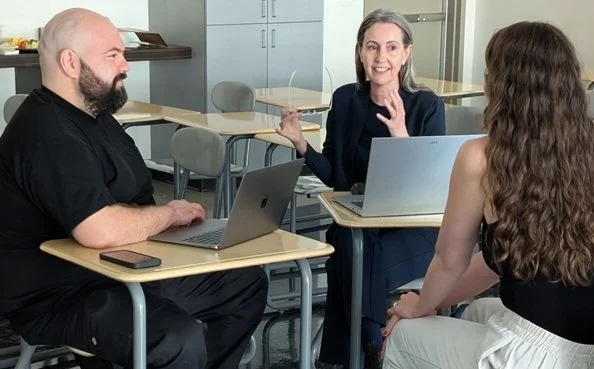
Most 15-hour supervisor training courses are available in one of three formats: self-paced online text or video courses, live webinars conducted over Zoom or a similar platform, or in-person workshops typically held over a weekend or two to three days. Each format meets the BBS requirement. The question is which format will give you the most useful preparation for the work ahead.
Self-paced online courses are the most convenient and often the least expensive. They allow you to complete the training on your own schedule, typically over a period of days or weeks. The trade-off is that they involve no interaction with an instructor or with other supervisors-in-training. You read or watch the material, take a quiz, and receive your certificate. Research on continuing education in the mental health professions suggests that this kind of passive format has significant limitations. Taylor and Neimeyer (2017) found that "passive learning from didactic presentation does not facilitate long-term learning and registers minimal impact on skill acquisition or client outcomes" (p. 233). This does not mean self-study courses are without value, but it does mean they are better suited to conveying information than to building skill.
Live webinar and in-person formats offer opportunities for discussion, role-play, and Q&A with the instructor and other participants. If the course includes structured exercises or simulations, these formats can begin to move beyond pure information transfer. The downside is less scheduling flexibility and higher cost. Some live courses are offered as a single intensive weekend, while others are spread across multiple sessions.
Regardless of format, keep in mind that 15 hours of any instructional method is an introduction. As Goodyear and Rousmaniere (2017) noted, "Therapists already credit supervision as the single most important contributor to their professional development" (p. 67), citing a large multinational investigation. The stakes of supervisory work are real, and 15 hours is a compressed starting point for something most clinicians consider central to their growth.
How to Evaluate the Quality of a 15-Hour Supervisor Training Course
Not all 15-hour courses are equal. Here are the key dimensions to evaluate when comparing your options.
Does It Cover All Required BBS Content Areas?
This is the baseline. Verify that the course explicitly addresses every content area specified in the BBS Summary of Supervisor Qualifications. Some courses bundle multiple shorter modules to reach 15 hours, and it is worth checking that the full set of required topics is covered across those modules rather than assuming it.
Who Is Teaching It?
Look for instructors with direct clinical supervision experience, not just subject matter expertise in law or ethics. The best 15-hour courses are taught by clinicians who have supervised associates and trainees themselves and can speak from practical experience about the challenges you will face. The supervision literature consistently demonstrates that the relationship and process dimensions of supervision are at least as important as the regulatory content, and instructors who have navigated these dynamics bring a different quality to the training. For context on what research-informed supervisor development looks like in practice, see the Sentio University Deliberate Practice Supervision Training Program.
Does It Go Beyond Compliance?
Some courses treat the 15-hour requirement as a checklist: here are the rules, here are the forms, here is your certificate. Others embed the regulatory content within a broader framework of supervision skill development. The research base for this distinction is sobering. Rousmaniere (2017) found that "supervisors accounted for less than .01% of the variance in psychotherapy outcome" in a study of 6,521 clients seen by 175 therapists supervised by 23 supervisors (pp. 11-12). This does not mean supervision is unimportant. It means that supervision as it is typically practiced, often built on minimal training, does not yet produce the client outcomes it should. A course that acknowledges this gap and begins to address it is more valuable than one that does not.
Does It Address the Supervisory Relationship?
Research has consistently shown that the quality of the supervisor-supervisee relationship is a determining factor in whether supervision works. Rousmaniere (2017) reported that "84% of trainees reported withholding information" from their supervisors, "with a 'negative perception of supervision' being the most common topic withheld" (p. 10, citing Mehr, Ladany, & Caskie, 2010). A good 15-hour course should dedicate meaningful time to building a supervision relationship where your supervisees feel safe enough to bring their real clinical struggles, not just their polished case presentations. Look for courses that discuss how to create psychological safety, handle ruptures, and navigate power dynamics.
Does It Include Practice, Not Just Information?
The difference between knowing the rules of supervision and knowing how to supervise is the difference between reading about swimming and getting in the water. If the course includes any form of structured practice, role-play, or case simulation, that is a significant advantage. Brand, Miller-Bottome, Vaz, and Rousmaniere (2025) described the core problem with traditional approaches: "Broadly speaking, TS suffers from training therapists to get good at talking about therapy in supervision and not necessarily as good at actually doing therapy in session" (p. 2). The same critique applies to supervisor training itself: it is possible to complete a 15-hour course and know what supervision should look like on paper without having practiced any of the actual skills involved.
Questions to Ask Before Enrolling
Before you commit to a specific 15-hour course, consider asking the provider the following questions. Their answers will tell you a lot about the depth and quality of the training.
Is the course accepted by the California BBS for the 15-hour new supervisor requirement? This should be clearly stated. If it is not, ask for documentation of the provider's CE approval status.
Does the course cover all content areas specified in the BBS Summary of Supervisor Qualifications? Ask for a topic outline or syllabus. Cross-reference it against the BBS requirements document.
What is the format? Self-paced text, self-paced video, live webinar, or in-person? How many total hours are synchronous vs. asynchronous?
Who are the instructors, and what is their supervision experience? Look for instructors who actively supervise clinicians, not just educators who lecture on supervision topics.
Is there any interactive component? Role-play, case discussion, simulation, or Q&A? Even minimal interactivity adds value over a purely passive format.
How long do I have access to the materials? Some self-study courses expire after 30 or 60 days. Others provide ongoing access to reference materials, which can be useful as you begin supervising and encounter questions.
What support is available after completion? Does the provider offer follow-up consultation, a community of practice, or pathways to more advanced supervisor training? If you are serious about developing genuine supervisory competence beyond the 15-hour minimum, look for providers that offer a clear next step.
For a deeper analysis of how weekend and short-format courses compare to longer-term training, see our post on why weekend supervisor trainings fall short.

Beyond the 15 Hours: Why Compliance Is Not Competence
The 15-hour course will prepare you to meet the BBS requirement. It will give you a working knowledge of California supervision law, the documentation you need to maintain, and the ethical boundaries you must observe. This is genuinely important, and you should take the time to choose a course that covers it well.
But regulatory compliance and supervisory competence are not the same thing. The research on this point is extensive and consistent. Goodyear and Rousmaniere (2017) noted that despite therapists crediting supervision as the single most important contributor to their development, "Supervisees report that a large proportion of their supervisors are either ineffective or harmful" (p. 68, citing Ellis et al., 2014). In a separate study, Rousmaniere (2017) cited data showing that "93% of the supervisees are in 'inadequate supervision' and over half of the supervisees had received harmful clinical supervision" (p. 35, citing Ellis et al., 2014, p. 461). These findings describe a field where the gap between what supervision is supposed to accomplish and what it actually delivers is wide.
Part of the explanation is structural. As Rousmaniere, Goodyear, Miller, and Wampold (2017) observed, "Since the days of Freud, it has been assumed that experience as a clinician is sufficient to make one an effective supervisor. This assumption stands in contrast to many other fields, which define the role of a coach as clearly distinct from that of a performer and do not assume that great performers are automatically effective coaches" (p. 271). The 15-hour requirement was a step toward addressing this assumption, but 15 hours cannot close the gap on its own.
The supervisors who do develop genuine effectiveness tend to share certain characteristics. They use video to observe their supervisees' actual clinical work rather than relying solely on verbal case reports. They provide specific, corrective feedback tied to observable moments in session. They structure supervision around skill rehearsal, not just conceptual discussion. And they continue their own professional development in supervision methodology over time, not just during the initial training period. Hanna Levenson (2024), a psychotherapy training expert who spent a year and a half observing Sentio University's supervision-of-supervision meetings, wrote: "In the past, I have written about how supervision has been the most closeted component of psychotherapy training; no one records or shows their supervision sessions. In these Sup-of-Sup meetings, however, the door is thrown wide open!" (p. 2).
Miller, Hubble, and Chow (2017) identified a parallel pattern in therapist development more broadly: "What does reliably improve is therapists' confidence in their abilities," even as client outcomes plateau or decline (p. 24). Without structured feedback and deliberate skill-building, it is possible to supervise for years while believing you are effective without evidence to confirm it. Rousmaniere, Goodyear, Miller, and Wampold (2017) put this directly: "Meaningful skill acquisition is hard work that requires persistence, openness to critical feedback, and continuous effort despite delayed gratification" (p. 273).
What Step Two Looks Like
If you are serious about becoming an effective clinical supervisor and not just a compliant one, the second step involves training that goes well beyond what any 15-hour course can provide. The hallmarks of advanced supervisor training include extended duration (months or a full year rather than days), video-based observation of your own supervision sessions, regular feedback from experienced mentors on your supervisory practice, and structured rehearsal of specific supervisory skills with real cases.
Sentio University's Deliberate Practice Supervision Training Program offers this kind of advanced training at no cost through a six- or twelve-month work-trade arrangement. The program provides up to 50 CE hours, weekly group mentoring with senior faculty, and Deliberate Practice Coach certification. It is open to licensed supervisors in California and Washington State.
Whichever path you take, the first step is the same: choose a solid 15-hour course that gives you a strong regulatory and conceptual foundation. Use the criteria in this guide to compare your options. Then consider what comes next. Your supervisees, and their clients, will benefit from whatever additional investment you make in developing your supervisory skills.
Keep reading
How to become a clinical supervisor in California, BBS requirements, training hours, and next steps.
CAMFT Certified vs. AAMFT Approved supervisor, which credential fits which audience.
LMFT vs. LCSW vs. LPCC supervisor requirements, the three license paths compared.
Why one-weekend supervisor trainings fall short, the case for year-long training.
References
Brand, J., Miller-Bottome, M., Vaz, A., & Rousmaniere, T. (2025). Deliberate practice supervision in action: The Sentio Supervision Model. Journal of Clinical Psychology, 1-11. https://doi.org/10.1002/jclp.23790
California Board of Behavioral Sciences. (2024). Summary of supervisor qualifications. https://www.bbs.ca.gov/pdf/supervisor_qualifications.pdf
Goodyear, R. K., & Rousmaniere, T. (2017). Helping therapists to each day become a little better than they were the day before: The Expertise-Development Model of supervision and consultation. In T. Rousmaniere, R. K. Goodyear, S. D. Miller, & B. E. Wampold (Eds.), The cycle of excellence: Using deliberate practice to improve supervision and training (pp. 67-96). John Wiley & Sons. ISBN: 978-1-119-16556-9. https://doi.org/10.1002/9781119165590.ch4
Levenson, H. (2024, May). What deliberate practice supervision has to offer traditional supervision: Nine take-home messages. Psychotherapy Bulletin, 59(3), 55-59. https://societyforpsychotherapy.org/what-deliberate-practice-supervision-has-to-offer-traditional-supervision-nine-take-home-messages/
Miller, S. D., Hubble, M. A., & Chow, D. (2017). Professional development: From oxymoron to reality. In T. Rousmaniere, R. K. Goodyear, S. D. Miller, & B. E. Wampold (Eds.), The cycle of excellence: Using deliberate practice to improve supervision and training (pp. 23-48). John Wiley & Sons. ISBN: 978-1-119-16556-9. https://doi.org/10.1002/9781119165590.ch2
Rousmaniere, T. (2017). Deliberate practice for psychotherapists: A guide to improving clinical effectiveness. Routledge. ISBN: 978-1-138-20320-4. https://doi.org/10.4324/9781315472256
Rousmaniere, T., Goodyear, R. K., Miller, S. D., & Wampold, B. E. (2017). Improving psychotherapy outcomes: Guidelines for making psychotherapist expertise development routine and expected. In T. Rousmaniere, R. K. Goodyear, S. D. Miller, & B. E. Wampold (Eds.), The cycle of excellence: Using deliberate practice to improve supervision and training (pp. 267-276). John Wiley & Sons. ISBN: 978-1-119-16556-9. https://doi.org/10.1002/9781119165590.ch13
Taylor, J. M., & Neimeyer, G. J. (2017). The ongoing evolution of continuing education: Past, present, and future. In T. Rousmaniere, R. K. Goodyear, S. D. Miller, & B. E. Wampold (Eds.), The cycle of excellence: Using deliberate practice to improve supervision and training (pp. 219-248). John Wiley & Sons. ISBN: 978-1-119-16556-9. https://doi.org/10.1002/9781119165590.ch11
About the Authors
Tony Rousmaniere, PsyD is the President of Sentio University and Executive Director of the Sentio Counseling Center. He is Past-President of the psychotherapy division of the American Psychological Association and the author of over 20 books on deliberate practice and psychotherapy training, including The Essentials of Deliberate Practice book series (APA Books). He is a licensed psychologist in California and Washington. Learn more
Alexandre Vaz, PhD is the Chief Academic Officer of Sentio University and cofounder of the Deliberate Practice Institute. He is co-editor of The Essentials of Deliberate Practice book series (APA Books) and the author of over a dozen books on deliberate practice and psychotherapy training. Dr. Vaz is the founder and host of Psychotherapy Expert Talks. He is a licensed clinical psychologist in Portugal. Learn more