
How to Become a Therapist in California: The Complete Step by Step Pathway
The Complete California Pathway From Bachelor's Degree to LMFT License
California is home to 48,679 active Licensed Marriage and Family Therapists as of September 2024, according to the California Board of Behavioral Sciences Licensing Population Report (BBS, 2024). Becoming one of them takes five to seven years for most students, broken into clearly defined stages that the state regulates closely. This post is a comprehensive pathway hub that walks through each stage from undergraduate preparation through full LMFT licensure, including the timeline, the registration and examination gates, the costs, and the career considerations for students entering the field at any age. For the realistic timeline math, see our companion post on how long it takes to become an LMFT in California. For the post-degree mechanics, see AMFT registration in California and California LMFT supervised hours. For the academic foundation, the Sentio MFT program overview and our guide on switching careers to become a therapist walk through what the master's degree itself involves.
What Is the Step by Step Process to Become a Therapist in California?
The California pathway to LMFT licensure breaks into six discrete stages. Stage 1: Bachelor's degree. A four-year undergraduate degree is required to apply to MFT graduate programs. The major does not have to be psychology, though some programs prefer or require specific prerequisite coursework. Career changers without a psychology background often complete a few prerequisite courses before applying. Stage 2: Apply to and complete a qualifying MFT master's program. The degree must include at least 60 semester units (or 90 quarter units) of specific coursework meeting California Business and Professions Code section 4980.36 or 4980.37, plus a practicum component with at least 150 hours of face-to-face counseling (BBS, 2024). Most master's programs run two to three years.
Stage 3: Register as an Associate Marriage and Family Therapist (AMFT) with the California BBS. Submit the application within 90 days of your degree award date so post-degree supervised hours can count from your degree date forward. Processing time averaged 27 days in FY 2024-2025, down from 52 days the prior year (BBS, 2025). Stage 4: Accumulate 3,000 hours of supervised experience. Of those, at least 1,750 must be direct clinical counseling, of which at least 500 must involve diagnosis and treatment of couples, families, or children. Hours must be accumulated over a minimum of 104 weeks, with supervision at a ratio of one unit per five hours of direct work. Stage 5: Pass the California Law and Ethics Examination. This exam is taken annually as a condition of AMFT renewal and must be passed before a subsequent registration. Stage 6: Pass the LMFT Clinical Examination. This is the final step before licensure, taken after all 3,000 hours are completed.
How Long Does It Take to Become a Therapist in California?
The realistic timeline from starting a bachelor's degree to LMFT licensure is roughly nine to eleven years for a traditional student: four years of undergraduate study, two to three years of graduate study, two and a half to three years of supervised AMFT practice, and several months of examination scheduling. For students who already hold a bachelor's degree, the path from starting the master's program to LMFT licensure is typically five to seven years.
Accelerated MFT programs compress the master's degree into 18 to 24 months, shortening the total timeline to roughly four to five years from the start of graduate school. Combined with California's recent reduction in AMFT registration processing times, an accelerated path is now meaningfully faster than the traditional one. For a comparison of accelerated and traditional options, see our post on accelerated and fast-track MFT programs in California.
Part-time and career-change paths take longer. A career changer who works full-time while completing a part-time master's program may take four to six years for the degree alone. The AMFT years also flex based on weekly hours: full-time AMFT work at 30 to 35 hours per week completes in about three years, while part-time work at 15 to 20 hours per week stretches to five or six years.
Can You Become a Therapist Later in Life in California?
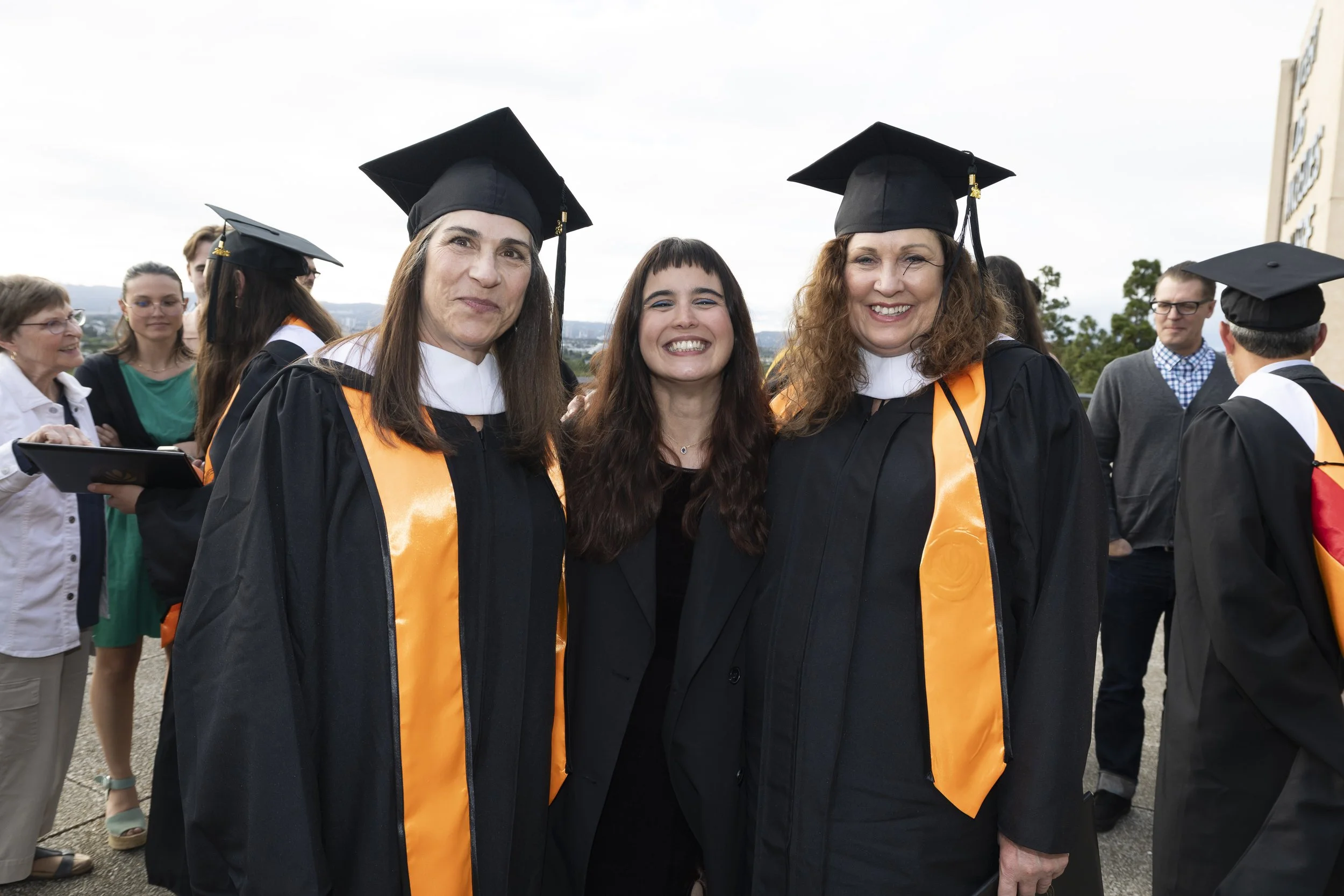
Yes, and many California MFT graduates begin their training in their thirties, forties, fifties, or older. The MFT field has historically been welcoming to career changers, and the regulatory pathway does not discriminate by age. The practical considerations differ from those of a recent college graduate.
For career changers, the path typically begins with a self-assessment of whether the bachelor's degree they hold meets the prerequisites for the master's programs they are considering. Some programs require specific prerequisite courses (in developmental psychology, statistics, or research methods), which can usually be completed at a community college or online for under $3,000. Others have flexible admissions and accept any accredited bachelor's degree. Our post on switching careers to become a therapist walks through this transition in detail.
Financial planning differs for later-life career changers. The trade-off between expected lifetime earnings as an LMFT and the cost of the degree depends on how many years of practice the student expects after licensure. A 35-year-old who licenses at 40 has 25 years of LMFT practice ahead. A 55-year-old who licenses at 60 has 10 to 15 years. Both can be financially viable, but the math is different. The Bureau of Labor Statistics reports the California mean annual wage for MFTs at $69,780 as of May 2023, with regional variation up to $92,370 in the San Francisco Bay Area (BLS, 2024). For a deeper look, see our statewide salary guide for prospective MFT students.
What Are the Two Required Examinations for California LMFT Licensure?
The California BBS requires LMFT candidates to pass two examinations administered by Pearson VUE. The first, the California Law and Ethics Examination, must be taken annually during the AMFT registration period as a condition of renewal, and must be passed before a subsequent (second or later) AMFT number can be issued. The first-time pass rate for this exam was approximately 85 to 86 percent in late 2022 (BBS, 2023). For a focused walkthrough, see our post on the California BBS Law and Ethics Exam for MFT.
The second exam, the LMFT Clinical Examination, is taken after all 3,000 hours of supervised experience are completed. Its first-time pass rate was approximately 79 to 83 percent in the same reporting period (BBS, 2023). Effective September 1, 2024, the LMFT clinical examination was reduced from 170 to 150 total questions, with 125 of those scored (BBS, 2024).
Both exams are scored on a pass-fail basis. The exam fee is paid separately from the BBS application fees, and candidates who do not pass on the first attempt must wait at least 90 days before retaking. Most candidates pass both exams within 12 months of becoming eligible. The overall pass rate for the clinical exam (including repeat takers) is lower than the first-time rate, suggesting that comprehensive preparation matters.
Does the Quality of Your MFT Program Affect Your Path to Licensure?
The procedural gates are the same regardless of program. What varies is how prepared you arrive at each gate, and how effective you are as a clinician across the AMFT years and beyond.
The research on therapist effectiveness is consistent: time in the field does not produce skill on its own. Alexandre Vaz, PhD, and Tony Rousmaniere, PsyD, summarize the literature in Clarifying Deliberate Practice for Mental Health Training: "research has consistently suggested that years of clinical experience bear little to no relation to therapist's effectiveness" (Vaz and Rousmaniere, 2022, p. 3). What does predict effectiveness is deliberate practice: structured, repeated, feedback-rich skill rehearsal that requires video review, outcome data, and explicit corrective feedback.
This has direct implications for your path through the licensure stages. An MFT program that integrates deliberate practice into every class produces graduates whose AMFT years build skill more quickly. A program that defers clinical skill development to a final practicum semester sends graduates into supervised practice with a thinner foundation. The questions to ask each prospective program are concrete: does the program operate its own counseling center, are sessions videotaped for supervision review, does the program use routine outcome monitoring to track client progress, what is the supervisor-to-student ratio, and is deliberate practice methodology part of the supervision model.
A note on accreditation. Prospective students sometimes equate accreditation with quality. The relationship is more complicated. For a balanced look, see Sentio's review of research suggesting COAMFTE programs are not preparing students for clinical practice and the companion explainer on what COAMFTE accreditation actually means for MFT students. The most reliable single action you can take is to ask each program whether you can attend a live or online class before enrolling. For more on the broader evaluation framework, see our guide on how to choose the right MFT program.

A Closer Look at One Program: Sentio University's MFT Track
The following is a concrete example of how one California MFT program structures the academic phase of the pathway. It is not a recommendation against evaluating other programs. Students should research multiple options and ask each one direct questions about how clinical skill is built and measured.
Sentio University offers a 20-month, 60-unit hybrid Master of Arts in Marriage and Family Therapy designed to meet California BBS licensure requirements. Most coursework is delivered live online, with in-person residencies in Los Angeles each semester. The program is described in peer-reviewed work as the first graduate psychotherapy program to thoroughly integrate deliberate practice, with roughly half of nearly every class session dedicated to active skills training rather than lecture (Rousmaniere and Vaz, 2025, p. 2).
Three features distinguish the model. First, the program offers a guaranteed practicum placement at the Sentio Counseling Center. Second, all therapy sessions at the counseling center are videotaped, all counselors use routine outcome monitoring every session with every client, and all supervision sessions are also videotaped (Rousmaniere and Vaz, 2025). Third, supervisors complete a 50-week video-based supervision training program before working with students (Rousmaniere and Vaz, 2025, p. 2). The program also offers AI literacy training through its AI certification program for therapists.
Sentio is a small, newer institution and its alumni network is still developing. Prospective students should factor that into their decision. Visit the Sentio MFT program overview and the Sentio FAQ page for more detail.
Making Your Decision
The California pathway to LMFT licensure is well-defined, but the years inside that pathway vary enormously based on the choices you make at each stage. The undergraduate major, the master's program format, the practicum placement, the AMFT employer, and the supervision structure all shape what kind of therapist you become. Marketing materials describe these stages in similar language regardless of what is actually happening underneath. The most reliable way to evaluate any MFT program or AMFT employer is to see it in operation. Ask every program you are seriously considering whether you can attend a live or online class session before enrolling, and ask AMFT employers whether you can speak with current associates. Reputable programs welcome this kind of inquiry. Hesitation or refusal is informative on its own. Trust what you see in a classroom or clinic over what you read in promotional copy.
Frequently Asked Questions
How long does it take to become a therapist in California?
For students who already have a bachelor's degree, the path from starting the master's program to LMFT licensure takes five to seven years: two to three years of graduate study, two and a half to three years of supervised AMFT practice, and several months of examination scheduling. Including a four-year undergraduate degree, the total is roughly nine to eleven years.
Do I need a psychology bachelor's degree to become a therapist in California?
No. California BBS does not require a specific undergraduate major. Some MFT graduate programs prefer or require certain prerequisite courses, but the bachelor's degree itself can be in any field from an accredited institution. Career changers from non-psychology backgrounds typically complete a few prerequisite courses before applying.
What is the difference between an LMFT, LCSW, and LPCC in California?
All three are master's-level mental health licenses regulated by the California BBS. LMFT focuses on systemic and relational therapy with individuals, couples, and families. LCSW (Licensed Clinical Social Worker) emphasizes a broader range of psychosocial interventions including case management and social systems. LPCC (Licensed Professional Clinical Counselor) is a more individually-focused counseling license. The three have overlapping but distinct training requirements and scope of practice.
Is it too late to become a therapist at 40 or 50?
No. California MFT programs regularly admit and graduate students in their forties, fifties, and beyond. The financial math depends on expected years of practice after licensure, but career changers often bring valuable life experience that benefits their clinical work. Our post on switching careers to become a therapist walks through the practical considerations.
How much does it cost to become a therapist in California?
The MFT master's degree alone typically costs $30,000 to $90,000 depending on the program. Adding undergraduate costs (if not already incurred), examination fees, BBS application fees, and lost income during full-time study, the total investment ranges from roughly $40,000 to over $100,000. Financial aid, scholarships, and the Behavioral Health Scholarship Program can offset substantial portions of this cost.
What is the difference between an AMFT and an LMFT?
An AMFT is an Associate Marriage and Family Therapist registered with the California BBS during the post-degree, pre-licensure phase. An LMFT is a Licensed Marriage and Family Therapist who has completed the required 3,000 supervised hours and passed both California examinations. AMFTs may practice only under supervision. LMFTs may practice independently.
Can I work as a therapist in another state with a California LMFT license?
License portability varies by state. California does not have full reciprocity with all other states, though many states will accept a California LMFT for licensure with additional requirements. Therapists planning to relocate should check the requirements of their destination state's regulatory board before assuming portability.
References
California Board of Behavioral Sciences. (2023). Examinations Report January 2023. https://www.bbs.ca.gov/pdf/agen_notice/2023/20230202_03_item_xv_d.pdf
California Board of Behavioral Sciences. (2024). Marriage and family therapist handbook. https://www.bbs.ca.gov/pdf/publications/mft_ada.pdf
California Board of Behavioral Sciences. (2024, November 14). Licensing Population Report. https://www.bbs.ca.gov/pdf/board_minutes/2024/20241114-15_item9.pdf
California Board of Behavioral Sciences. (2025). Executive Officer Report August 2025. https://bbs.ca.gov/pdf/agen_notice/2025/20250821_22_item_15.pdf
Rousmaniere, T., and Vaz, A. (2025, March). Sentio's clinic-to-classroom method: Bridging deliberate practice and clinical training. Psychotherapy Bulletin, 60(2), 79-84. https://societyforpsychotherapy.org/sentios-clinic-to-classroom-methodbridging-deliberate-practice-and-clinical-training/
U.S. Bureau of Labor Statistics. (2024). Occupational Employment and Wage Statistics: Marriage and Family Therapists (May 2023). https://www.bls.gov/oes/2023/may/oes211013.htm
Vaz, A., and Rousmaniere, T. (2022). Clarifying deliberate practice for mental health training. Sentio University. https://drive.google.com/file/d/1MFdWU-fRl-2EKN2rdvFsExPcJ8-O0C_A/view
About the Authors
Hello, World!