

The Honest Guide · Chapter 6
How Therapist Licensure Actually Works in California
Getting the degree is not getting licensed, so here is the route every California credential runs after graduation, and how it differs for therapists, counselors, social workers, and psychologists.
Last verified: October 2, 2026
The route is not the degree
Getting the degree is not the same as getting licensed. The degree only lets you start.
After you graduate, California runs every credential through the same machine. You register as an associate, accrue thousands of hours of supervised experience under specific rules, pass two exams, and clear a background review. The whole process takes years, and most people underestimate it because program websites end the story at graduation. This chapter walks the machine so you can see what you are signing up for before you commit to a degree.
The California LMFT route, step by step
The LPCC and LCSW follow the same shape. The psychologist route differs, as the comparison further down shows.
Which board you answer to
Two state boards license the four credentials this guide covers, and which one you deal with depends on the credential. The Board of Behavioral Sciences licenses marriage and family therapists (LMFTs), professional clinical counselors (LPCCs), and clinical social workers (LCSWs). The Board of Psychology licenses psychologists. Both sit under the California Department of Consumer Affairs, but they have separate statutes, separate rules, and separate applications, so read your own board’s current page before you commit. Naming this split early matters, because the later steps diverge between the three Board of Behavioral Sciences routes and the psychologist route.
When the clock starts: trainee hours, graduation, and associate registration
The answer depends on the license path. For MFTs, the clock can start during graduate school. California allows MFT trainees to count up to 1,300 supervised pre-degree hours toward the 3,000-hour requirement, including up to 750 hours of counseling and direct supervisor contact, as long as the hours meet Board of Behavioral Sciences rules for trainee experience. That makes the MFT path different from professional clinical counseling and social work, where the licensure hours start to accumulate after the degree and after registration as an associate.
After graduation, the three Board of Behavioral Sciences master’s-level credentials begin to look more similar. Once the board issues your associate number, you become an Associate Marriage and Family Therapist (AMFT), Associate Professional Clinical Counselor (APCC), or Associate Clinical Social Worker (ASW), and your post-degree supervised hours can count from that point forward. There is one important exception: if you apply for associate registration within 90 days of graduation and meet the required fingerprinting conditions, qualifying post-degree hours can count back to your graduation date. The 90-day rule does not replace the MFT trainee-hour rules; it protects the post-graduation gap before the associate number is issued. The psychologist route works differently, since supervised experience can begin during the doctorate.
Register the moment you are eligible. For the steps and documents, see AMFT registration: your first steps after graduating.
The qualifying degree
Each credential names a different degree. The LMFT requires a master’s or doctoral degree in marriage and family therapy or a closely related field, at least 60 semester units, from an accredited or California-approved institution. The LPCC requires a comparable counseling or psychotherapy degree of at least 60 semester units. The LCSW requires a master’s in social work (MSW) from a school accredited by the Council on Social Work Education. The psychologist requires a doctoral degree in psychology from a regionally accredited institution. This chapter names the standard each board sets. Whether a specific program is a good one, and how to compare them, is a separate question covered in comparing California MFT programs.
The hours machine
For the three Board of Behavioral Sciences credentials, the supervised-experience requirement is 3,000 hours, completed over at least 104 weeks. But the timing is not the same for every license. The LMFT path is different because MFT trainees can begin counting some hours during graduate school: up to 1,300 pre-degree hours may count toward the 3,000-hour total. The remaining hours are earned after graduation as an AMFT. By contrast, the LPCC and LCSW paths are built around post-degree experience after associate registration, with the 90-day rule as the narrow exception for qualifying hours earned between graduation and the associate number being issued.
The credentials also differ in how much of the 3,000 hours must be direct clinical work. The LMFT and LPCC each require at least 1,750 hours of direct clinical counseling. For LMFTs, at least 500 of those hours must involve diagnosing and treating couples, families, or children. The LCSW requires at least 750 hours of face-to-face psychotherapy inside a 2,000-hour clinical minimum. The psychologist route is built differently again: two years of supervised professional experience totaling 3,000 hours, at least half of it after the doctorate, with no separate direct-client-contact minimum. The hours are the heart of the route, and they are where the rules get specific. For the LMFT detail, see the 3,000-hour requirement explained. What happens to those hours over time, the exams, and the full credential-by-credential comparison come next.
Your hours can expire: the six-year window
Hours can expire. For the three Board of Behavioral Sciences credentials, hours gained more than six years before the board receives your licensure application do not count. A long interruption during the supervised-experience years can erase work you already did.
Treat the supervised years as a continuous block. The three master’s credentials must complete the 3,000 hours within the six years before the application is received. The psychologist route runs on a different clock, with each phase of supervised experience inside a 30-month window, or 60 months if all of it is postdoctoral. The practical reading is simple: the route forgives short gaps and punishes long ones, so if life forces a break, check your board’s time rule before you assume the hours you banked still count.
Two exams, not one
Every California credential requires two exams: a Law and Ethics Exam specific to the credential, and a clinical exam. Both differ by credential. For the LMFT it is the California Clinical Exam. For the LPCC it is the National Clinical Mental Health Counselor Examination (NCMHCE). For the LCSW it is the Association of Social Work Boards (ASWB) Clinical Exam. For the psychologist it is the national EPPP plus the California Psychology Laws and Ethics Examination. For the three Board of Behavioral Sciences credentials, the Law and Ethics Exam comes first, during your associate years, and the clinical exam comes after the board approves your licensure application.
The background review
Both boards run a character-and-fitness review when you apply. It is decided case by case. A past conviction or a prior disciplinary action is not an automatic bar, and the board weighs whether the matter relates to the work and how long ago it happened. The rules vary by board and by situation, so if you have a specific concern about your own history, ask your board directly. A forum thread or a general guide is not the right source for that question.
How the four credentials compare
Same machine, different settings. Here is the California route across the four credentials, side by side.
| LMFT | LPCC | LCSW | Psychologist | |
|---|---|---|---|---|
| Regulating board | Behavioral Sciences | Behavioral Sciences | Behavioral Sciences | Board of Psychology |
| Associate title | AMFT | APCC | ASW | Registered Psychological Associate |
| Supervised hours | 3,000 | 3,000 | 3,000 | 3,000 (two years) |
| Hours can start counting | In graduate school (up to 1,300 trainee hours) | After the degree and associate registration | After the degree and associate registration | During the doctorate |
| Direct-clinical minimum | 1,750 hrs | 1,750 hrs | 750 psychotherapy hrs (within 2,000) | None set |
| Time window | 6 years | 6 years | 6 years | 30 months per phase (60 if all postdoctoral) |
| Clinical exam | CA Clinical Exam | NCMHCE | ASWB Clinical | EPPP |
| Interstate compact | None (no MFT compact) | Counseling Compact | Social Work Compact | PSYPACT |
All four credentials also require their own version of a Law and Ethics Exam. The compact row names the interstate compact that exists for each credential. California participates in none of them, as the next section explains.
If you move: how a license travels
A license crosses state lines one of two ways. Licensure by endorsement means the destination state’s board reviews your out-of-state license on its own terms, against its own standards. An interstate compact is a multistate authorization that works only when both your home state and the destination state are members. Three compacts are live or nearly live: PSYPACT for psychologists (more than 40 states), the Counseling Compact for counselors (a growing set, issuing privileges in ten states as of October 2026), and the Social Work Licensure Compact for social workers (activated, but not yet issuing licenses). There is no interstate compact for marriage and family therapists yet, so LMFTs cross state lines through endorsement, and many states will credit a California LMFT license toward their own requirements; the specifics for each state are collected in MFT license requirements by state. And California has joined none of the three, so a move into or out of California currently runs through endorsement, in both directions.
The bottom line
- Licensure is not the degree. The degree lets you start; the route after it takes years, and it is the part most people underestimate.
- Register as an associate the moment you are eligible. For LPCCs and LCSWs, the clock starts at associate registration. MFT trainees can start counting hours in graduate school, up to 1,300 of them, and the 90-day rule protects qualifying hours earned in the gap right after graduation.
- Three credentials, one shape: the LMFT, LPCC, and LCSW each need 3,000 supervised hours over at least two years, inside a six-year window. The psychologist route is two years of supervised experience, at least half after the doctorate.
- Every credential takes two exams: its own Law and Ethics Exam and a clinical exam, both specific to the credential.
- If portability matters, California has joined none of the interstate compacts, and there is no MFT compact. Plan any move around licensure by endorsement.
Weighing the MFT route specifically? The next questions are what it pays and what it costs. See the guide’s pillar overview, the Sentio MFT program overview, tuition and fees, and how to compare California MFT programs.
About the authors
Three of us wrote this guide. We work at Sentio University, and the guide overview explains our perspective and the rules we set for ourselves.

Tony Rousmaniere, Psy.D. is the President of Sentio University, and the Executive Director of the Sentio Counseling Center. He is also Past-President of the psychotherapy division of the American Psychological Association, and the author of many books on Deliberate Practice and psychotherapy training, including the book series The Essentials of Deliberate Practice (APA Books). In 2017 he published the widely cited article in The Atlantic Monthly, “What your therapist doesn’t know”. Dr. Rousmaniere supports the "open data" movement towards making clinical outcome data available to consumers, policy-makers, and researchers by publishing his clinical outcome data on his website. He is a licensed psychologist in California and Washington. Dr. Rousmaniere’s ORCID, Google Scholar, and Research Gate profiles.

Alexandre Vaz, Ph.D. has extensive experience in academic leadership and is the cofounder of the Deliberate Practice Institute. He provides workshops, webinars, and advanced clinical training and supervision to clinicians around the world. Dr. Vaz is the author/co-editor of many books on deliberate practice and psychotherapy training and the book series The Essentials of Deliberate Practice (APA Books). He has held multiple committee roles for the Society for the Exploration of Psychotherapy Integration (SEPI) and the Society for Psychotherapy Research (SPR). Dr. Vaz is founder and host of Psychotherapy Expert Talks, an acclaimed interview series with distinguished psychotherapists and therapy researchers. He is a licensed clinical psychologist in Portugal. Dr. Vaz’s ORCID, Google Scholar profiles.
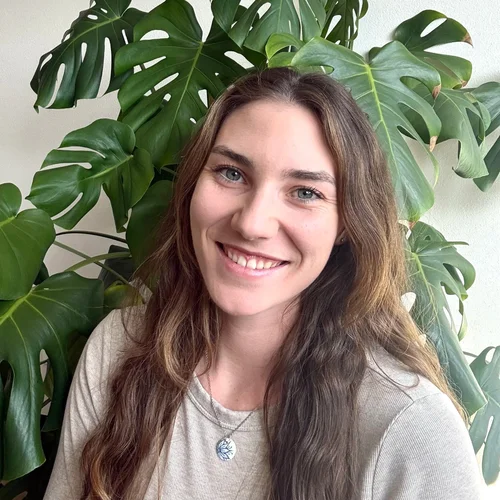
Mikaela Abundez is the Director of Student Services at Sentio University as well as a Faculty member and a Licensed Marriage and Family Therapist (LMFT #164987) at the Sentio Counseling Center. She holds a Master of Arts in Marriage and Family Therapy and has training in Emotionally Focused Therapy, Schema Therapy, and Internal Family Systems. Her private practice is at growwithmikaela.com.