

The Honest Guide · Chapter 5
Which Therapy Credential Is Right for You in California?
LMFT, LPCC, LCSW, or psychologist: four credentials lead to the same therapy room but very different careers. Here is how they differ on scope, training, cost, and portability, and how to match one to your goals.
Last verified: October 2, 2026
Four credentials, one waiting room
The four therapy credentials lead to the same hour with a client, but they produce very different careers.
LMFT, LPCC, LCSW, psychologist. From the outside the letters look interchangeable. They are not. Each names a different degree, a different scope of practice, a different training length, and a different debt load, and they differ in how easily they travel across state lines. The reassuring part is that the choice is more forgiving than it feels, because no credential reliably makes you a better therapist than the others. The decision is about fit: the work you want to do, where you want to do it, how fast you need to get there, and what you can afford to borrow. Start with five questions, then read the comparison.
Start with five questions
Your answers point you toward a credential before you read a single comparison. Hold them in mind as you go.
Five questions to ask yourself first
Each one narrows the field. None of them is about which credential makes better therapists, because that is not where they differ.
What clinical work do you want to do?
Points toward: individual, couples, and family therapy from a relational lens (LMFT), individual mental-health counseling (LPCC), the broadest range including medical and child welfare (LCSW), or psychological testing and assessment (psychologist).
Where will you practice, and might you move?
Points toward: if you may cross state lines, portability matters, and the psychologist and the LPCC lead on it through their compacts, while the LMFT route runs through state-by-state endorsement.
How fast do you need to be licensed?
Points toward: a master’s credential reaches a license two to four years faster than the psychology doctorate.
What can you afford to borrow?
Points toward: debt at graduation varies by roughly a factor of two across the paths, and it is the biggest single financial difference among them.
Master’s scope, or doctoral scope?
Points toward: the doctorate adds full psychological testing and prescribing in eight states (not California), at the cost of more years and more debt.
The four credentials at a glance
Here are the four side by side, on the dimensions that actually decide it. Every row is unpacked in the sections below.
| LMFT | LPCC | LCSW | Psychologist | |
|---|---|---|---|---|
| What it is | Systemic therapy with individuals, couples, and families | Individual clinical mental-health counseling | Clinical social work | Doctoral psychology |
| Degree | Master’s in MFT (60 units) | Master’s in counseling (60 units) | MSW | Doctorate (PhD or PsyD) |
| Years to license (est.) | ~4 to 6 | ~4 to 6 | ~4 to 6 | ~6 to 9 |
| Psychological testing | Limited | Limited; statutory exclusions | Limited | Full scope |
| Prescribing | No | No | No | Not in CA (8 other states) |
| Typical debt (est.) | Lower | Lower to mid | Lower to mid | Highest (~$150k+) |
| Interstate compact | None (endorsement only) | Counseling Compact | Social Work Compact (not yet live) | PSYPACT (40+ states) |
| Strongest fit | Individual, couples, and family therapy; clinical skills | Portability; counseling growth | Broadest settings; medical and VA | Testing, hospitals, top pay |
Years to license and typical debt are labeled estimates. Scope, prescribing, and the compacts are read from California statute and the compact commissions. Testing and prescribing are explained next.
What each one lets you do: scope of practice
Scope of practice is the one dimension where the credentials genuinely diverge, and it is written into California law. Three things are true for all four, and one thing separates them.
All four can assess, diagnose, and treat mental health conditions in California, and all four can practice independently once licensed. (The word “diagnosis” appears explicitly in the psychologist statute; the counseling, therapy, and social-work statutes phrase it as assessing, evaluating, and treating mental illness, which California recognizes as diagnostic authority in practice.) For the detail, see the live post on whether an LMFT can diagnose in California.
The dividing line is psychological testing. California law gives the licensed psychologist the full toolkit: constructing, administering, and interpreting tests of mental abilities, aptitudes, personality, and motivation (Business and Professions Code section 2903). The LPCC scope is the only master’s-level scope that names test categories, and it does so to exclude them. An LPCC’s assessment may not use projective personality tests, individually administered intelligence tests, neuropsychological testing, or a battery of three or more tests to determine psychosis, dementia, amnesia, cognitive impairment, or criminal behavior (section 4999.20). The LMFT and LCSW statutes are silent on test categories, and in practice the higher-tier instruments are gated to doctoral-level testers by the test publishers themselves. If formal psychological or neuropsychological testing is the work you want, that points to the doctorate. Hospital work and court-recognized evaluation are open to master’s-level clinicians as well: they staff hospital behavioral-health teams, and California law lets a licensed LMFT, LCSW, or LPCC serve as a child custody evaluator once the required training is complete (Family Code section 3110.5).
On prescribing, no master’s credential prescribes anywhere, and California psychologists cannot prescribe either: state law expressly excludes prescribing, surgery, and electroconvulsive therapy from the practice of psychology (section 2904). Eight other states (New Mexico, Louisiana, Illinois, Iowa, Idaho, Colorado, Utah, and Vermont) authorize specially trained prescribing psychologists, but California is not among them.
On everyday therapy the scopes overlap heavily, but each has a center of gravity. The LMFT statute is built on family-systems theory and names couples and groups directly, which is why couples and family work routes to MFTs. The license also fully covers individual psychotherapy, and in practice most LMFTs treat individual clients, often as the largest share of their caseload, approaching that work through a systemic, relationship-focused lens. The LCSW scope is the broadest, pairing psychotherapy with social services, referral, and case management, which is what lets a social worker move between mental health, medical, and child-welfare work across a career. The LPCC is individual clinical mental-health counseling. The psychologist adds the testing and assessment layer on top of therapy.
Speed and cost
These two move together, and together they are the strongest practical reason most people choose a master’s credential over the doctorate.
Speed first. A master’s credential takes a two- to three-year degree plus two to three years of supervised hours, so figure about four to six years from a bachelor’s degree to an independent California license. The psychology doctorate takes four to six years of doctoral work plus a matched internship year and supervised experience, so figure about six to nine years, and nine is common. That two- to four-year gap is the single largest difference among the paths, and every extra year is a year you are not earning at the licensed rate. These are typical-path estimates, not guarantees. (For the 3,000-hour mechanics, the two exams, and the six-year window, see how therapist licensure works in California.)
Cost runs the same direction. All four paths usually require borrowing. Within the master’s credentials the debt is similar: counselor graduates who borrow carry student-loan balances averaging in the high $70,000s, and about 44 percent of MSW students use loans (survey estimates, not exact figures). The PsyD or an unfunded PhD is the most expensive path by a wide margin, with debt at graduation commonly around $150,000 and running past $250,000 in some programs. The exception is the fully funded PhD, which waives tuition and pays a stipend, but those seats are among the hardest admissions in graduate education, so most applicants cannot count on one. For the live numbers, see tuition and fees, what the career pays once licensed and before licensure, and how to compare California programs.
Portability, if you might move
If you may practice in more than one state, the interstate compacts matter. The licensed psychologist is the most mobile today through PSYPACT, live in more than 40 states. The LPCC is next: the Counseling Compact is now issuing privileges in a small but growing number of states. The LCSW’s Social Work Licensure Compact has been activated but is not yet issuing multistate licenses. There is no MFT compact yet, so the other three credentials offer an easier route to multistate practice, and that is a real advantage. It does not rule out LMFT portability: LMFTs add states through each state’s licensure-by-endorsement process, and many states will credit a California LMFT license and supervised experience toward their own requirements. The details vary state to state, so check the destination board before you count on it. The MFT rules for every state are collected in MFT license requirements by state. One catch applies to everyone reading this in California: the state has joined none of the three compacts, so a move into or out of California runs through licensure by endorsement in both directions. The full mechanics are in the licensure chapter.
Which one fits you
Put the dimensions together and each credential is the strongest fit for a different reader. None is better than the others; each is better for a different goal.
The LMFT
Best for individual, couples, and family therapy; clinical skills
- The credential is built on family-systems theory, so couples and family clients route to MFTs.
- Most LMFTs also treat individuals, often as their primary work; the license fully covers individual psychotherapy.
- The training is clinical from the start, centered on hands-on therapy skills rather than a generalist curriculum.
Trade-off: no interstate compact yet, so practicing in additional states runs through state-by-state endorsement rather than a single multistate privilege.
The LPCC
Best for portability and individual counseling
- The Counseling Compact is the only live multistate option among the master’s credentials.
- Individual clinical counseling is the fastest-growing of these occupations.
Trade-off: federal wage data lump counselors together, so category pay figures are not LPCC-specific.
The LCSW
Best for the broadest settings and career flexibility
- The widest range of settings, with room to move between mental health, medical, and child welfare.
- The largest job market; the VA is the nation’s largest employer of social workers.
Trade-off: the MSW is generalist, so clinical therapy is one track among many.
The doctorate (PhD or PsyD)
Best for testing, assessment, and the highest ceiling
- The only credential that does the full range of psychological testing and assessment.
- The highest pay ceiling and the strongest portability, through PSYPACT.
Trade-off: the longest path (about six to nine years) and the highest debt (around $150,000+), unless you land a funded PhD.
Does the credential make you a better therapist?
One claim circulates in every prospective-student forum: the credential does not matter, only skill matters. The honest version is more precise, and it should change how you decide.
Across the psychotherapy outcome research, therapist effects, the share of client-outcome differences explained by which individual provides the care, run at about 5 percent. Within that 5 percent, the therapist’s degree, license, years of experience, age, and gender explain very little. (The foundational study is Wampold and Brown’s 2005 analysis of 581 therapists treating 6,146 patients; a 2018 meta-analysis by Flückiger and colleagues, covering 295 studies and more than 30,000 patients, points the same way on the working relationship.) For everyday psychotherapy, your skill and the alliance you build predict your clients’ outcomes more than your credential does.
Two things follow. First, do not choose a credential because you believe it will make you a more effective therapist; the evidence does not support that belief. Choose on the things that genuinely differ: scope, setting, speed, cost, and portability. Second, the outcome research is silent on scope-restricted work such as psychological testing, hospital crisis evaluation, and court-recognized evaluation, where the credential is what legally authorizes the work in the first place. If that is the work you want, the credential is not a tiebreaker; it is the gate.
The bottom line
- There is no single best credential. Each of the four is the strongest fit for a different goal. Match the credential to the work you want, not to the program nearest you.
- Scope is the real divider. All four diagnose and treat; only the psychologist does full testing, and only the psychologist prescribes, in eight states, not California.
- Speed and cost favor the master’s. About four to six years and lower debt, against six to nine years and the highest debt for the doctorate.
- Portability favors the psychologist and the LPCC. PSYPACT is live in 40+ states and the Counseling Compact is growing; the social-work compact is not live yet and the LMFT has no compact, though LMFTs can still add states through licensure by endorsement. California has joined none of them.
- Decide the credential before the program. The credential is the bigger, less reversible commitment; the program choice happens inside it.
Going deeper? For two-way comparisons, see LMFT vs LCSW in California and MFT vs MSW. For the route as a whole, see the guide’s pillar overview, how licensure works, the Sentio MFT program overview, and how to compare California MFT programs.
References
- Flückiger, C., Del Re, A. C., Wampold, B. E., & Horvath, A. O. (2018). The alliance in adult psychotherapy: A meta-analytic synthesis. Psychotherapy, 55(4), 316-340. https://doi.org/10.1037/pst0000172
- Wampold, B. E., & Brown, G. S. (2005). Estimating variability in outcomes attributable to therapists: A naturalistic study of outcomes in managed care. Journal of Consulting and Clinical Psychology, 73(5), 914-923. https://doi.org/10.1037/0022-006X.73.5.914
About the authors
Three of us wrote this guide. We work at Sentio University, and the guide overview explains our perspective and the rules we set for ourselves.

Tony Rousmaniere, Psy.D. is the President of Sentio University, and the Executive Director of the Sentio Counseling Center. He is also Past-President of the psychotherapy division of the American Psychological Association, and the author of many books on Deliberate Practice and psychotherapy training, including the book series The Essentials of Deliberate Practice (APA Books). In 2017 he published the widely cited article in The Atlantic Monthly, “What your therapist doesn’t know”. Dr. Rousmaniere supports the "open data" movement towards making clinical outcome data available to consumers, policy-makers, and researchers by publishing his clinical outcome data on his website. He is a licensed psychologist in California and Washington. Dr. Rousmaniere’s ORCID, Google Scholar, and Research Gate profiles.

Alexandre Vaz, Ph.D. has extensive experience in academic leadership and is the cofounder of the Deliberate Practice Institute. He provides workshops, webinars, and advanced clinical training and supervision to clinicians around the world. Dr. Vaz is the author/co-editor of many books on deliberate practice and psychotherapy training and the book series The Essentials of Deliberate Practice (APA Books). He has held multiple committee roles for the Society for the Exploration of Psychotherapy Integration (SEPI) and the Society for Psychotherapy Research (SPR). Dr. Vaz is founder and host of Psychotherapy Expert Talks, an acclaimed interview series with distinguished psychotherapists and therapy researchers. He is a licensed clinical psychologist in Portugal. Dr. Vaz’s ORCID, Google Scholar profiles.
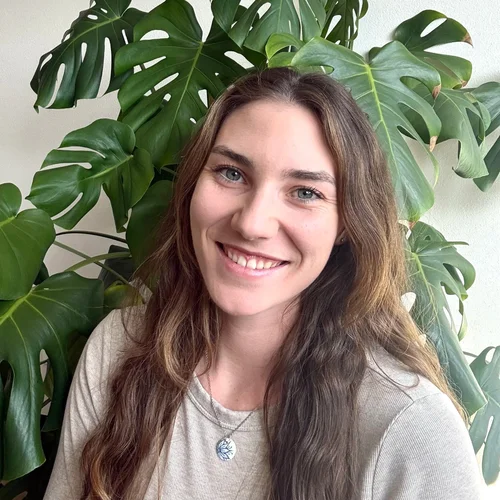
Mikaela Abundez is the Director of Student Services at Sentio University as well as a Faculty member and a Licensed Marriage and Family Therapist (LMFT #164987) at the Sentio Counseling Center. She holds a Master of Arts in Marriage and Family Therapy and has training in Emotionally Focused Therapy, Schema Therapy, and Internal Family Systems. Her private practice is at growwithmikaela.com.