
Can You Complete Your MFT Practicum and Supervised Hours Online in California?
Can You Complete Your MFT Practicum and Supervised Hours Online in California? What the Telehealth Rules Actually Permit
Telehealth visits account for more than 30 percent of specialty mental health sessions in California, up from less than 10 percent before the pandemic (DHCS, 2024). With supervised AMFT hours now routinely earned through video sessions and remote supervision, prospective MFT students naturally ask whether the practicum hours during graduate school and the supervised hours after graduation can be completed entirely online. The short answer: most of the post-degree hours can be remote, and the BBS counts video telehealth sessions, with both audio and visual contact, toward the practicum's 150 face-to-face counseling hours, although programs and placement sites set their own policies. This post explains California's current rules for online practicum and supervised hours, what California Senate Bill 775 changed for telehealth supervision, what hours formats the California Board of Behavioral Sciences accepts, and how to evaluate programs and AMFT employers on telehealth infrastructure. For broader context see our companion posts on the guaranteed practicum at the Sentio Counseling Center, remote and telehealth supervision for LMFT hours in California: what SB 775 means for you, hybrid vs. in-person MFT programs in California, and the Sentio MFT program overview.
Can the 150-Hour Practicum Be Completed Online in California?
The California Board of Behavioral Sciences requires every qualifying MFT degree to include a practicum with a minimum of 150 hours of face-to-face counseling experience (BBS, 2024). The BBS counts telehealth toward these hours when the session has both audio and visual contact with the client. Telephone-only counseling can count toward licensure hours but not toward the 150 face-to-face hours (BBS MFT and Trainee FAQ, questions 6 and 7).
What has changed is how much of the practicum can happen remotely. Supervision of practicum students may now be conducted via HIPAA-compliant videoconferencing in many cases, some practicum coursework can be delivered remotely, and client sessions conducted by video count as face-to-face. Whether a given program or placement site offers telehealth sessions is its own decision. For programs that operate their own counseling center, students typically complete these hours at the center under direct supervision. For programs that decentralize the practicum, students complete the hours at partner sites in their local area.
Can the Post-Degree Supervised Hours Be Earned Online?
Largely yes, with important caveats. AMFTs may provide telehealth services to clients, and California Senate Bill 775, enacted in 2025, made permanent the authorization for supervision via two-way, real-time videoconferencing that had applied since August 29, 2022 under a law set to expire on January 1, 2026. This includes individual, triadic, and group supervision formats. The BBS Telehealth Committee, established in 2021, has continued to refine the rules in favor of remote work (BBS Telehealth Committee Report, 2024).
Of the 3,000 hours, at least 1,750 must be direct clinical counseling, and these can be conducted via telehealth in most settings. The remaining 1,250 hours of nonclinical activity (notes, documentation, training, supervision) can be completed remotely. The required supervision, at least one hour of direct supervisor contact each week in each work setting plus an additional hour in any setting where the associate performs more than ten hours of direct clinical counseling that week, can occur via videoconferencing. For an AMFT working from a home office with a stable internet connection and proper HIPAA-compliant tools, almost the entire post-degree experience can be remote. Our post on remote and telehealth supervision under SB 775 walks through the rules in detail.
What Are the Hidden Limitations of Online Practicum and Supervision?
Beyond the practicum, whose delivery each program and placement site decides, several practical considerations limit how fully online the MFT path can be. First, certain AMFT employers may require some in-person work even when state rules permit remote work. Community mental health agencies, hospitals, and school-based settings often need on-site presence for case coordination, team meetings, and certain client populations. Second, clinical work with some client populations (severe mental illness, certain trauma populations, children) often requires in-person sessions for clinical reasons even when telehealth is technically permitted.
Third, the quality of supervision when conducted entirely online depends heavily on infrastructure that not all settings provide. The BBS regulations permit remote supervision but do not require the technology and process that make remote supervision effective: HIPAA-compliant video platforms, structured session review, video recording of client sessions, and structured deliberate practice rehearsal. Programs and employers that integrate these features support effective remote supervision. Programs and employers that simply move a poorly-structured in-person supervision hour to Zoom may technically meet regulations while losing much of the value supervision should provide.
Does the Quality of Online Practicum and Supervision Affect Your Long-Term Effectiveness?
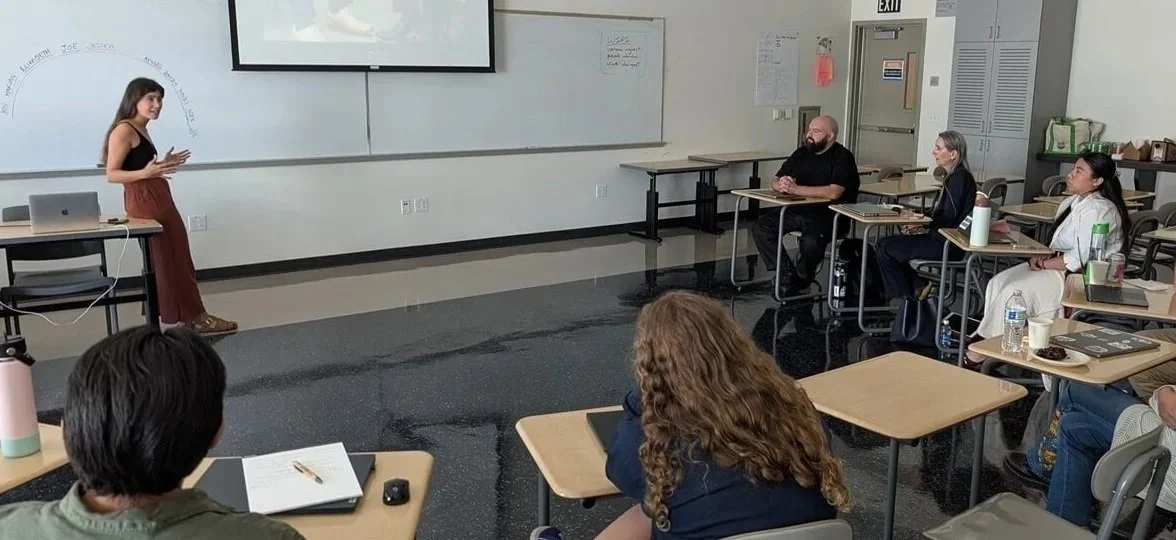
The research on therapist development consistently points to specific program features that predict effectiveness, regardless of in-person or remote delivery. Alexandre Vaz, PhD, and Tony Rousmaniere, PsyD, summarize the literature in Clarifying Deliberate Practice for Mental Health Training: "research has consistently suggested that years of clinical experience bear little to no relation to therapist's effectiveness" (Vaz and Rousmaniere, 2022, p. 3). What predicts effectiveness is deliberate practice: structured, repeated, feedback-rich skill rehearsal that depends on video review, outcome data, and explicit corrective feedback.
For online practicum and supervision specifically, this finding has direct implications. A remote supervision hour that includes video review of a client session and structured deliberate practice rehearsal builds clinical skill more effectively than an in-person supervision hour that consists of unstructured case discussion. The format is less important than the method. The peer-reviewed Sentio Supervision Model (Brand, Miller-Bottome, Vaz, and Rousmaniere, 2025) describes how to structure supervision (in-person or remote) to actually change how a clinician practices.
For more on this, see our review of the research on clinical preparation in MFT training and the companion explainer on what programmatic accreditation means for MFT students. The questions about clinical training quality apply equally to in-person and remote training infrastructures.
A Closer Look at One Program: Sentio University's Hybrid Practicum Model
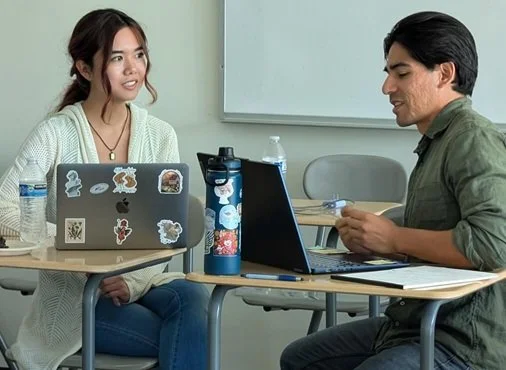
The following is a concrete example of how one program structures the practicum component of an MFT program designed for online and hybrid learners. It is not a recommendation against evaluating other programs.
Sentio University offers a 20-month hybrid Master of Arts in Marriage and Family Therapy with most coursework delivered live online and in-person residencies in Los Angeles each semester. The program offers a guaranteed practicum placement at the Sentio Counseling Center, where students complete the required 150 face-to-face counseling hours under structured supervision. Sentio also operates Sentio Counseling Washington for students in Washington State.
What distinguishes the model is what happens around the practicum hours. All therapy sessions at the counseling center are videotaped, all counselors use routine outcome monitoring every session with every client, and all supervision sessions are also videotaped (Rousmaniere and Vaz, 2025, p. 2). The Sentio Supervision Model integrates outcome monitoring, video review, and deliberate practice rehearsal into the supervision hour (Brand, Miller-Bottome, Vaz, and Rousmaniere, 2025). For students moving into their AMFT years, the habits formed in this practicum environment translate directly to whatever remote or hybrid AMFT setting they enter next.
Sentio is a small, newer institution and its alumni network is still developing. Visit the Sentio MFT program overview and the Sentio FAQ page for more detail.
Making Your Decision
The California path to LMFT licensure now accommodates substantial remote work, but the 150 face-to-face practicum hours are not optional. Programs that handle the practicum well (through a guaranteed centralized practicum or a strong network of partner sites) make the rest of the path easier. Programs that leave the practicum search to the student in a state where placements vary in quality leave more to chance. For the post-degree AMFT years, California's telehealth rules now permit largely remote work, but the quality of remote supervision varies widely. Ask every MFT program you are seriously considering whether you can attend a live or online class session before enrolling. Ask AMFT employers about their supervision infrastructure, video review practices, and outcome monitoring before accepting a position. Reputable programs and employers welcome this kind of inquiry. Trust what you see in a classroom or supervision setting over what you read in promotional copy.
Frequently Asked Questions
Can I complete my MFT practicum entirely online in California?
It depends on the program and the placement site. The California BBS requires every qualifying MFT degree to include a practicum with a minimum of 150 hours of face-to-face counseling experience, and it counts telehealth sessions with both audio and visual contact as face-to-face. Telephone-only sessions do not count toward the 150 hours. Supervision of the practicum and other coursework can be delivered remotely.
Can my supervised AMFT hours be earned via telehealth?
Largely yes. Following California Senate Bill 775 and BBS Telehealth Committee updates, AMFTs may provide telehealth services to clients and receive supervision via HIPAA-compliant videoconferencing, including individual, triadic, and group supervision. Some employers and clinical populations may still require in-person work.
What did California SB 775 change for AMFT telehealth supervision?
SB 775, enacted in 2025, made permanent the authorization for supervision via two-way, real-time videoconferencing that had applied since August 29, 2022 under a law set to expire on January 1, 2026. Combined with BBS Telehealth Committee guidance, the practical effect is that AMFTs can now receive most of their supervised hours through remote work.
Are video-recorded sessions required for AMFT supervision in California?
Not required by regulation, but strongly recommended for clinical skill development. Video review allows supervisors to provide specific corrective feedback that unstructured case discussion cannot. Programs and AMFT employers that integrate video review into supervision tend to produce more effective clinicians.
Can I work as an AMFT from home in California?
Yes, in many settings, provided you have HIPAA-compliant technology and your employer permits remote work. Telehealth client sessions, video supervision, documentation, and team meetings can all be conducted remotely. Some employers, client populations, and settings require partial or full in-person presence.
How do I find a practicum site that meets BBS requirements?
Programs that operate their own counseling centers typically place students directly. Programs that decentralize the practicum often maintain partner site networks and help students secure placement. Practicum sites must offer at least 150 hours of face-to-face counseling and qualified supervision. Verify with each MFT program before enrolling exactly how practicum placement works.
Does telehealth supervision count for the BBS 3,000 hour requirement?
Yes. California regulations now permit individual, triadic, and group supervision via HIPAA-compliant videoconferencing. Hours are counted regardless of whether the supervision occurred in-person or remotely, provided the supervision meets the weekly requirement: at least one hour of direct supervisor contact each week in each work setting, plus an additional hour in any setting where the associate performs more than ten hours of direct clinical counseling that week.
References
Brand, J., Miller-Bottome, M., Vaz, A., and Rousmaniere, T. (2025). Deliberate practice supervision in action: The Sentio Supervision Model. Journal of Clinical Psychology, 1-11. https://doi.org/10.1002/jclp.23790
California Board of Behavioral Sciences. (2024). Marriage and family therapist handbook. https://www.bbs.ca.gov/pdf/publications/mft_ada.pdf
California Board of Behavioral Sciences. (2024, November 14). Telehealth Committee Report. https://www.bbs.ca.gov/pdf/board_minutes/2024/20241114-15_item17.pdf
California Department of Health Care Services. (2024). Biennial Telehealth Utilization Report April 2024. https://www.dhcs.ca.gov/provgovpart/Documents/Biennial-Telehealth-Utilization-Report-April-2024.pdf
Rousmaniere, T., and Vaz, A. (2025, March). Sentio's clinic-to-classroom method: Bridging deliberate practice and clinical training. Psychotherapy Bulletin, 60(2), 79-84. https://societyforpsychotherapy.org/sentios-clinic-to-classroom-methodbridging-deliberate-practice-and-clinical-training/
Vaz, A., and Rousmaniere, T. (2022). Clarifying deliberate practice for mental health training. Sentio University. https://drive.google.com/file/d/1MFdWU-fRl-2EKN2rdvFsExPcJ8-O0C_A/view