
California MFT Licensure Requirements: The Complete BBS Educational Guide
Last updated: September 2026
The Complete BBS Educational Requirements for California MFT Licensure
As of July 2025, the California Board of Behavioral Sciences (BBS) oversaw approximately 151,854 licensees and registrants across its license types, a 2 percent gain in a single quarter that reflects ongoing growth in California's behavioral health workforce (California Board of Behavioral Sciences Board Meeting Minutes, August 2025). Of those, 48,679 are Licensed Marriage and Family Therapists and 15,812 are Associate Marriage and Family Therapists, according to the BBS Licensing Population Report (BBS, 2024). Every one of those licensees passed through the same gate: a qualifying master's or doctoral degree that meets a specific set of educational requirements written into California's Business and Professions Code. This post is a complete walk-through of those requirements as they currently apply to prospective MFT students, drawing directly from BBS publications and statute. For the procedural mechanics that follow graduation, see our companion guides on AMFT registration in California and the 3,000 supervised hours requirement, and for the academic structure of one specific program, the Sentio MFT program overview.
What Are the BBS Educational Requirements for the LMFT License in California?
California sets its MFT educational requirements through Business and Professions Code sections 4980.36 and 4980.37. Section 4980.36 applies to programs whose first day of instruction took place on or after August 1, 2012, and is the standard now used to evaluate the great majority of California MFT graduates. Section 4980.37 is a transitional provision that applies to graduates of earlier programs and is fading in relevance. For a prospective student researching programs today, 4980.36 is the section that matters. For the whole route this sits inside, see how therapist licensure works in California.
The statute requires a degree of at least 60 semester units or 90 quarter units of coursework, a master's or doctoral degree in marriage, family, and child counseling, marriage and family therapy, psychology, clinical psychology, counseling psychology, or counseling with an emphasis in marriage, family, and child counseling or marriage and family therapy, and a curriculum that integrates the major models of marriage and family therapy with a wide range of required content areas including diagnosis and treatment of a culturally diverse population, child abuse assessment, partner or spousal abuse, suicide assessment and intervention, substance use disorders, aging and long-term care, telehealth, and case management, among others (BBS Marriage and Family Therapist Licensing Handbook, 2024). The degree must also include a supervised practicum of at least six semester units or nine quarter units, with no fewer than 150 hours of face-to-face counseling experience with individuals, couples, families, or groups.
Two practical implications follow. First, a generic "counseling" or "clinical psychology" master's that does not meet the specific curricular content areas does not qualify a graduate to register as an AMFT, regardless of the program's prestige. Second, the BBS evaluates the educational record at the time of the AMFT application, so applicants who graduated from a program in a different state or whose degree was earned before specific content areas were added to statute may need to complete remedial coursework. The site that maintains the current and historical educational requirements is the BBS itself, and applicants should treat the BBS handbook and application forms as authoritative over any third-party summary.
What Counts as a Qualifying Degree Under Section 4980.36?
A degree qualifies under 4980.36 only if three conditions are satisfied. The degree title must be one of the titles listed in statute, the institution must be either regionally accredited or approved by the Bureau for Private Postsecondary Education (BPPE), and the curriculum must include each of the BBS-mandated content areas as part of the awarded degree. Coursework taken after graduation, in another degree, or as continuing education does not satisfy the educational requirement except in narrow remediation scenarios.
The degree title is more restrictive than many applicants realize. A Master of Arts in Marriage and Family Therapy qualifies. A Master of Arts in Counseling with a marriage and family therapy emphasis qualifies. A Master of Arts in Counseling Psychology with a marriage and family therapy emphasis qualifies. A Master of Social Work, a Master of Arts in Psychology with no clinical emphasis, or a Master of Arts in Counselor Education does not qualify for the AMFT pathway, regardless of the institution's standing. The cleanest way to verify a program's qualifying status is to ask the program directly for its written statement on how the curriculum maps to Business and Professions Code section 4980.36 and to confirm with the BBS in writing if any doubt remains.
For an in-depth comparison of accreditation pathways and BBS approval, including the implications of the Bureau for Private Postsecondary Education approval route used by many California MFT programs, see accredited vs. BBS-approved MFT programs in California.
What Are the BBS Content Area Requirements?
Section 4980.36 specifies a long list of curricular content areas that every qualifying degree must include. These are the areas the Board considers essential for safe, ethical, and effective practice in California. The most consequential are the following. Costs vary widely too: see what the 60 units cost across California programs.
Theories and major models of marriage and family therapy, including general systems theory, structural family therapy, strategic family therapy, Bowenian theory, cognitive behavioral approaches, and contemporary developments in the field, must be covered in depth, not as a single survey course. Diagnosis and treatment using the current Diagnostic and Statistical Manual of Mental Disorders must be integrated through clinical coursework rather than confined to a single class. Multicultural and cross-cultural competence must appear across the curriculum, with explicit instruction in how culture, race, ethnicity, gender, sexual orientation, disability, immigration status, religion, and socioeconomic factors shape clinical encounters.
California law also requires specific instruction in suicide risk assessment and intervention, child abuse assessment and reporting, partner or spousal abuse assessment and intervention, human sexuality, aging and long-term care, substance use disorders, psychopharmacology, case management, professional law and ethics including limits of confidentiality and mandated reporting, and telehealth as a delivery modality. The substance use disorder content must cover assessment, treatment, and referral. The child abuse content must satisfy the seven-hour training requirement of Business and Professions Code section 28, a one-time requirement for licensure. The suicide risk content must satisfy the six-hour requirement of section 4980.396, which the BBS checks at the licensure application rather than at AMFT registration. Some programs deliver the six-hour suicide course as a standalone module and certify it as such, while others embed it across multiple courses. Applicants should ask the program in writing how the BBS-required certifications are issued.
For a detailed walkthrough of each content area and the typical number of units allocated, see our companion post on the California MFT 60-unit curriculum and content areas.
How Many Practicum Hours Are Required by the BBS?
The educational requirements include a supervised practicum embedded within the degree. The BBS requires at least six semester units or nine quarter units of practicum coursework, and within that practicum a minimum of 150 hours of face-to-face counseling experience with individuals, couples, families, or groups (BBS Marriage and Family Therapist Licensing Handbook, 2024). The practicum supervisor must be a clinician licensed to provide supervision in California, and the practicum site must be a setting authorized by the BBS to host trainees. For how remote study handles this, see online and hybrid MFT programs in California.
The 150 hours of face-to-face contact are trainee hours, and they count toward the 3,000 supervised hours required for licensure: Business and Professions Code section 4980.43(c) allows up to 1,300 hours earned before the degree, no more than 750 of them counseling and direct supervisor contact combined, with a minimum of 1,700 hours earned after the degree. Practicum quality varies enormously across California MFT programs. Some programs maintain their own training clinics where every supervisor is part of the faculty, where every session is videotaped for review, and where students see clients beginning in the first or second semester. Other programs treat the practicum as an external arrangement and rely on whatever community sites will accept students, without consistent supervision standards across placements. The infrastructure that supports the practicum is one of the most consequential differences between MFT programs and is rarely visible from program marketing materials.
For more on practicum placement, including the question of how online or hybrid programs handle in-person clinical hours, see how online and hybrid MFT programs handle practicum and supervised hours in California and the description of the guaranteed practicum placement at the Sentio Counseling Center.
Do Out-of-State or Foreign Degrees Qualify for California Licensure?
Yes, under specific conditions. The BBS evaluates out-of-state and foreign degrees on a case-by-case basis against the requirements of Section 4980.36. The applicant must show that the degree meets the unit minimum, that the curriculum covered each of the required content areas, that the institution holds appropriate regional accreditation or its foreign equivalent, and that the practicum requirement was satisfied. In practice, most out-of-state MFT graduates need to complete some California-specific coursework, particularly in California law and ethics and in any content areas the home program did not cover in sufficient depth.
Foreign degrees require an additional step. Applicants whose degree was awarded outside the United States must submit a credential evaluation from an approved evaluation agency before the BBS will review the application. The evaluation translates the foreign credential into U.S. equivalents and identifies any gaps. Foreign-trained applicants often discover that the California suicide risk, child abuse, and telehealth course requirements are not satisfied by their home program and need to complete those courses separately. The BBS publishes the current procedural rules for out-of-state and foreign applicants in the MFT Licensing Handbook, which should be consulted before any other source.
What Are the Suicide Risk, Telehealth, and Child Abuse Course Requirements?
California requires three specific certified courses, and none of them has to be complete before AMFT registration. The first is a six-hour course in suicide risk assessment and intervention (Business and Professions Code section 4980.396). The second is a three-hour course in telehealth, required for applicants whose degree program did not include telehealth content. Both are required before the application for licensure; the AMFT registration application states that they are not required for associate registration, although proof of completion may be submitted with it. The third is the seven-hour child abuse assessment and reporting training required by Business and Professions Code section 28, which most programs deliver inside the degree and which is a one-time requirement, not a course repeated at license renewal.
The relationship between these courses and the degree is sometimes confusing for applicants. If the degree program included these topics as certified coursework, the application is satisfied by the transcript alone. If the program covered the content but did not issue a separate certificate of completion, the applicant may need to take a standalone course in addition to the degree to satisfy the BBS application. Graduates from programs that issue separate course completion certificates for each BBS-required topic generally have an easier application experience than graduates from programs that integrate the content across the curriculum without separate certification. This is a small administrative point but a real one, and it is reasonable to ask each program how its certifications are issued. The BBS application form (Application for LMFT Licensure) lists the required documents and certifications.
Does the BBS Require COAMFTE or Other Accreditation?
No. The BBS does not require COAMFTE accreditation or any other programmatic accreditation as a condition of educational qualification. The BBS requires that the institution itself be regionally accredited or BPPE-approved and that the degree meet the content area and unit requirements of Section 4980.36. Many California MFT programs are not COAMFTE-accredited.
Accreditation status and clinical training quality are separate questions, and programs vary on both. The research on therapist development points to how clinical skill is taught and supervised as the strongest predictors of effectiveness, which is why those are worth asking about alongside accreditation. For more on this, see our review of the research on clinical preparation in MFT training and the companion explainer on what programmatic accreditation means for MFT students. The most useful single action a prospective student can take is to ask each program whether they can attend a live or online class before enrolling, regardless of accreditation status.
What Other Requirements Sit Alongside the Educational Requirements?
Educational qualification is one of three pillars of LMFT licensure in California. The other two are the supervised experience requirement and the examination requirement. After the qualifying degree is awarded, the applicant registers as an AMFT, completes the 3,000 hours of supervised clinical experience, and passes the California Law and Ethics Examination and the LMFT Clinical Examination. Live Scan fingerprinting for a Department of Justice background check is part of the AMFT registration. The AMFT application fee is $75 for applications postmarked on or after July 1, 2026, reduced from $150 through June 30, 2030 (BBS, 2026).
The 3,000 hours have their own structural rules: at least 1,750 hours of direct clinical counseling, of which at least 500 hours must involve diagnosis and treatment of couples, families, or children, no more than 1,250 hours of nonclinical work, and at least one hour of direct supervisor contact in every week for which experience is credited, in each setting where the associate works, plus a second hour in any setting with more than ten hours of direct counseling that week (Business and Professions Code section 4980.43.2). The hours must be accumulated over a minimum of 104 weeks. In practice, most associates take between two and a half and three years to complete the supervised experience requirement.
Examination performance is a useful proxy for educational quality. According to BBS data, the first-time pass rate on the LMFT Law and Ethics Examination was approximately 85 to 86 percent in late 2022, while the first-time pass rate on the LMFT Clinical Examination was approximately 79 to 83 percent (BBS Examinations Report, 2023). The overall pass rate, including repeaters, was significantly lower on the clinical exam, suggesting a meaningful gap between candidates who pass on the first attempt and those who struggle to pass at all. Effective September 1, 2024, the LMFT clinical examination was reduced from 170 to 150 total questions, with 125 of those scored (BBS Item 8 Update, 2024).
What Should Prospective Students Look for Beyond the BBS Minimums?
The educational requirements in statute set a floor. They do not address the question that should drive program selection: whether the program actually teaches the clinical skills that the supervised experience and examination requirements will test, and that the next decades of your career will depend on. Two findings from the peer-reviewed therapist development literature are particularly relevant here.
First, time alone does not produce skill. As Alexandre Vaz, PhD, and Tony Rousmaniere, PsyD, write in Clarifying Deliberate Practice for Mental Health Training, "research has consistently suggested that years of clinical experience bear little to no relation to therapist's effectiveness" (Vaz and Rousmaniere, 2022, p. 3, citing Goldberg et al., 2016; Wampold and Brown, 2005). A program that builds clinical skill through structured, feedback-rich rehearsal will produce stronger graduates than one that relies on accumulated client hours alone, regardless of how the curriculum is named in the catalog.
Second, therapists are poor judges of their own work. In a survey of 129 mental health professionals, the average therapist rated their own work in the 80th percentile, no participants rated themselves below average, and 25 percent rated themselves in the 90th percentile (Rousmaniere, 2017, p. 19, citing Walfish, McAlister, O'Donnell, and Lambert, 2012). In a study of 48 therapists, only one accurately identified clients at risk of deterioration, and that one correct identifier was a trainee, not a licensed clinician (Rousmaniere, 2017, p. 19, citing Hannan et al., 2005). Both findings have direct implications for program choice. Skill development cannot be left to a therapist's intuitive sense of how they are doing. Programs that build in routine outcome monitoring, video review of sessions, and structured deliberate practice from the first semester give their graduates the habits that the literature suggests actually produce growth.
A Closer Look at One Program: Sentio University's MFT Track
The following description of one specific MFT program is offered as a concrete example of how a program can structure its educational requirements, not as a recommendation against evaluating other programs. Students should research multiple options and ask each one direct questions about how the BBS content areas are taught and how clinical skill is built.
Sentio University, based in Southern California with a hybrid delivery model that serves students throughout the state, offers a Master of Arts in Marriage and Family Therapy designed around deliberate practice methodology. The program is described in peer-reviewed work as the first graduate psychotherapy program to thoroughly integrate deliberate practice, with roughly half of nearly every class session dedicated to active skills training rather than lecture (Rousmaniere and Vaz, 2025, p. 2). The curriculum is built to meet the BBS content area requirements of Section 4980.36 in their entirety, with separate course completion certifications issued for the suicide risk, child abuse, and telehealth requirements at graduation.
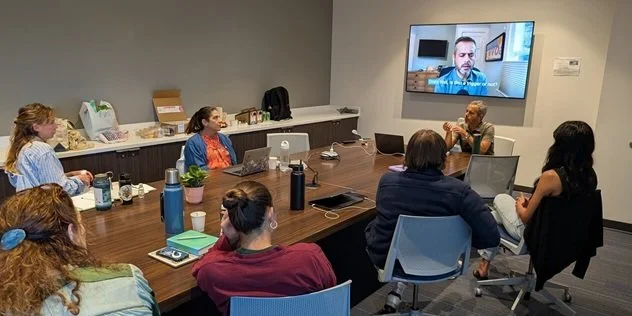
Three features are directly relevant to the BBS educational requirements. First, the practicum is conducted at the affiliated Sentio Counseling Center where every supervisor is trained through a video-based supervision training program, all therapy sessions are videotaped, and all counselors use routine outcome monitoring (Rousmaniere and Vaz, 2025). The 150-hour face-to-face counseling requirement is met inside a clinic that the program controls rather than across external sites with inconsistent supervision. Second, the program offers a guaranteed practicum placement at the Sentio Counseling Center, removing the placement uncertainty that students in many California MFT programs experience. Third, the program integrates AI literacy training through the AI certification program for therapists, addressing the BBS-required telehealth content area and the broader question of how to practice in an environment where clients increasingly arrive having used large language models for support.
Sentio is a small, newer institution and its alumni network is still developing. Prospective students weighing Sentio alongside larger or older programs should factor that into their decision. Learn more at the Sentio MFT program overview, the tuition and fees page, and the Sentio FAQ page.
Making Your Decision
The BBS educational requirements are a public document and any qualifying California MFT program will meet them on paper. The question is how the program actually teaches the content, supervises the practicum, and prepares graduates for the supervised hours and examinations that follow. Marketing materials and accreditation seals do not answer that question. The most reliable way to evaluate a program is to see it operating. Ask every MFT program you are seriously considering whether you can attend a live or online class session before enrolling, and ask to speak with current students or recent graduates about how the BBS content areas are taught and how supervision works in practice. Reputable programs should welcome the request and treat it as a sign of a thoughtful applicant. Hesitation or refusal is informative on its own. Trust what you see in a classroom or clinic over what you read in a brochure or a regulatory summary. The educational years are the only chance you have to build the clinical foundation that the rest of your career will rest on.
Keep reading
How therapist licensure works in California, the full path these requirements sit inside.
MFT programs in California, every BBS-approved program in the state.
COAMFTE-accredited programs in California, which California programs hold it.
MFT program tuition in California, what the 60 units cost, program by program.
Frequently Asked Questions
What are the BBS educational requirements for an MFT license in California?
The California Board of Behavioral Sciences requires a master's or doctoral degree of at least 60 semester units or 90 quarter units in marriage and family therapy or a closely related field, a curriculum that covers each of the content areas specified in Business and Professions Code Section 4980.36, and a supervised practicum of at least six semester units or nine quarter units that includes a minimum of 150 hours of face-to-face counseling experience.
Does the BBS require COAMFTE accreditation?
No. The BBS does not require COAMFTE accreditation. It requires that the institution be regionally accredited or approved by the Bureau for Private Postsecondary Education and that the degree meet the curricular content area and unit requirements of Section 4980.36. Many California MFT programs are not COAMFTE-accredited.
How many practicum hours are required for the California MFT degree?
The BBS requires a supervised practicum of at least six semester units or nine quarter units, and within that practicum a minimum of 150 hours of face-to-face counseling experience with individuals, couples, families, or groups. These hours count toward the 3,000 supervised hours required for licensure; up to 1,300 pre-degree hours may be credited, and at least 1,700 of the 3,000 must be earned after the degree.
What content areas must a California MFT degree include?
The required content areas include theories and major models of marriage and family therapy, diagnosis and treatment using the DSM, multicultural and cross-cultural competence, suicide risk assessment, child abuse assessment and reporting, partner or spousal abuse, human sexuality, aging and long-term care, substance use disorders, psychopharmacology, case management, professional law and ethics, and telehealth. The full list is in Business and Professions Code Section 4980.36 and in the BBS MFT Licensing Handbook.
Can I qualify for the California MFT license with an out-of-state degree?
Yes, but the BBS evaluates out-of-state degrees against Section 4980.36 on a case-by-case basis. Most out-of-state applicants need to complete some California-specific coursework, particularly in California law and ethics and in any content areas the home program did not cover in sufficient depth. Foreign-trained applicants must also submit a credential evaluation from an approved evaluation agency.
What is the difference between BBS approval and COAMFTE accreditation?
BBS approval is a determination that a specific degree program meets the educational requirements of California licensure under Section 4980.36. COAMFTE accreditation is a separate, voluntary programmatic accreditation issued by the Commission on Accreditation for Marriage and Family Therapy Education, a national body. A program can be BBS-approved without being COAMFTE-accredited and vice versa. For California licensure purposes, BBS qualification is what matters.
How long does it take to complete the California MFT educational requirements?
A full-time California MFT master's program typically takes between two and three years to complete, including the practicum. Part-time, working-adult, and hybrid programs often take three to four years. The 60-unit minimum and the practicum requirements set the floor on time-to-degree, and most programs are designed to complete the educational requirements in a defined cohort schedule.
Do I need to take a separate suicide risk and child abuse course in addition to my degree?
It depends on the program. The seven-hour child abuse training belongs to the degree content, and the six-hour suicide risk training must be complete before you apply for licensure, not before AMFT registration. If your degree program certified both, no additional coursework is required. If your program covered the content without issuing separate certifications, you may need to take the courses separately before the licensure application. Programs that issue separate certifications for each BBS-required course generally produce a smoother application experience.
References
California Board of Behavioral Sciences. (2023). Examinations Report January 2023. https://www.bbs.ca.gov/pdf/agen_notice/2023/20230202_03_item_xv_d.pdf
California Board of Behavioral Sciences. (2024). Application for LMFT Licensure (In-State). https://www.bbs.ca.gov/pdf/forms/mft/mftapp.pdf
California Board of Behavioral Sciences. (2024). Marriage and Family Therapist Licensing Handbook. https://www.bbs.ca.gov/pdf/publications/mft_ada.pdf
California Board of Behavioral Sciences. (2024, November 14). Licensing Population Report. https://www.bbs.ca.gov/pdf/board_minutes/2024/20241114-15_item9.pdf
California Board of Behavioral Sciences. (2024). September 19-20, 2024 Material Item 8: LMFT Clinical Exam Update. https://www.bbs.ca.gov/pdf/agen_notice/2024/20240919-20_item_8.pdf
California Board of Behavioral Sciences. (2025). Board Meeting Minutes August 2025. https://www.bbs.ca.gov/pdf/board_minutes/2025/202508_board_min.pdf
California Board of Behavioral Sciences. (2025). Executive Officer Report August 2025. https://bbs.ca.gov/pdf/agen_notice/2025/20250821_22_item_15.pdf
Rousmaniere, T. (2017). Deliberate practice for psychotherapists: A guide to improving clinical effectiveness. Routledge. ISBN: 978-1-138-20320-4. https://doi.org/10.4324/9781315472256
Rousmaniere, T., and Vaz, A. (2025, March). Sentio's clinic-to-classroom method: Bridging deliberate practice and clinical training. Psychotherapy Bulletin, 60(2), 79-84. https://societyforpsychotherapy.org/sentios-clinic-to-classroom-methodbridging-deliberate-practice-and-clinical-training/
Vaz, A., and Rousmaniere, T. (2022). Clarifying deliberate practice for mental health training. Sentio University. https://drive.google.com/file/d/1MFdWU-fRl-2EKN2rdvFsExPcJ8-O0C_A/view