
AMFT Employment Rules in California: W-2 or 1099, Who Can Pay You, Private Practice Limits, and Advertising
A Guide to the Employment Rules for Associate Marriage and Family Therapists
An associate marriage and family therapist gains the 3,000 supervised hours for the LMFT license inside an employment relationship that California regulates in detail: who the associate may work for, how the associate may be paid, where the work may take place, what the associate's advertising must say, and what each client must be told. The rules are in the Business and Professions Code, in the Board of Behavioral Sciences regulations in Title 16 of the California Code of Regulations, and in the Board's own FAQ for associates and trainees. This guide covers the employment and advertising rules only. Whether an associate can open a private practice is answered in the FAQs of the What Is an AMFT guide and the AMFT registration guide; the short answer there is that independent practice begins with the license, and this guide explains the employment rules that follow from it. What associates earn in each setting is in the pre-licensure earnings guide.
Can an AMFT Work as an Independent Contractor?
No. Section 4980.43.3(a) states: "A trainee, associate, or applicant for licensure shall only perform mental health and related services as an employee or volunteer, and not as an independent contractor," and adds that the associate "shall not perform any services or gain any experience within the scope of practice of the profession, as defined in Section 4980.02, as an independent contractor" (California Legislature, 2026a). The rule applies to every setting and to every hour: agency, clinic, school, hospital, group practice, and private practice alike. The statute's proof requirement is what gives the rule its force. "If employed, an associate shall provide the board, upon application for licensure, with copies of the W-2 tax forms for each year of experience claimed," and for a tax year that has not ended, the most recent pay stub; a volunteer provides "a letter from the associate's employer verifying the associate's status as a volunteer during the dates the experience was gained" (California Legislature, 2026a). The Board's FAQ accepts no substitute for the W-2 except an IRS Wage and Income Transcript: "No other types of documents will be accepted in place of a W-2 or Wage and Income Transcript" (California Board of Behavioral Sciences, 2025a, question 61).
Two payments may lawfully arrive on a Form 1099 without breaking the rule, and both concern volunteers rather than contractors. A volunteer "who only receives reimbursement for expenses actually incurred shall be considered an employee," and an associate who receives "a stipend or educational loan repayment from a program designed to encourage demographically underrepresented groups to enter the profession or to improve recruitment and retention in underserved regions or settings shall be considered an employee" (California Legislature, 2026a). In both cases the Board may audit, and "the applicant shall have the burden of demonstrating that the payment received was for the specified purposes" (California Legislature, 2026a). The Board's FAQ restates the whole rule in one paragraph: "All Associates must either be a paid W-2 employee or a volunteer employee. Trainees and Associates may not bill clients directly," and "There are limited circumstances under which you may be paid under a 1099," namely expense reimbursement and the stipend or loan repayment programs described in the statute (California Board of Behavioral Sciences, 2025a, question 38).
The rule is about the employment relationship, not about the schedule. A part-time W-2 position counts; a telehealth position counts, since "An associate or a trainee may provide services via telehealth that are in the scope of practice outlined in this chapter" (California Legislature, 2026a); a position at a group practice counts if the practice hires the associate as an employee. What does not count is any arrangement in which the associate invoices the practice, receives a 1099 for clinical work, or is described in a contract as an independent contractor, however the parties label it. The Board's list of "avoidable events that could result in losing your hard-earned experience hours" begins with the 90-day rule and continues: "Ensure that you are employed as either a W-2 employee or a volunteer, and not as an independent contractor" (California Board of Behavioral Sciences, 2025a, question 54). Volunteering is lawful, and the statute notes that "While an associate may be either a paid employee or a volunteer, employers are encouraged to provide fair remuneration" (California Legislature, 2026a).
Who Can Pay an AMFT, and Who Cannot?
The employer, and only the employer. Section 4980.43.3(e) provides that an associate "shall not receive any remuneration from patients or clients and shall only be paid by their employer, if an employee" (California Legislature, 2026a). Money flows from the client to the practice and from the practice to the associate as wages; a client who pays the associate directly, in cash, by card, or through a payment app, has paid the wrong party, and the associate has accepted a payment the statute forbids. Section 4980.10 defines practice broadly enough that donations count: a person practices marriage and family therapy when they perform or offer to perform the service "for remuneration in any form, including donations" (California Legislature, 2026b).
The prohibition extends to money moving in the other direction. Section 4980.43.3(f) states that an associate "shall have no proprietary interest in their employer's business and shall not lease or rent space, pay for furnishings, equipment, or supplies, or in any other way pay for the obligations of their employer" (California Legislature, 2026a). An associate who rents an office from a group practice, pays a percentage of collections as a "room fee," buys the furniture, or covers the practice's software subscription has paid for the employer's obligations, and the arrangement is unlawful regardless of how the paperwork describes it. The Board's FAQ draws the line in plain words: once the registration is issued, "Independent practice cannot begin until you are issued an LMFT license. Independent practice (including opening your own office) is considered unlicensed practice and is subject to disciplinary action by the Board. You are also prohibited from receiving any remuneration (payment) from clients directly for services performed until you are licensed" (California Board of Behavioral Sciences, 2025a, question 16).
Who sets the fees follows from the definition of a private practice. A private practice is a nonexempt setting in which "One or more licensed health professionals are responsible for the practice and for the services provided and set conditions of client payment or reimbursement for the provision of services" (California Legislature, 2026c). The licensed owner decides what clients pay and how; the associate is paid wages for the work. This is also why an associate cannot be the practice: the owner must be "a health professional who is licensed under this division either independently or jointly with one or more other health professionals who are licensed under this division" (California Legislature, 2026c), and an associate is by definition "an unlicensed person who has earned a master's or doctoral degree qualifying the person for licensure and is registered with the board as an associate" (California Legislature, 2026d).
Which Settings Are Allowed, and When Does the Registration Number Matter?
California sorts work settings into exempt and nonexempt. An exempt setting is "a governmental entity, a school, a college, a university, or an institution that is both nonprofit and charitable," and unlicensed, unregistered staff may practice there under the entity's oversight, though registered associates working in those settings remain under the Board's jurisdiction (California Legislature, 2026e). Every other setting is nonexempt, and section 4980.06 requires "An active license or registration number" to practice in a nonexempt setting "at all times," with two exceptions: a trainee gaining hours under the school's supervision, and an applicant for registration working under the 90-day rule, in each case only "in a nonexempt setting that is not a private practice or a professional corporation" (California Legislature, 2026c). Within the nonexempt group, a private practice is a setting owned by licensed health professionals that provides clinical mental health services and whose licensed owners set the conditions of client payment; a professional corporation is a private practice formed under the Corporations Code (California Legislature, 2026c).
The registration number is the gate to private practice. Section 4980.43.3(c)(3) states that "An applicant for registration as an associate shall not be employed or volunteer in a private practice or professional corporation until the applicant has been issued an associate registration by the board" (California Legislature, 2026a), and section 4980.43(b)(2) repeats the rule for graduates working under the 90-day rule (California Legislature, 2026f). A graduate whose application is pending may take an agency or clinic job and count the hours if the 90-day rule is met, but may not start at a group practice or a private practice until the number arrives. The Board's FAQ adds the time limit that runs from that date: "You may only work in a private practice or professional corporation for the first six (6) years after your Associate registration is issued. You are not permitted to work in these settings after that time. There are no exceptions" (California Board of Behavioral Sciences, 2025a, questions 13 and 14).
Two further conditions attach to private practice employment. First, location: an associate "shall only perform mental health and related services at the places where their employer permits business to be conducted" (California Legislature, 2026g). Second, the supervisor's relationship to the practice. An associate in a private practice or professional corporation must be supervised by someone who "Is employed by or contracted by the associate's employer or is an owner of the private practice or professional corporation" and who either treats clients for that employer or holds a written contract giving "the same access to the associate's clinical records provided to employees of that employer," with the clients' authorization to release records to the supervisor (California Legislature, 2026g). When the supervisor is not the employer's employee, or is a volunteer, "A written oversight agreement, as specified by the board by regulation, shall be executed between the supervisor and employer," and the supervisor "shall evaluate the site or sites where the supervisee will be gaining experience" (California Legislature, 2026g). The regulation requires that agreement to be "executed and signed prior to commencement of supervision" and to contain the employer's acknowledgment that it "agrees not to interfere with the supervisor's legal and ethical obligations" (16 CCR section 1833(a)). Supervisors in nonexempt settings "shall not serve as individual or triadic supervisors for more than a total of six persons" who are not fully licensed, a limit that applies across all of a supervisor's nonexempt settings and excludes group supervisees (California Legislature, 2026g; California Board of Behavioral Sciences, 2026d, question 12). The supervision requirements guide covers the supervision agreement, the weekly hours, and the documentation.
What Changes With a Subsequent Registration Number?
An associate registration expires one year after the last day of the month in which it was issued, "may be renewed a maximum of five times," and cannot be renewed or reinstated "beyond six years from the last day of the month during which it was issued" (California Legislature, 2026h). An associate who has not finished at six years may apply for a subsequent registration number, which requires passing the California law and ethics examination, and the statute then closes one door: "An applicant who is issued a subsequent associate registration number pursuant to this subdivision shall not be employed or volunteer in a private practice" (California Legislature, 2026h). The Board's FAQ states the consequence without qualification: "Only those who have been issued a first Associate registration number may work in a private practice or professional corporation. Associates issued a subsequent registration may NOT work in a private practice or professional corporation. There are no exceptions. All other work settings are permissible" (California Board of Behavioral Sciences, 2025a, question 24). Hours gained under the subsequent number still count, subject to the six-year rule on the age of hours at the time of the licensure application (California Board of Behavioral Sciences, 2025a, question 24). An associate approaching the six-year mark in a group practice therefore has a fixed deadline: finish the hours and apply, or move to an agency, clinic, school, or other permitted setting when the first number expires. The timeline guide works through the six-year window and the Law and Ethics Exam guide covers the exam that a subsequent number requires.
What Must an AMFT's Advertising, Cards, and Website Say?
Two sources set the content of an associate's advertising. The statute, section 4980.44(b), requires that "Any advertisement by or on behalf of a registered associate marriage and family therapist shall include, at a minimum, all of the following information: (A) That the person is a registered associate marriage and family therapist. (B) The associate's registration number. (C) The name of the person's employer. (D) That the person is supervised by a licensed person," and "The abbreviation 'AMFT' shall not be used in an advertisement unless the title 'registered associate marriage and family therapist' appears in the advertisement" (California Legislature, 2026i). The Board's advertising regulation, 16 CCR section 1811 as amended effective April 1, 2026, adds the name requirement and fixes the acceptable titles. Every advertisement must include "The first name and last name of the licensee or registrant as filed with the board," the complete title or an acceptable abbreviation, which for associates is "Registered Associate Marriage and Family Therapist or Registered Associate MFT," and "The license or registration number"; registrants must also include "The name of their employer, or if not employed, the name of the entity for which they volunteer" and "That they are supervised by a licensed person" (16 CCR section 1811(a) and (b); California Board of Behavioral Sciences, 2026a). "AMFT" alone is not an acceptable title; the Board's fact sheet states that it "may be used in an advertisement, but ONLY if 'Registered Associate Marriage and Family Therapist' is ALSO included" (California Board of Behavioral Sciences, 2026b).
Advertising is defined broadly. Under section 4980.03(e) it "includes, but is not limited to, any public communication," the "issuance of any card, sign, or device to any person," and any sign or listing "in any newspaper, magazine, directory, or any printed matter whatsoever" (California Legislature, 2026d). The Board's fact sheet applies the definition to the places associates actually advertise. "A website is a type of advertising, so all of the information that you are required to provide in advertising must appear on your website," and the required items "should be easy to find and appear relatively near each other"; a registration number "in a very small font at the bottom of a long page, or in a normal sized font but buried on a different page of your website" may not comply (California Board of Behavioral Sciences, 2026b). "Social media is considered a type of advertising," so a profile whose bio cannot hold the required items needs "a link to a website that contains all of the required information" (California Board of Behavioral Sciences, 2026b). Directory listings on therapist-finder sites are advertisements under the same definition. The fact sheet also assigns responsibility for the employer's marketing to the associate: "You have the obligation to ensure that your employer's advertisements that include you are not false, fraudulent, misleading or deceptive as discussed above, and contain all required information. You, as the licensee or registrant, are ultimately responsible even though you did not produce the advertisement" (California Board of Behavioral Sciences, 2026b).
Several details recur in the Board's guidance. A nickname or former legal name may be used "only if the advertisement also includes their first and last name as filed with the Board" (California Board of Behavioral Sciences, 2026b; 16 CCR section 1811(g)). The words "psychotherapy" and "psychotherapist" are permitted for associates when the advertisement carries all required information, while "The term 'psychology' may not be used as it is a protected term reserved for Licensed Psychologists" (California Board of Behavioral Sciences, 2026b). Earned academic degrees may be listed; the Board calls the use of "Dr." by a holder of a related doctorate "a grey area in law" and recommends legal or association advice before using it (California Board of Behavioral Sciences, 2026b). For a graduate working under the 90-day rule with no number yet, the Board recommends following all associate rules and, "Instead of your registration number, a statement that says 'Pending Registration with the Board of Behavioral Sciences' or similar" (California Board of Behavioral Sciences, 2026b). Above all these requirements sits section 651, which makes it unlawful to disseminate any public communication "containing a false, fraudulent, misleading, or deceptive statement, claim, or image," including a statement that "Is likely to mislead or deceive because of a failure to disclose material facts" (California Legislature, 2026j). For an associate, the material fact is the registration itself; the fact sheet states: "It is especially important that Associates do not give the impression that they are licensed and/or working independently" (California Board of Behavioral Sciences, 2026b).
What Must Clients Be Told?
Two disclosures happen before the first session, one spoken or written and one necessarily written. The first is the associate's own status. Section 4980.44(a) requires an associate to "Inform each client or patient prior to performing any mental health and related services that the person is an unlicensed registered associate marriage and family therapist, provide the person's registration number and the name of the person's employer, and indicate whether the person is under the supervision of a licensed marriage and family therapist, licensed clinical social worker, licensed professional clinical counselor," a licensed psychologist, a licensed educational psychologist, or a board-certified psychiatrist (California Legislature, 2026i). Most practices put this in the informed consent document so that the disclosure is documented, though the statute itself does not prescribe the form.
The second is the Notice to Clients, which section 4980.32 requires of every licensee and registrant. The notice must be "written in at least 12-point type," provided "prior to initiating psychotherapy services, or as soon as practicably possible thereafter," and must read: "NOTICE TO CLIENTS The Board of Behavioral Sciences receives and responds to complaints regarding services provided within the scope of practice of marriage and family therapists. You may contact the board online at www.bbs.ca.gov, or by calling (916) 574-7830" (California Legislature, 2026k). For clients who begin services on or after July 1, 2025, the notice "shall also include the licensee's or registrant's full name as filed with the board, the license or registration number, the type of license or registration, and the license or registration expiration date," and "Delivery of the notice required by this section to the client shall be documented" (California Legislature, 2026k). The Board's FAQ on the 2025 change confirms that the notice may be delivered electronically as long as it is written and in 12-point type, that clients who began before July 1, 2025 need not receive an updated notice, and that a new notice is not required each time the registration renews (California Board of Behavioral Sciences, 2025b). The same 2024 law changed the display rule: a license or registration must be displayed "in a conspicuous place in the licensee's primary place of practice when rendering professional clinical services in person," and need not be displayed for telehealth (California Legislature, 2026l; California Board of Behavioral Sciences, 2025b). Fee disclosure belongs to the practice, since the licensed owner sets the fees, but the duty in section 4982(n) to disclose "the fee to be charged for the professional services, or the basis upon which that fee will be computed" before treatment begins applies to registrants as well as licensees (California Legislature, 2026m).

What Happens When the Rules Are Broken?
The first consequence is the one the Board's FAQ warns about: hours that cannot be counted. An associate who worked as an independent contractor has no W-2 to submit, and the Board accepts no other proof of paid employment; the hours claimed for those years cannot be verified and the licensure application is short by that amount (California Board of Behavioral Sciences, 2025a, questions 38 and 61). Section 4982 makes "The violation of any statute or regulation governing the gaining and supervision of experience required by this chapter" unprofessional conduct, along with "Violating, attempting to violate, or conspiring to violate any of the provisions of this chapter," "Misrepresentation as to the type or status of a license or registration held," and "Advertising in a manner that is false, fraudulent, misleading, or deceptive, as defined in Section 651," and it authorizes the Board to "deny a license or registration or may suspend or revoke the license or registration" for any of them (California Legislature, 2026m). The supervisor and the employer are exposed as well: unprofessional conduct includes "Any conduct in the supervision of any registered associate, trainee, or applicant for licensure by any licensee that violates this chapter or any rules or regulations adopted by the board" and "Aiding or abetting, or employing, directly or indirectly, any unlicensed or unregistered person to engage in conduct for which a license or registration is required" (California Legislature, 2026m).
Between a warning and discipline sits the citation. The Board's executive officer may issue citations "containing orders of abatement and fines" to associates as well as licensees (16 CCR section 1886), with fines that "shall not exceed two thousand five hundred dollars ($2,500) for each investigation" in the ordinary case and up to $5,000 where the citation involves, among other circumstances, "a history of two or more prior citations for similar violations," "multiple violations that demonstrate a willful disregard of the statutes or regulations," or "unlicensed practice" (16 CCR section 1886.40). The Board weighs "The gravity of the violation," good or bad faith, prior history, willfulness, cooperation, and mitigation (16 CCR section 1886.30). Section 651 violations can bring a citation and fine and are also a misdemeanor for licensed persons (16 CCR section 1811(e); California Legislature, 2026j). In practice the Board's advertising fact sheet describes the usual sequence: "If your advertising is determined to be out of compliance, the Board will issue a notification. In many instances, you'll be given an opportunity to correct the issue before any formal action is taken" (California Board of Behavioral Sciences, 2026b).
The Board's enforcement report to its August 2026 meeting gives the scale. In fiscal year 2025-2026 the Board received 3,050 consumer complaints across all four professions it regulates, closed 1,710 after investigation, referred 19 to the Office of the Attorney General, and issued 18 citations from complaints; a further 119 citations and fines went to licensees who failed continuing education audits (California Board of Behavioral Sciences, 2026c). Complaints rose 23 to 38 percent over the three prior fiscal years (California Board of Behavioral Sciences, 2026c). The report does not break complaints out by subject, so the number that concerned associate employment or advertising is not published. The pattern the figures do show is that most matters end in correction or closure, that citations are uncommon, and that the loss of hours, which the Board records nowhere as an enforcement action, is the sanction an associate is most likely to feel.
What This Means for Choosing a First AMFT Job
Ask the employment question before the salary question. An offer that pays by 1099, asks for rent or a percentage of collections, or has the associate collect from clients is not an AMFT position under California law, whatever it pays, and the hours will not count. A lawful offer, at any setting, has these features: a W-2 payroll position or a documented volunteer role; fees set and collected by the employer; a supervisor who is an employee, contractor, or owner of the practice if the setting is a private practice or professional corporation; a written oversight agreement signed before supervision starts when the supervisor is outside the employer; a supervision agreement signed within 60 days of starting (16 CCR section 1833(c)); and marketing that already shows the practice's associates with the required titles, numbers, and supervision statements. The Board's supervision agreement requires the associate to affirm an understanding of the "Prohibited practices pertaining to employment and supervisory relationships as specified in section 4980.43.3" (16 CCR section 1833(c)(3)(E)), so the rules in this guide are ones you will sign for.
Then weigh the setting with the numbers in front of you. Agencies, county programs, schools, hospitals, and federally qualified health centers include supervision in the position and are exempt or nonexempt settings without the private-practice limits; group and private practices are permitted only under a first registration number and only for its six years, and they often require the associate to pay an outside supervisor, which the pre-licensure earnings guide prices setting by setting. The private practice versus agency guide compares the two paths after licensure, and the career trajectory guide follows the whole route from associate to licensee. Before the first client, prepare two documents: an informed consent that states your registered status, number, employer, and supervisor's license type, and a Notice to Clients in 12-point type with the complaint language and your name, number, registration type, and expiration date. Keep a record that each client received both.
A Closer Look at One Program: Sentio University's MFT Track
The following description of one specific MFT program is offered as a concrete example of how a program can prepare students for the associate years, not as a recommendation against evaluating other programs. Students should research multiple options and ask each one direct questions about how clinical skill is built and measured.
Sentio University, a nonprofit graduate school based in Los Angeles with a hybrid delivery model that serves students throughout California, offers a Master of Arts in Marriage and Family Therapy that meets the Board of Behavioral Sciences educational requirements for the LMFT. The program runs 20 months across 60 units, with weekly online classes and one intensive in-person residency at the start of each semester, in cohorts capped at 24 students at a 4:1 student-to-faculty ratio. It is designed around deliberate practice methodology and is described in peer-reviewed work as the first graduate psychotherapy program to thoroughly integrate deliberate practice, with roughly half of nearly every class session dedicated to active skills training rather than lecture (Rousmaniere and Vaz, 2025, p. 2).
The employment rules are taught before graduation. The 2026-2027 Academic Catalog describes MFT564 Therapist Career Development, taken in the final semester, as a course whose topics include "practice management, networking, guidance for starting a private practice, and applying for employment at agencies, professional collaborations, research participation, career strategy, resume design, ethics, and legal issues," and lists "planning for the associateship and licensure application process" among its content (Sentio University, 2026b). Practicum at the Sentio Counseling Center provides more than 400 hours of supervised clinical experience during the degree under supervisors trained in deliberate practice, so graduates enter the associate years having already worked inside a supervised, documented clinical relationship. Sentio also integrates AI literacy training through its AI certification program for therapists.
Sentio is a small, newer institution, admits only applicants who are California residents or willing to relocate to California and who intend to license in California, and its alumni network is still developing. Prospective students weighing Sentio alongside larger or older programs should factor that into their decision. Learn more at the Sentio MFT program overview, the tuition and fees page, and the Sentio FAQ page.
Making Your Decision
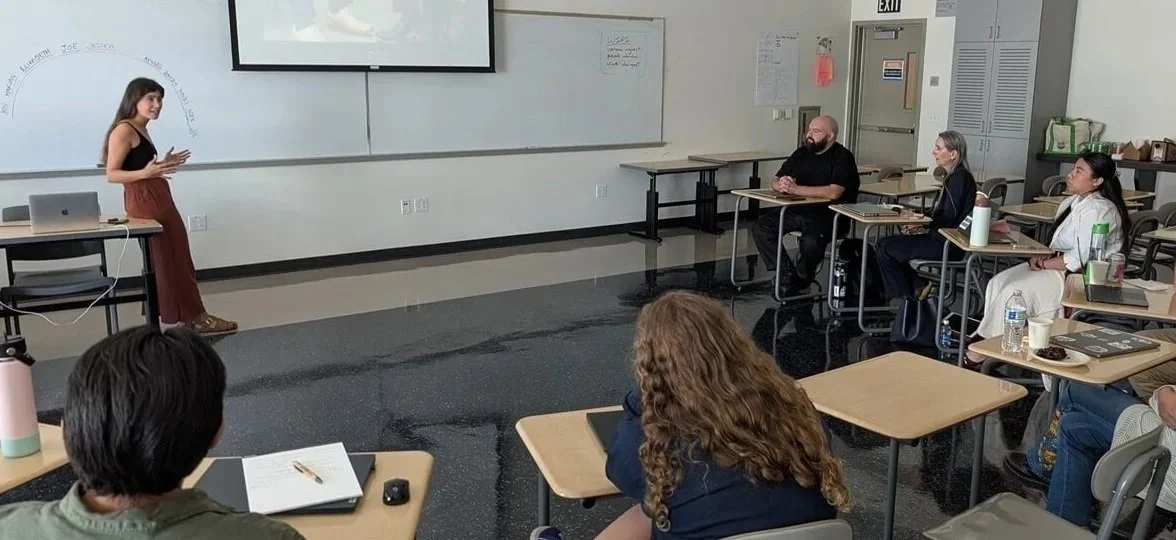
The employment rules for associates are short and absolute: employee or volunteer, paid by the employer alone, in a permitted setting, under a qualifying supervisor, with the registration disclosed in every advertisement and to every client. Read any offer against those five points before reading the salary line, and ask the employer in writing how associates are paid, who sets fees, who the supervisor is, and where the practice's marketing shows the required statements. If you are still choosing a graduate program, ask how it prepares students for the associate years and whether its practicum hours count toward the Board's requirement. Program websites describe clinical training in similar language regardless of what is actually happening in classrooms and supervision rooms. Ask every program you are seriously considering whether you can attend a live or online class session before enrolling, and ask to speak with current students and recent graduates about how supervision and skill development function in practice. Reputable programs should welcome the request. Hesitation or refusal is informative on its own. Trust what you see in a classroom over what you read in promotional copy.
Frequently Asked Questions
Can an AMFT be paid as a 1099 independent contractor in California?
No. Business and Professions Code section 4980.43.3 requires an associate to work as an employee or volunteer and not as an independent contractor, and the Board requires W-2 forms for every year of paid experience at the licensure application. A 1099 is acceptable only for a volunteer's expense reimbursements or for a stipend or loan repayment from a workforce program, and the Board may audit those payments.
Can an AMFT accept payment directly from clients?
No. An associate may be paid only by their employer and may not receive any remuneration from clients, including donations. The associate also may not rent space, pay for furnishings, equipment, or supplies, or pay any other obligation of the employer.
What does a subsequent AMFT registration number change?
A first registration can be renewed five times and lasts six years. A subsequent number, which requires passing the California Law and Ethics Exam, allows the associate to keep counting hours in any setting except a private practice or professional corporation, where a subsequent registrant may not work at all.
What must an AMFT's advertisement include?
Since April 1, 2026: the associate's first and last name as filed with the Board, the title Registered Associate Marriage and Family Therapist or Registered Associate MFT, the registration number, the employer's name or the entity for which the associate volunteers, and a statement that the associate is supervised by a licensed person. Websites, social media profiles, directory listings, and business cards all count as advertising.
Can an AMFT use the abbreviation AMFT after their name?
Only when the full title Registered Associate Marriage and Family Therapist also appears in the same advertisement. AMFT alone is not an acceptable title under section 4980.44 or the Board's 2026 advertising regulation.
What must an AMFT tell clients before the first session?
That they are an unlicensed registered associate marriage and family therapist, their registration number, their employer's name, and the license type of their supervisor. Every client also receives a written Notice to Clients in at least 12-point type with the Board's complaint language and, for clients who began on or after July 1, 2025, the associate's full name, registration number, registration type, and expiration date. Delivery must be documented.
What are the penalties for breaking the AMFT employment or advertising rules?
Hours gained as an independent contractor cannot be verified with a W-2 and are not counted. The Board can issue a citation with a fine of up to $2,500 per investigation, or $5,000 with aggravating factors such as unlicensed practice or repeat violations, and can deny, suspend, or revoke a registration or license for unprofessional conduct. Advertising problems usually begin with a notice and a chance to correct them.
References
California Board of Behavioral Sciences. (2024). Handbook for future LMFTs (May 2024). https://www.bbs.ca.gov/pdf/publications/lmft_handbook.pdf
California Board of Behavioral Sciences. (2025a). Important answers to frequently asked questions for associate marriage and family therapists and MFT trainees (revised February 2025). https://www.bbs.ca.gov/pdf/publications/mft_faq.pdf
California Board of Behavioral Sciences. (2025b). FAQ for display of license/registration requirements and required notice to consumers (SB 1024, August 2025). https://www.bbs.ca.gov/pdf/display_of_lic_reg_reqs_and_req_notice_to_consumers.pdf
California Board of Behavioral Sciences. (2026a). Statutes and regulations relating to the practice of professional clinical counseling, marriage and family therapy, educational psychology, clinical social work (January 2026). https://www.bbs.ca.gov/pdf/publications/lawsregs.pdf
California Board of Behavioral Sciences. (2026b). Fact sheet and FAQs: Licensee and registrant advertising requirements (revised March 2026, effective April 1, 2026). https://www.bbs.ca.gov/pdf/publications/adv_guide.pdf
California Board of Behavioral Sciences. (2026c). Enforcement update (memorandum of July 28, 2026, agenda item 19, Board meeting of August 13-14, 2026). https://www.bbs.ca.gov/pdf/agen_notice/2026/20260813-14_agenda_item19.pdf
California Board of Behavioral Sciences. (2026d). Important answers to frequently asked questions for supervisors (March 2026). https://www.bbs.ca.gov/pdf/publications/faqs_for_supervisors.pdf
California Legislature. (2026a). Business and Professions Code section 4980.43.3. https://leginfo.legislature.ca.gov/faces/codes_displaySection.xhtml?lawCode=BPC§ionNum=4980.43.3.
California Legislature. (2026b). Business and Professions Code section 4980.10. https://leginfo.legislature.ca.gov/faces/codes_displaySection.xhtml?lawCode=BPC§ionNum=4980.10.
California Legislature. (2026c). Business and Professions Code section 4980.06. https://leginfo.legislature.ca.gov/faces/codes_displaySection.xhtml?lawCode=BPC§ionNum=4980.06.
California Legislature. (2026d). Business and Professions Code section 4980.03. https://leginfo.legislature.ca.gov/faces/codes_displaySection.xhtml?lawCode=BPC§ionNum=4980.03.
California Legislature. (2026e). Business and Professions Code section 4980.01. https://leginfo.legislature.ca.gov/faces/codes_displaySection.xhtml?lawCode=BPC§ionNum=4980.01.
California Legislature. (2026f). Business and Professions Code section 4980.43. https://leginfo.legislature.ca.gov/faces/codes_displaySection.xhtml?lawCode=BPC§ionNum=4980.43.
California Legislature. (2026g). Business and Professions Code section 4980.43.4. https://leginfo.legislature.ca.gov/faces/codes_displaySection.xhtml?lawCode=BPC§ionNum=4980.43.4.
California Legislature. (2026h). Business and Professions Code section 4984.01. https://leginfo.legislature.ca.gov/faces/codes_displaySection.xhtml?lawCode=BPC§ionNum=4984.01.
California Legislature. (2026i). Business and Professions Code section 4980.44. https://leginfo.legislature.ca.gov/faces/codes_displaySection.xhtml?lawCode=BPC§ionNum=4980.44.
California Legislature. (2026j). Business and Professions Code section 651. https://leginfo.legislature.ca.gov/faces/codes_displaySection.xhtml?lawCode=BPC§ionNum=651.
California Legislature. (2026k). Business and Professions Code section 4980.32. https://leginfo.legislature.ca.gov/faces/codes_displaySection.xhtml?lawCode=BPC§ionNum=4980.32.
California Legislature. (2026l). Business and Professions Code section 4980.31. https://leginfo.legislature.ca.gov/faces/codes_displaySection.xhtml?lawCode=BPC§ionNum=4980.31.
California Legislature. (2026m). Business and Professions Code section 4982. https://leginfo.legislature.ca.gov/faces/codes_displaySection.xhtml?lawCode=BPC§ionNum=4982.
Rousmaniere, T., and Vaz, A. (2025, March). Sentio's clinic-to-classroom method: Bridging deliberate practice and clinical training. Psychotherapy Bulletin, Society for the Advancement of Psychotherapy. https://societyforpsychotherapy.org/sentios-clinic-to-classroom-methodbridging-deliberate-practice-and-clinical-training/
Sentio University. (2026a). What therapists actually earn before licensure in California. https://sentio.org/what-therapists-earn-before-licensure-in-california
Sentio University. (2026b). Master of Arts in Marriage and Family Therapy academic catalog 2026-2027. https://sentio.org/academic-catalog-1