
What It Costs to Get Licensed as an LMFT in California After Your Degree
A Guide to What LMFT Licensure Costs After the Degree
The degree is the expensive part of becoming a marriage and family therapist; what tuition costs at California programs is covered in the MFT program tuition guide. This guide prices what comes after graduation: the Associate Marriage and Family Therapist registration, the fingerprint clearance, the two examinations and their preparation, liability insurance, continuing education, the licensure application, and the initial license. Every Board fee below comes from the Board's fee regulations as amended in 2026, and every example price from the seller's own page, with the date it was read. Supervision is priced in one section and otherwise left to the pre-licensure earnings guide, which works through what associates earn and pay in each work setting. The total at the end is a labelled range built from these parts, not a single number.
What Does the BBS Charge From AMFT Registration to the LMFT License?
The Business and Professions Code sets the Board's fees, and a Board regulation cut most of them in half for four years. The statute lists the standard amounts: "The application fee for an associate registration shall be one hundred fifty dollars ($150)"; "The annual renewal fee for an associate registration shall be one hundred fifty dollars ($150)"; "The fee for the application for licensure shall be two hundred fifty dollars ($250)"; the Board-administered clinical examination $250; the California law and ethics examination $150; "The fee for the issuance of an initial license shall be two hundred dollars ($200)"; and the two-year license renewal $200 (California Legislature, 2026a). Smaller statutory fees include $20 to rescore an examination, $20 for a replacement registration or license, $25 for a certificate or letter of good standing, and a delinquency fee of one-half the renewal fee for a license allowed to expire (California Legislature, 2026a).
The reduction runs from July 1, 2026, through June 30, 2030. The Board's reserve fund had grown past the limit that Business and Professions Code section 128.5 allows, and the regulation approved by the Office of Administrative Law on February 4, 2026, halves the fees for 48 months (California Board of Behavioral Sciences, 2026a, 2026b). For that period the AMFT registration application is $75, each annual AMFT renewal is $75, the law and ethics examination is $75, the application for licensure is $125, the clinical examination is $125, the initial license is $100, and the biennial LMFT renewal is $100 (California Board of Behavioral Sciences, 2026a). The Board's forms already carry the new figures. The AMFT registration packet states: "If your application is postmarked ON OR AFTER JULY 1, 2026: The application fee is $75" (California Board of Behavioral Sciences, 2025). The Application for Licensure instructs applicants to "Include a $250.00 fee (this fee consists of a $125.00 application fee for evaluating your experience and education, and a $125.00 examination fee)" (California Board of Behavioral Sciences, 2026c). The Request for Initial License Issuance asks for "a $100 check or money order payable to 'Behavioral Sciences Fund'" (California Board of Behavioral Sciences, 2026d).
How many renewals you pay depends on how long the associate period lasts. The registration "shall expire one year from the last day of the month in which it was issued," may be renewed a maximum of five times, and cannot be renewed beyond six years from issue (California Legislature, 2026b). The 3,000 supervised hours take a minimum of 104 weeks, so almost every associate pays at least one renewal, and the timeline guide puts the usual associate period at two to four years, which means one to three renewals at $75 each during the reduction. After licensure, each two-year renewal adds a statutory $20 surcharge for the Mental Health Practitioner Education Fund on top of the renewal fee (California Legislature, 2026c); that is a cost of being licensed rather than of becoming licensed, and it is left out of the totals below.
What Do the Two Exams Cost, Including Retakes?
The exam fees are paid to the Board, never to the test center. The law and ethics examination fee is $75 through June 30, 2030, and the clinical examination fee is $125 for the same period; associates pay the clinical fee with the Application for Licensure, as the form above shows, and out-of-state applicants who never held a California registration pay it with a separate Initial Clinical Exam application (California Board of Behavioral Sciences, 2026a, 2026c, 2026e). A candidate who fails either exam pays the same fee again for each attempt: under section 4984.72, an applicant who fails the clinical examination may retake it within one year "without further application upon payment of the fee for the examination" (California Legislature, 2026d), and the law and ethics rule is the same (California Legislature, 2026e). Pearson's handbook adds the one avoidable charge: a candidate who is absent from or late to an appointment without changing or canceling it is recorded as a no-show, and "your exam fee will be forfeited"; a candidate whose first and last names on the identification do not exactly match the exam authorization "will not be allowed to test, and the exam fees will be forfeited" (Pearson, 2026). Each failed attempt also costs time. The Board's published waiting period is 90 days between attempts for both exams, and eligibility is not sent to Pearson until it has passed (California Board of Behavioral Sciences, 2026f, 2026i; Pearson, 2026). Since January 1, 2023, a law and ethics retake requires only the re-exam application and the fee; the Board's exam FAQ states: "Effective January 1, 2023, a 12-hour law and ethics course is no longer required for a re-exam" (California Board of Behavioral Sciences, 2023b). The Law and Ethics Exam guide and the Clinical Exam guide cover the exams themselves.
Preparation courses are optional and unregulated, and the Board and Pearson provide only a content outline and a handful of sample questions (Pearson, 2026). Two long-standing California vendors publish their prices. Therapist Development Center lists its California MFT Clinical Exam program at $375.00 with six months of access and its California MFT Law and Ethics Exam program at $295.00 with four months of access, each with free extensions (Therapist Development Center, 2026a, 2026b). Gerry Grossman Seminars lists a clinical exam self-study course at $329.00, a course with a live online workshop at $399.00, and a workshop alone at $179.00, and for the law and ethics exam a self-study course at $279.00, a course with workshop at $339.00, and a workshop alone at $149.00 (Gerry Grossman Seminars, 2026a, 2026b, 2026c). Prices read September 6, 2026. Taken together, preparation for both exams from either vendor runs about $600 to $750; a single exam runs about $280 to $400. Some employers and professional associations reimburse or discount these courses, and many candidates prepare with used materials or study groups for far less.
When Do Associates Pay for Supervision, and What Does It Cost?
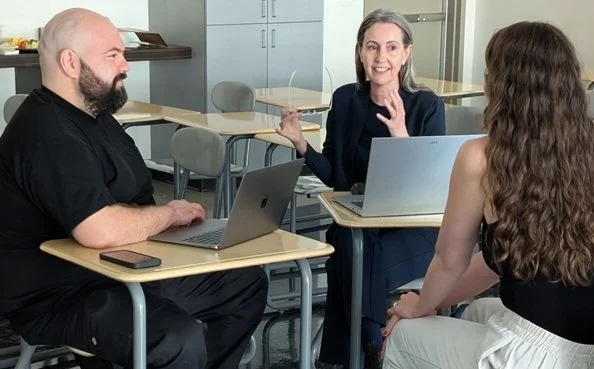
An associate "shall only perform mental health and related services as an employee or volunteer, and not as an independent contractor," and "shall not receive any remuneration from patients or clients and shall only be paid by their employer" (California Legislature, 2026f). Whether the employer also pays for supervision depends on the setting. County mental health, community clinics, federally qualified health centers, hospitals, and school districts employ their own licensed supervisors, and supervision comes with the position. Private practices and group practices often do not employ a qualified supervisor, so the associate contracts with an outside supervisor under a written oversight agreement and pays by the hour or by the month.
The pre-licensure earnings guide prices that arrangement: about $450 a month at the central estimate, in a range of about $200 to $800, or roughly $5,400 a year, built from the Board's supervision-contact requirement, a typical California clinical supervisor rate of about $100 to $250 an hour, and one to two hours of supervision a week (Sentio University, 2026a). Over a two-year associate period that is about $10,800 at the central estimate; over three years, about $16,200. Nothing else in this guide comes close, which is why the choice of first job is also the largest financial decision of the associate years. The earnings guide compares the settings side by side.
What Does Liability Insurance Cost an Associate?
Associates employed by agencies and clinics are usually covered by the employer's professional liability policy for work done in that job, and the first question to ask a prospective employer is whether that is so and whether the coverage extends to a personal policy's limits. Associates who want their own policy, or who work in a setting that requires one, buy it from the carriers that insure mental health professionals. Those carriers quote individually rather than publishing a rate sheet. HPSO's student and recent graduate page states: "Most students are able to secure coverage for as little as $43 per year" (Healthcare Providers Service Organization, 2026); CPH Insurance's mental health pages describe discounts for online binding, part-time work, new licensees, and association membership but list no premiums (CPH Insurance, 2026). An individual policy for a registered associate is a low three-figure annual premium in most quotes; treat $100 to $300 a year as an estimate for budgeting, not a published figure, and get a quote before signing an employment agreement that requires your own coverage.
What Are the Smaller Items?
Fingerprints come first. Every applicant for registration completes a state and federal criminal history check through the Department of Justice (16 CCR section 1815). The Board's Request for Live Scan Service form lists the "DOJ FINGERPRINT PROCESSING FEE: $32.00" and the "FBI FINGERPRINT PROCESSING FEE: $17.00," and adds that "there may be a service charge associated with the Live Scan site you visit" (California Board of Behavioral Sciences, 2020). The Department of Justice's fee chart carries the same $32 and $17 for a general license application and states that the rolling fee charged by the Live Scan operator "varies widely among locations, you will want to review the cost before going to a fingerprinting site" (California Department of Justice, 2012, 2026). Budget the $49 plus a rolling fee that Live Scan operators set themselves; the Board does not publish a figure for it. Applicants fingerprinted outside California submit two hard cards and "a $49 fee payable to Behavioral Sciences Fund" instead (California Board of Behavioral Sciences, 2025).
Continuing education starts before the license. "California law requires all registered Associates to complete three (3) hours of continuing education (CE) in California law and ethics annually, prior to each registration renewal," and the requirement holds "even if the registrant has already passed the California Law And Ethics Exam" (California Board of Behavioral Sciences, 2026g; California Legislature, 2026g). Courses must come from a provider in one of the Board's accepted categories: an accredited or approved school, a provider approved by a Board-recognized approval agency, or one of nine named professional associations, among them AAMFT and CAMFT (16 CCR section 1887.4.3; California Board of Behavioral Sciences, 2026h). Prices vary by provider; a three-hour law and ethics course from an online provider is commonly priced in the tens of dollars, and one national online provider lists unlimited annual access to its text-based courses at $89.99 a year (CE4Less, 2026). Confirm that any provider you use falls within the Board's accepted categories before paying. Applicants for licensure must also show three hours of training in telehealth, including its law and ethics, either as certified graduate coursework or as a continuing education course from an acceptable provider; it is "a one-time requirement" and must be documented "before they are approved to take the clinical exam" (California Board of Behavioral Sciences, 2023a). After licensure the requirement rises to 36 hours per two-year renewal, six of them in law and ethics (16 CCR section 1887.3).
The remaining items are small. Official transcripts for the registration application are ordered from your university at its transcript fee, and the Board accepts electronic transcripts. BreEZe, the Board's online portal used for the AMFT renewal, the law and ethics examination request, and re-examination applications, charges nothing beyond the fee for the transaction itself. A letter of good standing, needed only if you later apply for licensure in another state, is $25 (California Legislature, 2026a).
What Is the Realistic Total?
The total depends on three choices: whether the Board fees are the reduced or the standard ones, whether you buy preparation courses and your own insurance, and whether your job includes supervision. Three labelled scenarios, each for a three-year associate period with two annual renewals, cover the range.
- Lean path, reduced fees (July 1, 2026, through June 30, 2030). AMFT application $75; Department of Justice and FBI processing $49 plus the operator's rolling fee; law and ethics exam $75; two AMFT renewals $150; application for licensure and clinical exam $250; initial license $100. The Board and Department of Justice items total $699. Add the rolling fee and two or three years of the three-hour law and ethics course, and the path costs about $700 to $950. The telehealth training adds nothing if it was part of your degree, and one continuing education course if it was not.
- Lean path, standard fees. The same items at the statutory amounts: $150, $49, $150, $300, $500, and $200, or $1,349 before the rolling fee and continuing education, so about $1,375 to $1,600. These are the amounts to expect for a registration or licensure step that falls after June 30, 2030, unless the Board extends the reduction.
- Typical path, reduced fees. The lean path plus preparation courses for both exams ($600 to $750), an individual liability policy for three years (an estimate of $300 to $900), and one clinical exam retake ($125). Roughly $1,700 to $2,500. One law and ethics retake adds $75.
- Self-paid supervision. Add the earnings guide's supervision estimate to either path: about $5,400 a year at the central figure, or $10,800 to $16,200 over two to three years, within a range that runs from about $4,800 to $28,800 at the guide's low and high monthly figures (Sentio University, 2026a). For an associate in a group practice, supervision is 80 to 90 percent of the post-degree cost.
Two comparisons put the numbers in proportion. The lean path at reduced fees is less than one unit of graduate tuition at most California programs, and the typical path is less than three. The self-paid supervision path, by contrast, can exceed the cost of a semester, which is why the setting question deserves as much attention as the exam question.
How Is the Total Reduced?
Choose a setting that includes supervision. Agency, county, hospital, school, and federally qualified health center positions carry supervision as part of the job, and many also cover liability insurance and continuing education; the earnings guide shows that the wage difference between settings is smaller than the supervision difference. Time the Board steps inside the reduction window where you can: an application postmarked on or after July 1, 2026, pays the reduced fee, and the reduction ends June 30, 2030. Take the telehealth training as graduate coursework and obtain the registrar's certification before you leave school. Pass each exam on the first attempt; the retake fee is the smaller cost, the 90-day wait and the delayed license are the larger ones. Spouses and partners of active-duty military personnel stationed in California can request fee waivers on the registration application and the initial license, and active-duty members, veterans, and refugees and asylees can request expedited processing (California Board of Behavioral Sciences, 2025, 2026d). The scholarships and financial aid guide covers the state and federal loan repayment programs that reimburse graduates who work in shortage areas, which offset a different and much larger cost.
A Closer Look at One Program: Sentio University's MFT Track
The following description of one specific MFT program is offered as a concrete example of how a program can prepare students for the post-degree steps, not as a recommendation against evaluating other programs. Students should research multiple options and ask each one direct questions about how clinical skill is built and measured.
Sentio University, a nonprofit graduate school based in Los Angeles with a hybrid delivery model that serves students throughout California, offers a Master of Arts in Marriage and Family Therapy that meets the Board of Behavioral Sciences educational requirements for the LMFT. The program runs 20 months across 60 units at $1,120 per unit, with weekly online classes and one intensive in-person residency at the start of each semester, in cohorts capped at 24 students at a 4:1 student-to-faculty ratio. It is designed around deliberate practice methodology and is described in peer-reviewed work as the first graduate psychotherapy program to thoroughly integrate deliberate practice, with roughly half of nearly every class session dedicated to active skills training rather than lecture (Rousmaniere and Vaz, 2025, p. 2).
The post-degree steps are taught before graduation. The 2026-2027 Academic Catalog describes MFT564 Therapist Career Development, taken in the final semester, as a course that "prepares students to start their careers in the field of marriage and family therapy, gain employment, and pursue career-long professional development, including preparation for the California Law and Ethics Exam and LMFT Clinical Exam," and lists among its content "planning for the associateship and licensure application process" (Sentio University, 2026b). Practicum at the Sentio Counseling Center provides more than 400 hours of supervised clinical experience during the degree, so graduates begin the associate years with the pre-degree hours the Board allows already logged. Sentio also integrates AI literacy training through its AI certification program for therapists.
Sentio is a small, newer institution, admits only applicants who are California residents or willing to relocate to California and who intend to license in California, and its alumni network is still developing. Prospective students weighing Sentio alongside larger or older programs should factor that into their decision. Learn more at the Sentio MFT program overview, the tuition and fees page, and the Sentio FAQ page.
Making Your Decision
The Board's fees are the smallest part of the bill and are fixed in regulation; the preparation courses and insurance are optional and priced in the low hundreds; the supervision arrangement can cost more than everything else combined. Decide the setting question with the numbers in front of you, ask every prospective employer in writing whether supervision and liability coverage come with the position, and keep the three-year associate budget on one page next to your expected earnings. If you are still choosing a graduate program, ask how it prepares students for the licensure steps and whether its practicum hours count toward the Board's requirement. Program websites describe clinical training in similar language regardless of what is actually happening in classrooms and supervision rooms. Ask every program you are seriously considering whether you can attend a live or online class session before enrolling, and ask to speak with current students and recent graduates about how supervision and skill development function in practice. Reputable programs should welcome the request. Hesitation or refusal is informative on its own. Trust what you see in a classroom over what you read in promotional copy.
Frequently Asked Questions
How much does it cost to become an LMFT in California after the degree?
The Board and fingerprint fees for a three-year associate period total about $700 at the reduced fees in effect from July 1, 2026, through June 30, 2030, and about $1,350 at standard fees. Adding exam preparation, an individual liability policy, and one retake brings a typical total to roughly $1,700 to $2,500. Self-paid supervision adds about $5,400 a year.
What are the BBS fees for AMFT registration and the LMFT license in 2026?
Through June 30, 2030: AMFT application $75, each annual renewal $75, law and ethics exam $75, application for licensure $125, clinical exam $125, and initial license $100. The standard amounts are double each of these and return on July 1, 2030, unless extended.
Why are the BBS fees lower right now?
The Board's reserve fund exceeded the limit set by Business and Professions Code section 128.5, so a regulation approved on February 4, 2026, cut application, examination, license, and renewal fees by half for 48 months starting July 1, 2026.
Do I pay for my own clinical supervision as an AMFT?
It depends on the setting. Agencies, clinics, hospitals, and schools employ their own supervisors and include supervision with the job. Associates in private and group practices often pay an outside supervisor, at about $450 a month at the central estimate, in a range of about $200 to $800.
How much do LMFT exam prep courses cost?
Published prices in September 2026 ran from $279 to $339 for law and ethics exam courses and $329 to $399 for clinical exam courses at two California vendors, or about $600 to $750 for both exams. The Board and Pearson provide only the content outline and sample questions.
What does Live Scan fingerprinting cost for the BBS?
The Department of Justice charges $32 and the FBI $17, for $49, paid at the Live Scan site along with a rolling fee that each operator sets and the state does not publish. Out-of-state applicants submit hard cards with a $49 fee to the Board instead.
What happens to the cost if I fail an exam?
You pay the exam fee again for each attempt, $75 for law and ethics or $125 for the clinical exam during the reduction period, wait 90 days, and must retake within one year. A no-show forfeits the fee. Since January 1, 2023, a law and ethics retake requires no additional coursework.
References
California Board of Behavioral Sciences. (2020). Request for Live Scan Service: Instructions for Live Scan fingerprinting (Form 37A-648, revised June 2020). https://www.bbs.ca.gov/pdf/forms/livescan.pdf
California Board of Behavioral Sciences. (2023a). New requirement for existing licensees and applicants for licensure: Training or coursework in the provision of mental health services via telehealth (3 hours). https://www.bbs.ca.gov/pdf/ab_1759_faq_telehealth.pdf
California Board of Behavioral Sciences. (2023b). California Law and Ethics Examination: Frequently asked questions (revised September 2023). https://www.bbs.ca.gov/pdf/publications/law_ethics_faq.pdf
California Board of Behavioral Sciences. (2025). Application for registration as an associate marriage and family therapist (Form 37A-580, revised May 2025). https://www.bbs.ca.gov/pdf/forms/mft/imfapp.pdf
California Board of Behavioral Sciences. (2026a). Fee reductions: Notice of approval and order of adoption, California Code of Regulations, title 16, sections 1816, 1816.1, 1816.2, and 1816.4 (effective July 1, 2026). https://www.bbs.ca.gov/pdf/regulation/pending/fee_reduc_noa.pdf
California Board of Behavioral Sciences. (2026b). Fee reductions: Initial statement of reasons. https://www.bbs.ca.gov/pdf/regulation/pending/fee_reduc_isor.pdf
California Board of Behavioral Sciences. (2026c). Application for licensure: Licensed marriage and family therapist (Form 37A-318, revised June 2026). https://www.bbs.ca.gov/pdf/forms/mft/mftapp.pdf
California Board of Behavioral Sciences. (2026d). Request for initial license issuance (Form 37M-308, revised July 2026). https://www.bbs.ca.gov/pdf/forms/initial_lic_iss.pdf
California Board of Behavioral Sciences. (2026e). Application for initial LMFT California clinical examination (Form 37A-299, revised July 2026). https://www.bbs.ca.gov/pdf/forms/mft/lmft_clinical_exam_app.pdf
California Board of Behavioral Sciences. (2026f). LMFT Clinical Examination. https://www.bbs.ca.gov/exams/lmft.html
California Board of Behavioral Sciences. (2026g). Registrant continuing education requirements and frequently asked questions (revised May 2026). https://www.bbs.ca.gov/pdf/registrants_ce_info_brochure.pdf
California Board of Behavioral Sciences. (2026h). Statutes and regulations relating to the practice of professional clinical counseling, marriage and family therapy, educational psychology, clinical social work (January 2026). https://www.bbs.ca.gov/pdf/publications/lawsregs.pdf
California Board of Behavioral Sciences. (2026i). California Law and Ethics Examination. https://www.bbs.ca.gov/exams/calaw_ethics.html
California Department of Justice. (2012). Applicant fingerprint processing fees (as of August 17, 2012). https://oag.ca.gov/sites/all/files/agweb/pdfs/fingerprints/forms/fees.pdf
California Department of Justice. (2026). Applicants: Live Scan information. https://oag.ca.gov/fingerprints/applicants
California Legislature. (2026a). Business and Professions Code section 4984.7. https://leginfo.legislature.ca.gov/faces/codes_displaySection.xhtml?lawCode=BPC§ionNum=4984.7.
California Legislature. (2026b). Business and Professions Code section 4984.01. https://leginfo.legislature.ca.gov/faces/codes_displaySection.xhtml?lawCode=BPC§ionNum=4984.01.
California Legislature. (2026c). Business and Professions Code section 4984.75. https://leginfo.legislature.ca.gov/faces/codes_displaySection.xhtml?lawCode=BPC§ionNum=4984.75.
California Legislature. (2026d). Business and Professions Code section 4984.72. https://leginfo.legislature.ca.gov/faces/codes_displaySection.xhtml?lawCode=BPC§ionNum=4984.72.
California Legislature. (2026e). Business and Professions Code section 4980.399. https://leginfo.legislature.ca.gov/faces/codes_displaySection.xhtml?lawCode=BPC§ionNum=4980.399.
California Legislature. (2026f). Business and Professions Code section 4980.43.3. https://leginfo.legislature.ca.gov/faces/codes_displaySection.xhtml?lawCode=BPC§ionNum=4980.43.3.
California Legislature. (2026g). Business and Professions Code section 4980.54. https://leginfo.legislature.ca.gov/faces/codes_displaySection.xhtml?lawCode=BPC§ionNum=4980.54.
CE4Less. (2026). Continuing education for mental health professionals (home page, pricing read September 6, 2026). https://www.ce4less.com/
CPH Insurance. (2026). Individual mental health professional liability insurance. https://cphins.com/individual-mental-health/
Gerry Grossman Seminars. (2026a). MFT California clinical exam prep self-study course (pricing read September 6, 2026). https://www.gerrygrossman.com/mft-cce-exam-prep-self-study-course
Gerry Grossman Seminars. (2026b). MFT California clinical exam prep course and live online workshop (pricing read September 6, 2026). https://www.gerrygrossman.com/mft-cce-exam-prep-course-and-live-online-workshop
Gerry Grossman Seminars. (2026c). LMFT California law and ethics exam prep (pricing read September 6, 2026). https://www.gerrygrossman.com/law-and-ethics-exam/mft-law-and-ethics-exam-prep
Healthcare Providers Service Organization. (2026). Professional liability insurance for students and recent graduates. https://www.hpso.com/Insurance-for-you/Students-recent-graduates
Pearson. (2026). California Board of Behavioral Sciences candidate handbook (July 2026, No. 580500). https://www.pearsonvue.com/content/dam/VUE/vue/en/documents/publications/580500.pdf
Rousmaniere, T., and Vaz, A. (2025, March). Sentio's clinic-to-classroom method: Bridging deliberate practice and clinical training. Psychotherapy Bulletin, Society for the Advancement of Psychotherapy. https://societyforpsychotherapy.org/sentios-clinic-to-classroom-methodbridging-deliberate-practice-and-clinical-training/
Sentio University. (2026a). What therapists actually earn before licensure in California. https://sentio.org/what-therapists-earn-before-licensure-in-california
Sentio University. (2026b). Master of Arts in Marriage and Family Therapy academic catalog 2026-2027. https://sentio.org/academic-catalog-1
Therapist Development Center. (2026a). California MFT Clinical Exam (pricing read September 6, 2026). https://therapistdevelopmentcenter.com/product/california-mft-clinical-exam
Therapist Development Center. (2026b). California MFT Law and Ethics Exam (pricing read September 6, 2026). https://therapistdevelopmentcenter.com/product/california-mft-law-ethics