
What Is an LMFT? Licensed Marriage and Family Therapist, Explained for California
A Definitional Guide for People Considering a Therapy Career in California
LMFT stands for Licensed Marriage and Family Therapist. In California it is a state license issued by the Board of Behavioral Sciences (BBS) to a master's-level psychotherapist who has completed a qualifying degree, 3,000 hours of supervised clinical experience, and two licensing examinations. As of September 2024 the state had 48,679 active LMFTs and 15,812 registered Associate Marriage and Family Therapists working toward the license, according to the BBS Licensing Population Report (BBS, 2024). That makes the LMFT the largest clinical license the Board regulates and, by the Bureau of Labor Statistics' count, makes California home to close to half of the marriage and family therapists in the United States (BLS, 2024). The sections below cover what the license means in law, what LMFTs actually do and with whom, where they work and what they earn, who may use the title, and how the name came to be. For the pre-licensure stage that precedes it, see the guide to what an AMFT is; for how the license fits among California's other therapy credentials, see which therapy credential is right for you; and for the degree that starts the path, the Sentio MFT program overview.
What Does LMFT Stand For, and What Does the License Mean?
The four letters break down into three ideas. "Licensed" means the person holds a current license from the BBS, a state agency within the California Department of Consumer Affairs whose stated mission is to "protect and serve Californians by setting, communicating, and enforcing standards for safe and competent mental health practice" (BBS, n.d.). "Marriage and Family Therapist" names the profession, one of four license types the Board regulates alongside Licensed Clinical Social Workers, Licensed Professional Clinical Counselors, and Licensed Educational Psychologists. The letters together, LMFT, are a protected title: under Business and Professions Code section 4980, a person may not use "L.M.F.T.," "M.F.T.," or "M.F.C.C." after their name, or advertise as a marriage, family, child, domestic, or marital consultant, without holding the license (California Legislature, 2026a).
The license is the end point of a sequence, not a degree. A person earns a qualifying master's or doctoral degree, registers with the Board as an Associate Marriage and Family Therapist (AMFT), accumulates 3,000 hours of supervised experience over at least 104 weeks (up to 1,300 of them may be earned as a trainee before the degree), passes the California Law and Ethics Examination and the LMFT Clinical Examination, and then receives the license. The BBS Handbook for Future LMFTs sets out each step (BBS, 2024). The degree, the hours, and the exams each have their own guide on this site: the BBS educational requirements, the 3,000-hour requirement, and the Law and Ethics exam. The realistic total from the first day of graduate school to the license is five to seven years, mapped in the timeline to LMFT licensure.
Three related terms cause confusion. "MFT" without the L refers to the field, the academic discipline, and the degree; a person with an MFT master's degree and no license is not an LMFT. "AMFT" is the registered pre-licensure status that sits between the degree and the license. "MFCC," which still appears in older documents and on older licenses, is the pre-1999 name of the same license, explained below.
What Can an LMFT Do in California?
The scope of the license is written into statute. Business and Professions Code section 4980.02 defines the practice of marriage and family therapy as "the application of psychotherapeutic and family systems theories, principles, and methods in the delivery of services to individuals, couples, or groups in order to assess, evaluate, and treat relational issues, emotional disorders, behavioral problems, mental illness, alcohol and substance use, and to modify intrapersonal and interpersonal behaviors" (California Legislature, 2026b). The same section lists what that application includes: assessment, evaluation, and prognosis; treatment planning and evaluation; individual, relationship, family, or group therapeutic interventions; relational therapy; psychotherapy; client education; clinical case management; consultation; and supervision.
In practice that means an LMFT conducts intake assessments, forms diagnoses using the Diagnostic and Statistical Manual, writes treatment plans, and provides psychotherapy across the range of conditions that bring people to a therapist: depression, anxiety, trauma, grief, substance use, relationship distress, family conflict, and the behavioral problems of children and adolescents. An LMFT may practice independently, open a private practice, bill insurers and, since January 2024, Medicare, supervise associates after completing the required supervisor training, and consult with other professionals. The diagnostic question in particular is a frequent point of doubt for prospective students and clients, and it has its own guide: can an LMFT diagnose in California.
The scope also has edges. LMFTs do not prescribe medication, do not perform the comprehensive psychological testing associated with licensed psychologists, and, like every mental health licensee, must practice within their training and competence. The statute's 2022 amendment added the list of included activities and stated that the amendment "shall not be construed to expand or constrict the existing scope of practice," which is to say the Legislature was describing what LMFTs already did rather than granting anything new (California Legislature, 2026b).
Do LMFTs Only Work With Couples and Families?
No, and this is the most common misunderstanding about the license. The word "family" in the title describes the theoretical lens of the training, not a restriction on who may sit in the room. The statutory definition of the practice names "individuals, couples, or groups" as the recipients of service, and the training that leads to the license, described in the guide to the California MFT 60-unit curriculum, includes diagnosis, psychopathology, psychopharmacology, trauma, addiction, and human development alongside family systems theory.
What the lens changes is how an LMFT thinks about a problem. Family systems theory treats a person's difficulties as shaped by the relationships around them, and a systemically trained therapist working with an individual client will still ask about partners, parents, children, workplaces, and cultures as part of understanding the person in front of them. Many LMFTs spend the majority of their week with individual adult clients. Many others build practices around couples, families, or children. The license permits all of these.
The one place the title has teeth in the other direction is the supervised experience that precedes it. Of the 3,000 hours required for the license, at least 500 must involve the diagnosis and treatment of couples, families, or children (BBS, 2024). Every LMFT has therefore done substantial relational work before licensure, whatever they choose to focus on afterward.
Where Do LMFTs Work, and What Do They Earn?
The Bureau of Labor Statistics counted 63,340 marriage and family therapist jobs nationally in May 2023, and 30,890 of them in California, which is 48.8 percent of the national total (BLS, 2024). No other state comes close; the next largest, Minnesota, had 4,230. That concentration follows from history: California licensed the profession earlier and more broadly than most states, and its community mental health system, school districts, county behavioral health departments, and private practices have hired MFTs for decades.
Nationally, the industries employing the most marriage and family therapists in May 2023 were offices of other health practitioners (20,920 jobs, which includes group practices and private practices), individual and family services (20,370, which includes community mental health agencies and nonprofits), outpatient care centers (9,540), state government (3,940), and residential mental health and substance use facilities (1,970) (BLS, 2024). Schools are a smaller employer by headcount but a well-paying one: the mean annual wage for marriage and family therapists in elementary and secondary schools was $89,000, against $84,770 in state government, $67,600 in outpatient care centers, and $67,230 in offices of other health practitioners.
The statewide mean annual wage for the occupation in California was $69,780 in May 2023, or $33.55 an hour, slightly above the national mean of $68,730 and the national median of $58,510 (BLS, 2024). Within California the spread by region is wide: $92,370 in the San Francisco-Oakland-Hayward metropolitan area, $86,710 in San Jose-Sunnyvale-Santa Clara, $81,080 in Sacramento, $63,420 in Los Angeles-Long Beach-Anaheim, $62,980 in San Diego-Carlsbad, and $59,120 in Riverside-San Bernardino-Ontario (BLS, 2024). These figures pool licensed and pre-licensure practitioners, so a new LMFT's pay sits below the mean for a given setting and a private-practice LMFT's income is not captured at all, because the survey excludes the self-employed. The Bureau's Occupational Outlook Handbook projects employment of marriage and family therapists to grow 14 percent from 2025 to 2035, "much faster than the average for all occupations," with about 6,900 openings a year (BLS, 2026). Regional detail, setting-by-setting pay, and take-home figures after California taxes are in the statewide MFT salary guide and the take-home pay calculator.
Who Is Allowed to Use the Title?
Only a licensee. Section 4980(b) states that a person "shall not engage in the practice of marriage and family therapy, as defined by Section 4980.02, unless the person holds a valid license as a marriage and family therapist," and section 4980(c) prohibits an unlicensed person from advertising the services of a marriage, family, child, domestic, or marital consultant or from using the titles or letters "L.M.F.T.," "M.F.T.," or "M.F.C.C." in connection with their name (California Legislature, 2026a). The Board's online license lookup, reached from its home page, shows whether a given person holds the license, whether it is current, and whether any disciplinary action is on record.
The statute carves out one group. Licensed clinical social workers and licensed psychologists may engage in the practice of marriage and family therapy and may advertise that they practice it, because their own licenses already cover psychotherapy, but they may not advertise that they hold the marriage and family therapist license or use its letters (California Legislature, 2026a). Associates use a different protected title, "Associate Marriage and Family Therapist," and must disclose their registered status and their supervisor's name to clients; trainees still in a degree program work under their program's practicum with their own disclosure rules. The broader question of who may call themselves a "therapist" or "counselor" in California without any license is a separate topic from the LMFT title, and the answer depends on which words are used and what services are advertised.
How Did "Marriage, Family and Child Counselor" Become "Marriage and Family Therapist"?
For most of the license's history its holders were Marriage, Family and Child Counselors, or MFCCs. Business and Professions Code section 4980.08, added in 1998 and operative July 1, 1999, renamed the title: "The title 'licensed marriage, family and child counselor' or 'marriage, family and child counselor' is hereby renamed 'licensed marriage and family therapist' or 'marriage and family therapist,' respectively," and every reference to the old title in statute or regulation "shall be deemed a reference" to the new one (California Legislature, 2026c). The same section states that the rename did not expand or constrict the scope of practice. The change brought California's title into line with the one used by the national profession, whose membership body is the American Association for Marriage and Family Therapy.
The regulator changed its name at nearly the same time. The Board began in 1945 as the Board of Social Work Examiners and adopted its current name, the Board of Behavioral Sciences, on January 1, 1997 (BBS, n.d.). Licensees who qualified before 1999 hold the same license as those who qualified after; only the name on it changed. The "M.F.C.C." letters remain protected under section 4980 for the same reason, so an unlicensed person may not use the old title either.
How Does the LMFT Fit Among California's Other Therapy Licenses?
California licenses master's-level psychotherapists under three titles, the LMFT, the Licensed Clinical Social Worker (LCSW), and the Licensed Professional Clinical Counselor (LPCC), and licenses doctoral-level psychologists under a separate board. All four may assess, diagnose, and provide psychotherapy. They differ in the degree that leads to them, the theoretical emphasis of the training, the shape of the supervised hours, and how easily the license travels to another state. Those comparisons are made in full elsewhere on this site: LMFT vs. LPCC, LMFT vs. LCSW, and the four-credential overview in which therapy credential is right for you in California. For readers who may move, MFT license requirements by state lists what each state asks of an incoming LMFT.

A Closer Look at One Program: Sentio University's MFT Track
The following description of one specific MFT program is offered as a concrete example of how a program can structure the training that leads to the LMFT, not as a recommendation against evaluating other programs. Students should research multiple options and ask each one direct questions about how clinical skill is built and measured.
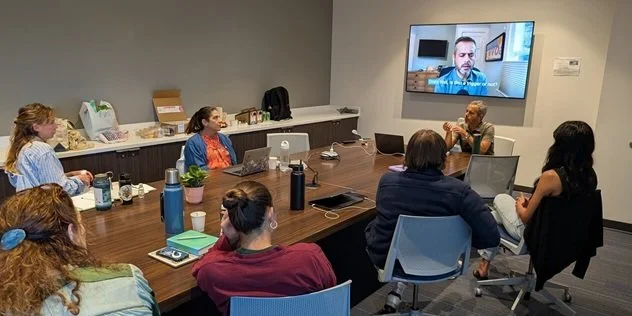
Sentio University, a nonprofit graduate school based in Los Angeles with a hybrid delivery model that serves students throughout California, offers a Master of Arts in Marriage and Family Therapy that meets the BBS educational requirements for the LMFT. The program runs 20 months across 60 units, with weekly online classes and one intensive in-person residency at the start of each semester, in cohorts capped at 24 students at a 4:1 student-to-faculty ratio. It is designed around deliberate practice methodology and is described in peer-reviewed work as the first graduate psychotherapy program to thoroughly integrate deliberate practice, with roughly half of nearly every class session dedicated to active skills training rather than lecture (Rousmaniere and Vaz, 2025, p. 2). Supervisors at Sentio are trained through a video-based supervision training program (Rousmaniere and Vaz, 2025, p. 2) that now runs in six- and twelve-month tracks.
Two features bear directly on the license. First, the program includes a guaranteed practicum placement at the affiliated Sentio Counseling Center, where every session is video-recorded, every client completes routine outcome measures at every session, and supervision follows the Sentio Supervision Model, a peer-reviewed protocol that integrates outcome monitoring, video review, and deliberate practice rehearsal into the supervision hour (Brand, Miller-Bottome, Vaz, and Rousmaniere, 2025). Second, because years of clinical experience bear little relation to therapist effectiveness in the research literature (Vaz and Rousmaniere, 2022, p. 3), the program treats the supervised associate period that follows graduation as something students should be prepared to use well, with habits of video review and outcome monitoring formed before they leave. Sentio also integrates AI literacy training through its AI certification program for therapists.
Sentio is a small, newer institution, admits only applicants who are California residents or willing to relocate to California and who intend to license in California, and its alumni network is still developing. Prospective students weighing Sentio alongside larger or older programs should factor that into their decision. Learn more at the Sentio MFT program overview, the tuition and fees page, and the Sentio FAQ page.
Making Your Decision
The LMFT is a license to practice psychotherapy with the full range of clients and conditions a therapist sees, earned through a California-specific sequence of degree, supervised hours, and examinations. If the license is the goal, the decision that matters most is the program, because the program determines the practicum, the supervision, and the clinical habits an associate carries into the rest of the 3,000 hours. Program websites describe clinical training in similar language regardless of what is actually happening in classrooms and supervision rooms. Ask every program you are seriously considering whether you can attend a live or online class session before enrolling, and ask to speak with current students and recent graduates about how supervision and skill development function in practice. Reputable programs should welcome the request. Hesitation or refusal is informative on its own. Trust what you see in a classroom over what you read in promotional copy.
Frequently Asked Questions
What does LMFT stand for?
LMFT stands for Licensed Marriage and Family Therapist. In California it is a license issued by the Board of Behavioral Sciences to a master's-level psychotherapist who has completed a qualifying degree, 3,000 hours of supervised clinical experience, and the Law and Ethics and Clinical examinations.
Is an LMFT a therapist?
Yes. An LMFT is a licensed psychotherapist. California law defines the practice as applying psychotherapeutic and family systems theories to assess, evaluate, and treat relational issues, emotional disorders, behavioral problems, mental illness, and alcohol and substance use, and the license authorizes independent practice.
Can an LMFT treat individuals, or only couples and families?
An LMFT can treat individuals, couples, families, and groups. The statutory definition names individuals, couples, or groups as recipients of service, and many LMFTs work mainly with individual adult clients. The word family in the title describes the systems-oriented training, not a limit on who may be treated.
Is an LMFT a doctor?
No. The LMFT is a master's-level license. Some LMFTs also hold doctoral degrees, but the license itself requires a qualifying master's degree, and LMFTs do not prescribe medication. Licensed psychologists hold doctorates and are licensed by a different California board.
What is the difference between MFT and LMFT?
MFT refers to the field of marriage and family therapy, the academic degree, and the profession in general. LMFT is the specific California license. A person with an MFT degree who has not completed the supervised hours and examinations is not an LMFT and may not use the letters after their name.
How many LMFTs are there in California?
The Board of Behavioral Sciences reported 48,679 active LMFTs and 15,812 registered AMFTs as of September 3, 2024. The Bureau of Labor Statistics counted 30,890 marriage and family therapist jobs in California in May 2023, close to half of the 63,340 it counted nationally.
Is a California LMFT license valid in other states?
Not automatically. Each state licenses marriage and family therapists under its own rules, and an LMFT who moves applies to the new state's board, which evaluates the California degree, hours, and examinations against its own requirements. Requirements differ by state, and the by-state guide on this site lists what each state asks of an incoming LMFT.
How long does it take to become an LMFT in California?
Five to seven years for most people: two to three years for the master's degree, two and a half to three years of supervised associate work to complete 3,000 hours over at least 104 weeks (up to 1,300 of those hours may be earned as a trainee before the degree), and several months for the two examinations and the license application.
References
Brand, J., Miller-Bottome, M., Vaz, A., and Rousmaniere, T. (2025). Deliberate practice supervision in action: The Sentio Supervision Model. Journal of Clinical Psychology, 1-11. https://doi.org/10.1002/jclp.23790
California Board of Behavioral Sciences. (n.d.). About the Board. https://www.bbs.ca.gov/about/board_info.html
California Board of Behavioral Sciences. (2024). Handbook for Future LMFTs. https://www.bbs.ca.gov/pdf/publications/mft_ada.pdf
California Board of Behavioral Sciences. (2024, November 14). Licensing Population Report. https://www.bbs.ca.gov/pdf/board_minutes/2024/20241114-15_item9.pdf
California Legislature. (2026a). Business and Professions Code section 4980. https://leginfo.legislature.ca.gov/faces/codes_displaySection.xhtml?lawCode=BPC§ionNum=4980.
California Legislature. (2026b). Business and Professions Code section 4980.02. https://leginfo.legislature.ca.gov/faces/codes_displaySection.xhtml?lawCode=BPC§ionNum=4980.02.
California Legislature. (2026c). Business and Professions Code section 4980.08. https://leginfo.legislature.ca.gov/faces/codes_displaySection.xhtml?lawCode=BPC§ionNum=4980.08.
Rousmaniere, T., and Vaz, A. (2025, March). Sentio's clinic-to-classroom method: Bridging deliberate practice and clinical training. Psychotherapy Bulletin, 60(2), 79-84. https://societyforpsychotherapy.org/sentios-clinic-to-classroom-methodbridging-deliberate-practice-and-clinical-training/
U.S. Bureau of Labor Statistics. (2024). Occupational Employment and Wage Statistics: Marriage and Family Therapists (May 2023). https://www.bls.gov/oes/2023/may/oes211013.htm
U.S. Bureau of Labor Statistics. (2026, August 27). Occupational Outlook Handbook: Marriage and Family Therapists. https://www.bls.gov/ooh/community-and-social-service/marriage-and-family-therapists.htm
Vaz, A., and Rousmaniere, T. (2022). Clarifying deliberate practice for mental health training. Sentio University. https://drive.google.com/file/d/1MFdWU-fRl-2EKN2rdvFsExPcJ8-O0C_A/view